
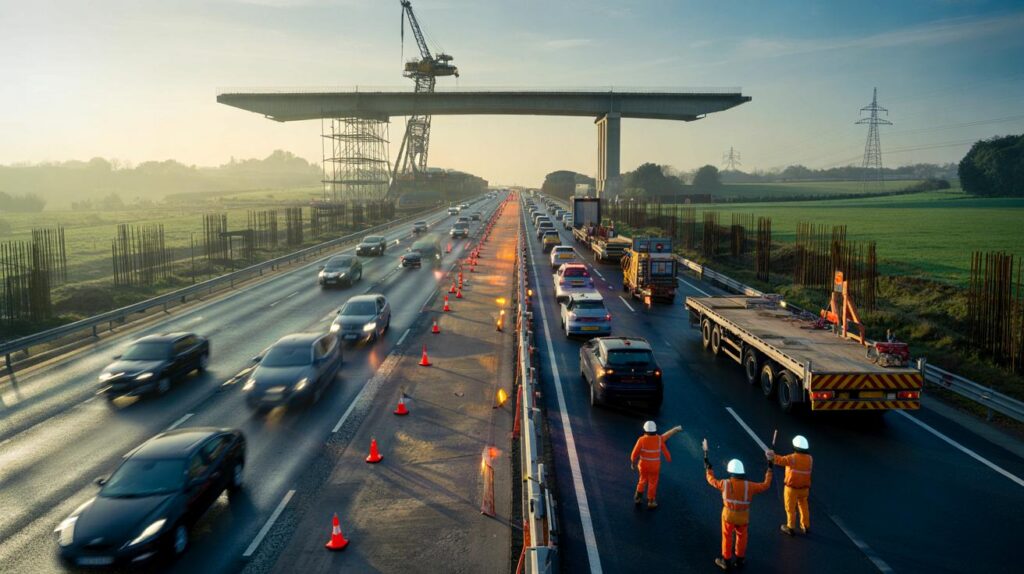
The UK’s £1bn mega road project just crossed a line that changes everything for drivers, freight, and the towns sitting in its shadow. The headline number is big, but the milestone is bigger: after years of prep, the scheme has cleared its last major hurdle and rolls into full construction. That means crews, cranes, detours, and a timeline that finally looks real — with dates, not just drawings.
I arrived at the site before sunrise, that strange half-light where pylons turn into silhouettes and the air smells faintly of diesel and damp grass. A low hum built along the verge as vans lined up, hazard lights blinking like a quiet parade. You could see it on faces: anticipation with a pinch of worry. The kind you feel when a plan finally stops being a plan.
A foreman waved in a convoy of flatbeds, steel stitching the shape of a junction that, until last month, lived mostly in renderings. Someone handed out bacon baps from a cool box. Someone else set the temporary traffic lights to green. *Then a cheer went up — small, but enough.* Something real had started.
For a £1bn piece of infrastructure, this moment looked ordinary. That’s why it mattered.
Why this milestone matters now
On paper, a “milestone” can sound like admin. In truth, it flips a switch. With national approvals locked and the main works contract engaged, the project moves from cautious edging to active building. Crews can open compounds. Live traffic management can go in. Bridges aren’t just drawings; they start to rise.
If you commute across this corridor, your reality shifts this week. Lane narrowings appear. Overnight closures pop onto your maps. You’ll see earthwork mounds forming like new hills, and drill rigs pinning in foundations you’ll never notice once the asphalt goes down. **This is the phase where the map changes shape.**
The ripple effect reaches far beyond cones and flashing arrows. Hauliers start planning different departure windows. Local cafés change their opening hours to catch the early shifts. Parcel vans reroute around compounds. Economic models call this “enabling”. People on the ground just call it life getting rearranged.
Here’s a human-sized example. A small landscaping firm in a nearby village picked up contracts for hedgerow translocation and site fencing. Two new apprentices came on board overnight. The owner told me his phone stopped ringing for garden patios and started pinging for ecological matting. That’s jobs moving before the asphalt is even warm.
On a bigger scale, this corridor carries everything from supermarket lettuce to turbine components, and those minutes lost to a bottleneck echo through supply chains. Freight planners I spoke to expect journey-time savings to stack up the moment the first traffic switch goes live. Not glamorous, just grit. **Time you don’t notice is money someone does.**
The numbers are blunt. The project aims to boost capacity, cut collision hotspots, and stabilise peak-hour speeds. Even a five-minute gain per trip, multiplied by thousands of vehicles a day, runs into millions saved each year. That’s before you count the reduction in tailpipe emissions from stop-start queues. It’s not magic. It’s maths and tarmac.
There’s a reason major builds get phased. You can’t pour a billion pounds onto a map and hope it sets. Teams sequence earthworks, utilities, structures, and surfacing so each hand-off lands clean. The milestone unlocks that domino line. It also sets the rhythm for inspections, night shifts, and the “big lifts” — those dramatic weekends when a deck slides into place while most of us sleep.
People often ask: why not just get it done faster? Roads don’t live in a vacuum. Gas mains snake where you’d rather they didn’t. Bats nest where your viaduct wants to land. You balance ambition with constraints, because building in the real world means working with the world that’s already there.
The next twelve months will look like controlled chaos. Precision beneath mess. Ecology teams moving newts before diggers move soil. Archaeologists pausing a trench because the past refuses to stay buried. Then a flotilla of yellow machines returns, and the landscape shifts again. Progress hides in the steady, unglamorous middle.
What drivers and locals can do right now
There’s a simple method that cuts stress: plan your week in layers. Scan the project’s weekly bulletin on a Sunday night. Save the live updates to your phone. Check again on the morning you travel. Three quick touchpoints keep surprises rare, especially when the team schedules rolling overnight closures or one-way systems. Build in a ten-minute buffer and spend it on a coffee if you don’t need it.
Adjust your routes in small bites, not heroic leaps. Try a detour once, at a quiet time, so it feels familiar when you need it under pressure. If you run a business, post your new delivery window on your socials and in your shop window — people forgive delays when you tell them early. And let the school WhatsApp group know about lane shifts before the morning scramble begins. Let’s be honest: nobody does that every day.
Common friction points show up at the same places: narrowings where mirrors kiss cones, temporary roundabouts that look like spaghetti, and surprise left-turn bans. If you’ve ever clipped a verge marker at midnight, you’re not alone. On a practical note, slow approaches cut stress more than any podcast can. Keep your head on a swivel, wave people in, and give priority vehicles space. **We’ve all had that moment when a last-second merge felt like a fight.**
One trick from veteran commuters: set two sat-nav apps before you leave. If one loses its nerve in a contraflow, the other often keeps its head. Match that with the project’s SMS alerts, and you’ll avoid most snags. It’s not glamorous, but neither is sitting in a queue with a flashing “ROAD AHEAD CLOSED” sign staring you down.
If you’re nearby on foot or bike, map the safe crossings now. Temporary works can rearrange desire lines in sneaky ways. Choose lit routes at night, nod to marshals, and report loose barriers — teams can’t fix what they don’t see. Small civic gestures matter in the margins: bin lids secured on windy nights, dogs on leads near compounds, patience where the footway narrows by a fence.
Your questions will be sharper than any press release. Ask them at drop-in sessions or online Q&As. The best project teams listen more than they brief, and fix small stuff quickly because small stuff spreads goodwill.
“We’re building for the next fifty years, but we know people live here today. If we get the next few months right — the detours, the communication, the tone — the rest follows.”
- Bookmark: live traffic page + weekly works bulletin.
- Sign up: SMS alerts for overnight closures near your postcode.
- Note down: alternative petrol stop and safe school-run route.
- Keep handy: high-vis for cycling and a spare headtorch in the boot.
What’s next on the ground
The headline shift is simple: major earthworks and the first bridge foundations give shape to the corridor, then come phased traffic switches that let crews build new carriageway while you’re driving on the old. Expect a few “big weekends” where cranes lift beams, a run of overnight diversions while surfacing gangs lay the black stuff, and a quiet flourish when wildlife crossings get planted long before you see any fresh white paint. The programme then turns to drainage, barrier, and signage — the choreography that makes a road a road. Construction teams will talk a lot about carbon, too, from recycled aggregates to all-electric plant on certain tasks. And when the first new section opens — maybe just a few miles at first — the nervous energy will break into something warmer. Curiosity. Relief. A little pride that this thing finally exists.
| Key points | Details | Interest for reader |
|---|---|---|
| Full construction phase begins | Final approvals in place, compounds active, first foundations going in | Signals real progress — visible changes in weeks, not months |
| Traffic management ramps up | Overnight closures, lane narrowings, phased switches, “big lift” weekends | Plan smarter journeys, avoid hotspots, save time and nerves |
| Community and jobs ripple out | Local contracts, apprenticeships, small firms pulled into the supply chain | Opportunities close to home — and a reason to keep an eye on bulletins |
FAQ :
- How long will the major works last?Think in seasons, not weeks. The main phase typically runs across two to three construction cycles, with different sections opening in stages.
- Will there be night-time noise?Some. Big lifts and surfacing often run overnight. Crews use screens and measured hours, and they publish schedules in advance.
- What’s the milestone everyone’s talking about?The green light for full-scale construction — the point where plans turn into piling, pours, and bridge builds at pace.
- Are there benefits before the road fully opens?Yes. Early traffic switches can remove pinch points, and safety upgrades land section by section.
- Is the scheme doing anything for the environment?Expect wildlife crossings, new planting, recycled materials, and lower-carbon machinery where it makes sense.



Love seeing this move from drawings to diggers. That small cheer at dawn says it all. If apprenticeships and local contracts are already landing, that’s a win before the asphalt even sets. Just hope comms stay clear when the first traffic switches hit — planning my week just got a lot easier. Finaly!