
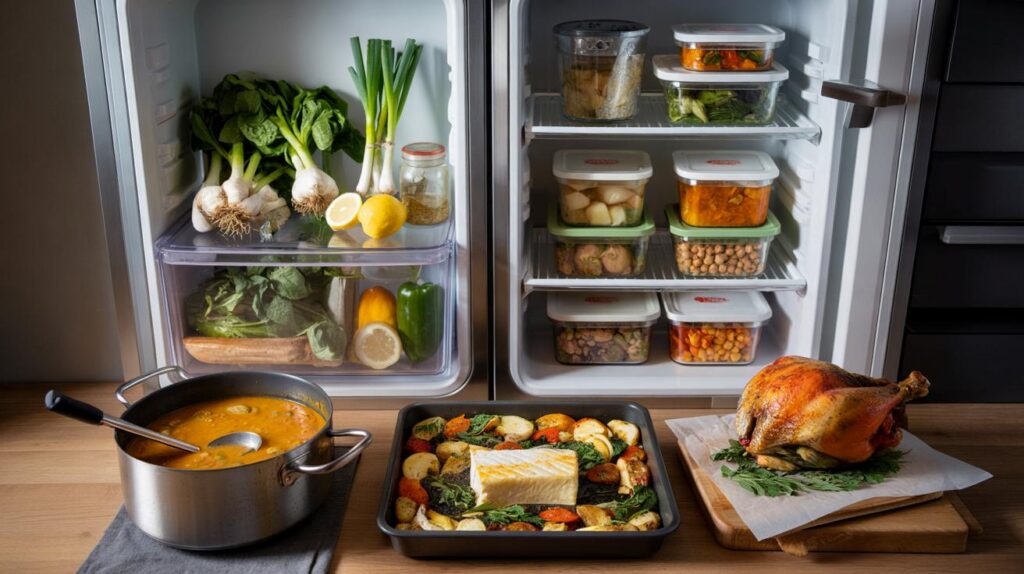
Food prices keep nudging up, fridges keep filling, and bins keep eating our pay. You bring home a proud big shop, then a week later you’re binning half a bag of spinach and a sad tub of hummus. There’s a simpler way to shop and cook that costs less and wastes almost nothing.
On a damp Tuesday in Leeds, I watched a neighbour unpack her groceries like a game of Tetris. Twelve tins. Four yoghurts. A double pack of chicken, because it was on offer. By Friday night, the herbs had wilted and the apples had gone mealy, so tea became toast and a shrug. She wasn’t careless. She was busy. She was trying to keep everyone fed without spending the earth, and still losing a quiet battle to the bin. Then she tried a tiny experiment: a simple meal plan written on a sticky note. It felt almost too small to matter. It didn’t.
Why a tiny plan beats a big shop
Grocery waste rarely happens in the trolley. It happens in the blur between work and dinner, when decision fatigue taps you on the shoulder and points you to a takeaway app. A simple meal plan gives you a map for those foggy evenings. Not a military schedule. Just a light that shows what to cook next.
WRAP, the UK charity tracking food waste, estimates households throw away millions of tonnes of edible food each year, and the average family could save around £60 a month by wasting less. That’s a tank of petrol or a winter coat. One in six bags you carry home effectively goes straight to the bin. A plan snaps those numbers back into your favour, because it links what you buy to what you’ll actually eat.
Think of a plan as friction removed. You’re not promising artful dinners seven nights in a row. You’re choosing three anchor meals that use up your most perishable ingredients, then repeating safe hits and using leftovers by design. Less choice at 6pm means fewer panics, fewer impulse shops, and fewer slimy cucumbers. A tiny plan beats a giant shop.
The simple meal plan that actually works
Start with your fridge, not the recipes. Take five minutes to inventory what’s already there and sort an “Eat Me First” box on the top shelf. That becomes the heart of your week. Then pick three anchor meals that knock out those quick-to-spoil things: one pan dinner, one soup or curry, one tray bake. Leave two free nights for life: leftovers, eggs-on-toast, or the friend who invites you round.
Let’s be honest: nobody meal-preps saintly lunches every single day. So plan to cook once and eat twice. Roast a chicken for Sunday, then Monday becomes a quick noodle bowl with shredded leftovers and Tuesday’s lunch is wraps with the last of the herbs. If you’re veggie, roast a tray of veg and chickpeas, then fold the lot through pasta, soup, and a speedy salad. Leftovers aren’t punishment. They’re your pay rise.
Priya in Manchester tried this for two weeks with her partner and toddler. She wrote a five-line plan on the fridge: chickpea curry, roasted veg tray bake, salmon with greens, plus two “free nights”. She shopped to that note and spent £18 less in week one, £22 in week two. The toddler still rejected spinach on sight, but the curry became fritters on day two and nobody noticed. Leftovers are not laziness; they’re strategy.
Where the savings hide: tiny moves, big impact
Write your plan in the same breath as your list. Group items by aisle so you don’t “just look” and add extras. Buy smaller when you won’t use the bulk; a two-for-one that goes off is a loss. Grab one versatile hero per week that threads through meals: a bag of spinach, a pot of yoghurt, a bunch of spring onions. They slide into eggs, soups, salads, and stretch everything.
Keep a “use-up” habit. Chop the last carrot and celery into a freezer bag labelled “soup starters”. Freeze the ends of bread for croutons. Stir the spoonful of pesto into tomorrow’s omelette. We’ve all had that moment when the bin feels like a hungry mouth. You’re allowed to outsmart it with scraps. *This isn’t about perfection; it’s about rhythm.*
Don’t fight your actual life. If Wednesdays are late and chaotic, Wednesday’s dinner should be eggs, toast, and something green. If you hate batch-cooking, don’t. Cook double only on nights you enjoy being in the kitchen, and lean on the microwave on the others. Waste less, spend less, eat better.
“The plan isn’t the point. The point is fewer decisions when you’re tired, and ingredients that actually get eaten.”
- Five-line template: 3 anchor dinners + 2 free nights + lunch from leftovers.
- Eat Me First box: top shelf, front and centre, emptied by midweek.
- One hero ingredient per week to link meals and reduce random buys.
- Cook once, eat twice: build it into the plan so it feels normal.
- Shop to your note, not to your cravings.
Make it yours, keep it flexible
Food is memory, comfort, culture. Keep your plan personal by rotating four or five family favourites and swapping the protein or veg with what’s cheap this week. A bolognese becomes lentil ragù. A stir-fry becomes fried rice. Same flavour lane, different route. That’s how you keep it satisfying and still stick to budget.
Use a visible timer: Thursday is “clear-the-fridge pasta” or “toast night” and you don’t apologise for it. A ten-minute pot of soup with tired veg, garlic, and a crumbling of cheese uses things that otherwise die quietly in your crisper. Soy sauce, lemon, and chilli flakes make leftovers bright. Small jars do the heavy lifting so you don’t need a dozen fresh bits every time.
Build a tiny ritual around your plan. Friday tea becomes “bits bowl”: leftover grains, roasted veg, egg, and a drizzle. Sunday tea is tray bake day with whatever’s knocking about. You’re giving your week a food heartbeat, not a prison. Cook with what you have, not what an ideal version of you would buy.
“Shop your fridge first, shop the shop second, and you’ll shop the bin far less.”
- Set a two-minute phone reminder on bin-night: scan the fridge and freeze what won’t make it.
- Keep a whiteboard on the door: list leftovers with dates, erase as you eat.
- Buy frozen veg and fruit for buffers: peas, spinach, berries save you midweek.
- Slice bread before freezing; toast straight from frozen, zero waste.
- Price-per-portion beats price-per-kilo when life is busy.
Some weeks, your plan will wobble. A late train. A child’s fever. A party invite. That’s fine. The plan is a scaffold you can lean on, not a contract to feel guilty about. Swap Thursday with Friday, push salmon to the freezer, and keep the yoghurt for breakfast. The win is less spoilage, not culinary perfection.
Batch-cooking can be a booster, not a religion. Make double of what reheats well—soups, stews, curries—and freeze flat in zip bags for fast defrosts. Label with the exact thing and the date. It sounds fussy, but it’s five seconds that saves a weeknight. Your future self will thank you when the rain’s hammering and the bus is late. Keep three emergency dinners in the freezer, always.
Your trolley will change shape within a month. Fewer “just in case” buys, more staples that earn their keep. You’ll walk past yellow-sticker bargains unless they actually fit the plan. You’ll learn your family’s real appetite, not the hopeful version. The bin won’t vanish, but it won’t feel like a hungry mouth anymore. Soyons honnêtes: personne ne fait vraiment ça tous les jours. Wait—let’s say it plainly. Let’s be honest: nobody does this perfectly every day. Do it most days, and your bank account will notice.
What happens next is subtle. You stop buying duplicates because you know tonight’s pasta uses the rest of the broccoli. You quit the midweek panic shop because there’s soup ready. Children get used to a rhythm, and fussiness softens when flavours repeat in friendly ways. You gain five quiet minutes back at the end of the day. That’s a bigger luxury than it sounds.
Try writing your plan as a mood board rather than a strict menu: “creamy”, “spicy”, “crunchy”. Then slot in meals that fit and use what’s on hand. Turn ageing salad leaves into a quick pesto. Shred last night’s roast veg into a quesadilla. If guilt creeps in, ditch it. Food should help you feel steady, not judged. The point isn’t to cook more. It’s to waste less while eating well.
If you want a starting grid for next week, pinch this. Three anchors: lentil curry with coconut; roasted veg and halloumi tray; lemony chicken thighs with potatoes. Two free nights: eggs-on-toast; clear-the-fridge pasta. Lunch rides the coattails: curry becomes spiced wraps; tray leftovers top couscous; chicken turns into a zippy noodle bowl. The rest is condiments and common sense.
Here’s the quiet gift of a simple plan: money stays in your pocket, time returns to your evening, and meals stop feeling like a quiz with a ticking clock. Share your own five-line plan with a friend, or swap go-to “bits dinners” in your group chat. The more we talk about real-life cooking, the easier it gets to keep pace. Trends will come and go. The humble sticky note on your fridge door might be the thing that outlasts them all.
| Key points | Details | Interest for reader |
|---|---|---|
| Plan three anchor meals | Target quick-to-spoil items and repeat easy hits | Saves money and headspace on busy nights |
| Cook once, eat twice | Design leftovers into your week, not as an afterthought | Fewer shops, faster dinners, less waste |
| Use an “Eat Me First” box | Top shelf, front and centre to guide choices | Transforms random bits into planned meals |
FAQ :
- How many meals should I plan each week?Plan three anchors and leave two free nights. The rest falls into place with leftovers and simple staples.
- What if my kids are fussy?Keep flavours familiar and change the shape: same sauce over pasta, rice, or wraps. Offer one safe side alongside the new thing.
- Do I need to batch-cook on Sundays?No. Make double only when you’re already cooking something that reheats well. Freeze flat, label, move on.
- How do I stop fresh produce going limp?Buy less, more often, and prep it once home. An “Eat Me First” box plus a midweek soup sweeps the remains.
- What if my plans change midweek?Swap nights, freeze what won’t get used, and pull an emergency dinner from the freezer. Flex is built into the plan.



I love the five-line template—3 anchors + 2 free nights makes dinner feel doable. Made an “Eat Me First” box yesturday and it already rescued lonely spring onions. This is simple, not preachy, and I’m definitley stealing the “cook once, eat twice” mantra.
Honest question: for a shift-working household, does the tiny plan still hold up? We’re four people with moving targets and a fussy teen. Is the advice to freeze more and lean on “emergency dinners”, or batch-cook on good days?