
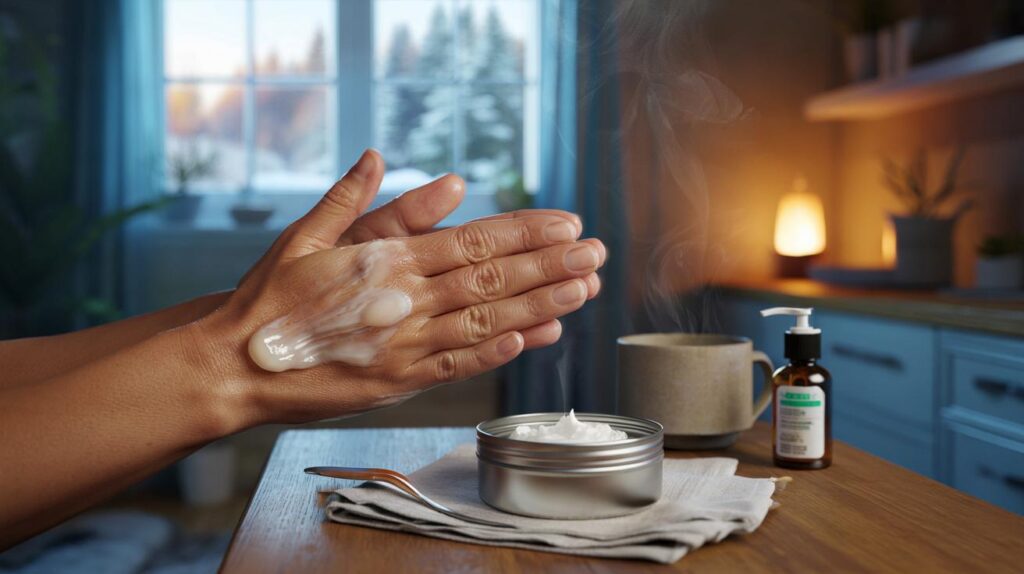
Winter in 2025 isn’t gentle on hands. Central heating hums, icy air bites at bus stops, and the pump of sanitiser hasn’t left our routines. Skin stretches, knuckles redden, nails snag. We’ve all felt that quiet sting when you go to button a coat and your fingers protest. Coconut oil sounds old-school, almost quaint. Yet it keeps popping up on bathroom shelves for one reason: it works when the weather won’t.
It started on a grey London morning, the kind that blurs into the next. On the 38 bus, a woman pulled a tiny silver tin from her pocket and rubbed a thumbful of soft coconut oil into her hands. The scent drifted like a beach memory in a city of fogged windows. Later that day, I spotted the same humble jar sitting on a designer’s desk between a steaming mug and a cracked keyboard. There’s a pattern people aren’t talking about enough. A small fix, doing big work.
Why coconut oil still wins for winter hands in 2025
Our hands take the hits first: cold wind outside, dry heat inside, frequent washing, sanitiser on repeat. Coconut oil offers an uncomplicated counterpunch. It melts at body temperature, glides on fast, and leaves a soft, not-greasy veil once you’ve let it settle for a minute. The light, gently sweet scent turns an ordinary moment into something a bit kinder. When trends swirl and serums multiply, a kitchen-staple oil keeps quietly repairing the damage you can feel but can’t always see.
I met a barista who stashes a thumb-sized tin in her apron. Two weeks into January last year, her knuckles were split and tender; by the time February rolled in, those micro-cuts were history. She didn’t overhaul her life, she just dabbed coconut oil after every wash, then once more before bed. Another friend keeps a small jar by the hallway radiator and presses a pea-sized smear in as she reaches for her keys. Tiny ritual. Noticeable difference.
The logic is simple. Coconut oil is rich in fatty acids like lauric acid that soften and smooth the outer skin layer, acting as an emollient. It also forms a light seal, an occlusive layer that slows moisture loss when the air is thirsty and central heating won’t stop running. Hydration comes first from water, then from trapping it. Wash, leave skin slightly damp, and seal with oil. Think of it as weatherproofing for your hands’ barrier, not a miracle—just clever timing.
How to use coconut oil so it actually helps
Make it a two-step habit, not a heavy slather. Rinse hands in lukewarm water, pat until just damp, then melt a pea-sized amount of coconut oil between your palms. Press it into the backs of hands, along the fingers, and over the cuticles. For stubborn cracks, tap a tiny dot onto the split and let it sit for a minute before rubbing in. Do this after the last wash of the night, then again when you wake. **Barrier before bed.**
Common mistakes trip people up. Using too much leaves a slick that attracts lint and frustration. Hot water strips fat from skin, so switch to kinder lukewarm rinses. Applying on bone-dry hands wastes potential—catch that dampness first. If fragrance irritates you, choose plain, food-grade coconut oil and keep the jar clean with a spoon, not fingers. Refined varieties are neutral-smelling; virgin gives the gentle coconut note. Let’s be honest: nobody does this every day. Aim for most days and forgive the rest.
Consistency beats intensity. A little, often, wins winter. **Tiny but timely** applications build a soft shield without the heavy feel people worry about. Pair a humectant like glycerin or a light hand cream under the oil if your skin is very dry, then let the oil lock it in. *Your hands remember small daily kindnesses.*
“Moisture first, then seal. Paint the fence, then weatherproof it. That’s the whole winter-hand story in one breath.”
- Warm, not hot, water resets the tone. **Warm, not hot.**
- Pea-sized amount for both hands; add a crumb for cuticles.
- After washing, after sanitiser, and always before bed.
- Slip on thin cotton gloves for 20 minutes if you want extra softness.
- Refined oil for scent-sensitive noses; virgin oil for the beachy whisper.
A small ritual with outsized impact
Hand care isn’t vanity this season; it’s comfort at scale. In 2025, we work across screens and door handles, ride cold trains, and chase lives that demand grip and patience. Coconut oil takes thirty seconds to melt and press in, and that half-minute delivers a calm you can literally feel. When your skin stops snagging on wool, when the sting fades from handshakes and dish duty, life shifts a notch. It’s a quiet upgrade worth sharing with someone you love.
| Key points | Details | Interest for reader |
|---|---|---|
| Coconut oil seals in moisture | Emollient and occlusive; slows water loss after washing | Hands stay soft longer in dry, heated air |
| Use on damp skin | Apply a pea-sized amount right after a lukewarm rinse | Better results without extra product or time |
| Simple routine wins | Most days, night-time focus, optional cotton gloves | Easy, low-cost habit with visible payoff |
FAQ :
- Is coconut oil actually good for dry winter hands?Yes. It softens the surface layer and creates a light seal that slows moisture loss, which is exactly what winter dries out.
- Will it clog pores or cause breakouts on my hands?Hands have fewer breakouts than faces. If you’re acne-prone, keep oil on backs of hands and cuticles, and wash palms if you’re about to touch your face.
- Virgin or refined—what’s better?Functionally both help. Virgin has a natural coconut scent and more aroma compounds; refined is neutral and often preferred if you’re scent-sensitive.
- How often should I apply it?After handwashing when practical and always at night. Morning and night are a strong baseline, with quick top-ups after sanitiser.
- Can I use it with gloves, sanitiser, or eczema-prone skin?Yes with gloves—apply, wait two minutes, then wear cotton gloves. Use after sanitiser dries. If your skin is reactive, patch-test first and keep products simple.



Tried your “moisture first, then seal” trick last night—lukewarm rinse, damp hands, pea-sized coconut oil. Woke up without those stingy knuckles for the first time this winter. Also loved the cotton gloves tip; 20 mins made a real diff. Thanks! 🙂