
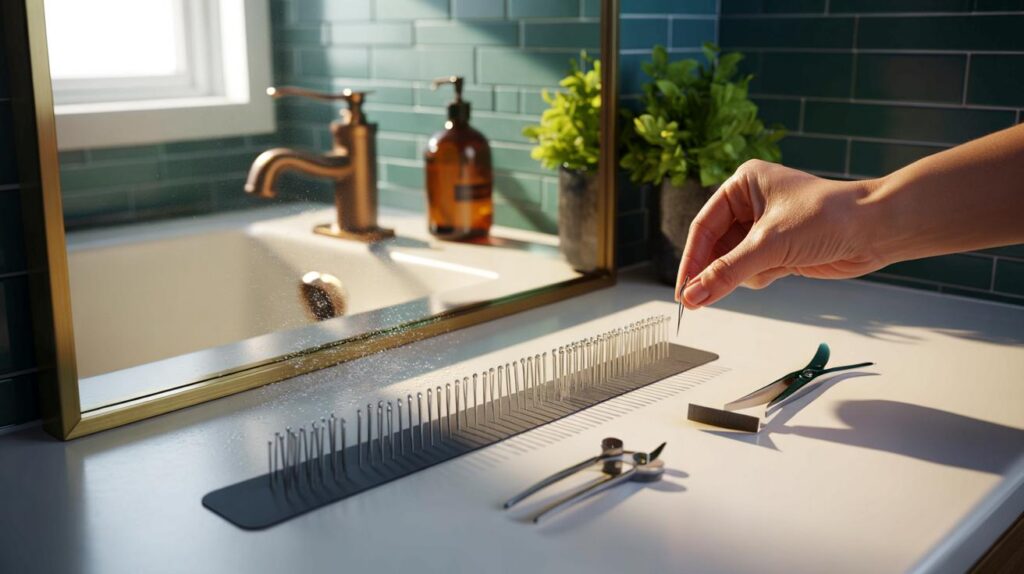
Hairpins migrate. One minute they’re clipped to a fringe, the next they’re skating across porcelain, slipping into the plughole, or rusting in a little puddle by the tap. The sink looks messy, your morning mood sours, and you end up buying yet another pack because the last lot vanished. There’s a tiny, almost silly fix that changes the whole picture — and it sits quietly on the edge of your mirror.
The morning I gave in to the chaos, the bathroom was a crime scene of metal slivers and stray hairs. Steam beaded on the mirror, the extractor hummed, and a bobby pin pinged from my fingers to the tiles with that unmistakable tick. I’d already lost two to the drain and one to the cat. My partner walked past, said nothing, and raised an eyebrow at the sink like it was a life choice. Later, rummaging in a kitchen drawer, I found a spare magnetic strip from a DIY project, wiped the back of the cabinet door, stuck it on, and touched a pin to it. The click was embarrassingly satisfying. *A tiny promise of order, right where the day begins.* It sounded like a small ritual, but it felt like a reset. The answer was hiding in the hardware aisle.
Why a magnet tames the bathroom mess
Hairpins are designed to be forgettable until the second you need one. That’s the problem: small, slippery, always escaping. A simple **magnetic strip** gives them a home in the exact spot you reach for them, and it turns a chaotic surface into something close to **visual quiet**. Two moves: off the head, onto the magnet — no tray, no dish, no faff. The habit forms almost without effort.
At my old flat in Peckham, three of us shared a tiny bathroom with a rebellious basin that splashed like a toddler. We stuck a thin magnet inside the cupboard door and counted lost pins for a week. Before the strip, we’d each fish around the sink twice a morning and lose three or four by Friday. After the strip, I lost one the whole week, and it was because I wore it to the gym and forgot. No sermon, just a small click that kept happening, and the surface stayed calm.
There’s a simple physics story here. Most **bobby pins** are steel, so they’re naturally attracted to a magnet; the narrow shape means they make strong contact along the strip. A good adhesive-backed magnet keeps the line flush to a wall, frame, or cupboard, away from water splashes. You’re not building storage so much as creating a “landing strip” for tiny metal things. The closer the strip is to where you do your hair, the more your hands retrain themselves without thinking about it.
Set it up in five minutes
Pick a slim adhesive-backed magnetic strip (the kind used for knives or tools), cut it to size, wipe the surface with alcohol, and stick it horizontally where your hand naturally rests: the side of the mirror, inside the vanity door, or under a shelf lip. Press for 30 seconds. Touch a pin to test the pull — you want a confident grab, not a grudging cling. Load the strip, and enjoy that tiny chorus of clicks.
We’ve all had that moment when the whole morning unravels because a single clip went missing. Put the strip out of splash range, and if your bathroom runs steamy, choose a coated magnet or add a thin clear tape over the face to limit moisture. Don’t pick those floppy fridge-sheet magnets; they’re too weak and the pins slide. Let wet pins dry on a towel first to avoid rust freckles on the strip. Kids around? Mount it higher, like under the mirror frame. Let’s be honest: no one actually does that every day.
There’s a rhythm to it: off, click, done. It sounds ordinary, but you feel the space exhale.
“The magnet didn’t just save pins — it saved my patience. That clean edge by the sink makes getting ready feel grown-up.” — Jess, a hairdresser who swears by two strips at work and one at home
- Best spots: inside a cabinet door, along the mirror’s outer edge, or the side of a shelf.
- Dress it up: paint the strip to match your tiles, or cover with washi tape for a soft finish.
- Multi-use: park tweezers, nail clippers, and tiny scissors on the same line.
- Travel hack: pack a 10cm strip in your toiletry bag; stick it to a hotel mirror and stop losing pins on the floor.
Small habit, bigger ripple
A neat line of pins looks like nothing until you notice what it replaces: the dish that overflowed, the clatter in the morning, the silent accusation of a messy sink. Tiny rituals shrink decision-making. They free a scrap of attention that you can spend elsewhere — on the haircut you’re actually trying to pin, or the conversation you were having through foam and fog. When your bathroom gives you less grief, you step out quicker, lighter, and strangely pleased. That pleasure is contagious. A partner starts using the strip. A teen stops nicking your clips because they’re easy to put back. Maybe you give the spare strip to a friend and watch them pull a face at how obvious it feels. The click becomes a cue: we’re done here. And the sink stays clear enough to reflect you back without all the noise.
| Key points | Details | Interest for reader |
|---|---|---|
| Magnetic strip placement | Side of mirror, inside cabinet door, or under a shelf lip, out of splash range | Immediate, low-cost tidiness right where you need it |
| Choose the right magnet | Adhesive-backed, firm pull; avoid weak fridge-sheet magnets; consider coated options | Prevents sliding pins and rust marks, saves replacements |
| Expand the idea | Store tweezers, clips, nail tools; use a short travel strip for hotel mirrors | Turns a single trick into an everyday system |
FAQ :
- Do magnetic strips cause rust on hairpins?Magnets don’t cause rust; moisture does. Keep the strip away from splashes, let wet pins dry first, and choose coated pins or a coated strip if your bathroom runs steamy.
- How strong should the magnet be?Look for a firm pull that holds 20–30 pins without sliding. Knife-bar strength is ideal; flimsy decorative sheets are usually too weak for steel pins.
- Is it safe near electric toothbrushes or trimmers?Yes. The small magnets used here won’t harm typical bathroom gadgets. If you use a pacemaker, follow your clinician’s guidance and keep magnets at a sensible distance from the body.
- What if my hairpins aren’t magnetic?Most steel pins are. If yours don’t stick, they might be aluminium or coated heavily. Swap to standard steel bobby pins and the strip will work instantly.
- Will the adhesive damage paint or tiles?Quality strips come off cleanly when warmed with a hairdryer and peeled slowly. On delicate paint, test a small patch or use removable mounting tape.



Tried this with a leftover knife-bar strip from the kitchen—instant calm. The little chorus of clicks is weirdly satisfying, and my sink finally looks like an adult lives here. Thanks for the coated-strip tip; no more rusty freckles.
Honest question: won’t a magnet next to the mirror scratch the glass or mess with electric toothbrush chargers? I’m into the idea, but the ‘firm pull’ sounds intense. Any long-term downside you’ve noticed?