
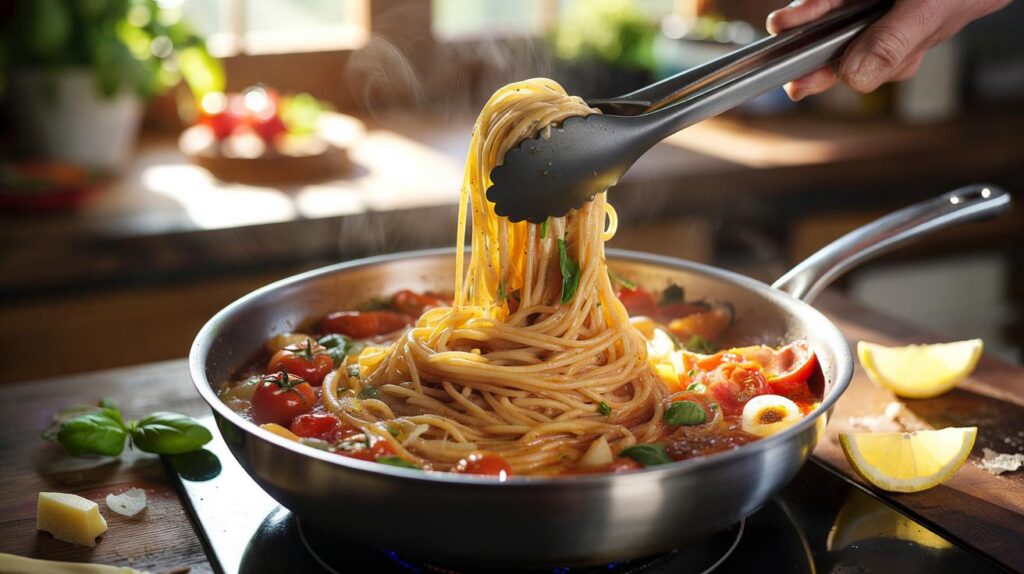
Your feed is full of glossy one-pot pasta shots: tongs lifting silky strands, basil confetti, a pan that seems to clean itself. Then you try it at home and get mush, clumps, or a sauce that tastes like hot water with good lighting. Here’s how to get the look and the flavour.
It’s Tuesday, the kind that starts grey and ends hungry. Phone balanced against a jar of olives, I watch a looping Reel where cherry tomatoes burst, garlic swirls, and the pan somehow does all the work. I dump everything in at once, because that’s the promise: one pot, fifteen minutes, no mess.
The kitchen smells like a trattoria on a fast-forward track, steam fogging the window as pasta softens and the liquid drops to a glossy sheen. I taste too soon and feel it—flat, a little sticky, like the sauce wants to be great but can’t find its voice. I reach for a lemon, then butter, then the salt I forgot to add at the start.
I wanted flavour, not theatre. And that’s when it clicked. The trick isn’t the hack in the video; it’s the handful of small choices you never see. A clue hides in the steam.
The One-Pot Promise, Debunked and Redeemed
One-pot pasta works by trapping starch in the pan so it turns the cooking water into sauce, binding oil, aromatics, and vegetable juices into something silky. When it clicks, the spoon leaves trails, and the pasta slips like satin. When it flops, you get gluey tangles or a puddle that refuses to thicken and tastes a bit like nothing.
The fix starts before the boil. Use a wide sauté pan, not a tall pot, so evaporation and contact with heat happen evenly. Salt the water early, not at the end. Stir more in the first two minutes than you think you should, then let it be. These are tiny, quiet moves, but they decide if your viral dinner actually sings.
My friend Liv tried the internet-famous tomato, onion, basil, and spaghetti number on a weeknight with a glass of red and a playlist. The first try looked right, scarlet and shiny, yet tasted shy. She did it again in a 28 cm pan, sweated the onions for two minutes before the water, and used 800 ml for 250 g pasta. The sauce gripped, the basil perfumed, and the bowl emptied fast.
We laughed because the method barely changed. A five-minute rest off the heat turned watery into glossy. A squeeze of lemon turned “fine” into “let’s make that again”. The hashtag has racked up hundreds of millions of views, which is sweet, but the little tweaks are what make those views taste like dinner, not just a video loop.
The science is home-kitchen simple. Starch granules swell and shed as pasta cooks, and that free starch emulsifies with fat to build body. Too much water dilutes that magic; too little and the strands fuse and scorch. A lid traps steam for faster softening, but you want some evaporation to intensify flavour. Salt sets the baseline so tomatoes and cheese don’t have to shout.
Acidity wakes up sweetness, and a finishing fat carries aroma across your tongue. A Parmesan rind, a dab of miso, or a stray anchovy melts into savoury depth without announcing itself. Cheese belongs off the heat so it melts, not splits. Think balance, not hacks. Think small, timely moves, not heroics.
The Method That Makes One-Pot Pasta Actually Work
Here’s a blueprint you can trust. For 250 g dried pasta, use 700–850 ml hot water or light stock, 1 level teaspoon fine salt, and a wide pan that lets the pasta lie mostly flat. Sweat aromatics in 1–2 tablespoons olive oil for two minutes—garlic, onion, chilli, or fennel—then add pasta, liquid, and hard veg. Bring to a lively simmer, uncovered.
Stir constantly for the first two minutes to stop sticking, then occasionally, letting the sauce reduce and thicken. Cook until the pasta is just two minutes shy of al dente, then drop in quick-cook bits—spinach, prawns, peas—for the last minute. Off the heat, add a knob of butter, a handful of cheese, and 1–2 teaspoons lemon juice or vinegar. Rest for two minutes. Toss. Taste. Adjust.
Common snags all feel familiar. A tall pot gives you plenty of water and nowhere for steam to go, so the sauce stays thin. Dairy dumped in too early can curdle or go grainy. Oversalting late makes it salty on the surface, bland inside. We’ve all had that moment where the pan foams like a science experiment and you start poking in a panic.
Drop the heat a touch or add a tiny drizzle of oil to keep foam in check. If things tighten too much, loosen with a splash of hot water and toss hard. If it tastes flat, it’s missing salt or acid, not more cheese. Let’s be honest: nobody weighs their pasta water like a lab on a Tuesday night. Taste, nudge, taste again, and you’ll land it.
There’s a quiet confidence that builds when you see the sauce go from watery to glossy, and that’s the moment you own it. A cook from a south London supper club told me the line I now hear every time I reach for the tongs.
“Pasta water isn’t waste. It’s your sauce. Treat it like stock.”
- Use a wide pan so evaporation and contact are on your side.
- Season early; salt dissolves into the pasta, not just around it.
- Finish with acid and a little fat for shine and clarity.
- Rest two minutes; the sauce tightens as steam calms and starch sets.
- Hold cheese off the heat to avoid splitting and keep it creamy.
Why These Recipes Keep Going Viral—and How to Make Them Yours
One-pot pasta sells the feeling that dinner is both easy and a little cinematic, and that feeling is not a lie. The pan does feel like a stage, steam a kind of fog machine, basil a curtain call. The trick to keeping the romance is letting technique whisper underneath the music. You don’t need expensive kit, rare ingredients, or a second pan soaking in the sink.
Pick a flavour anchor—roasted red peppers, lemon and capers, miso and mushrooms—and build around it with salt, fat, and acid. Add veg you like in the order they need, not the order that looks good on camera. Keep the water modest, the heat lively, and your wooden spoon close for those first two minutes. If you want protein, brown it first, set it aside, and slip it back in at the end.
The bowl that empties isn’t the one with the glossiest twirl; it’s the one that tastes like something and feels like you. Share your version with a friend or on your feed if you want, but the real win is knowing why it worked. Viral or not, that’s dinner you can repeat.
| Point clé | Détail | Intérêt pour le lecteur |
|---|---|---|
| Water and pan | 700–850 ml per 250 g pasta in a wide 28 cm pan | Prevents gluey clumps and builds natural creaminess |
| Seasoning and acid | Salt early; finish with lemon or vinegar and a knob of butter | Transforms “fine” into bright, restaurant-level flavour |
| Timing and rest | Stir early, cook to 2 minutes shy, rest off heat for 2 minutes | Locks in gloss and perfect bite without overcooking |
FAQ :
- Can I use gluten-free pasta?Yes. Choose shorter shapes like penne or fusilli. Start with the lower end of the water range, stir gently in the first two minutes, and cook to just shy of al dente, as GF softens fast.
- How much water should I use?For 250 g dried pasta, start with 700–850 ml. Thirsty shapes or wholewheat may want the upper end. If it tightens too much, add a splash of hot water and toss hard.
- Can I add meat or prawns?Brown sausages, pancetta, or prawns first for flavour, remove, then cook the pasta. Return them for the last minute to warm through so they stay juicy and don’t overcook.
- My sauce looks gummy. What now?Add a small ladle of hot water, a teaspoon of lemon juice, and toss until it loosens and turns glossy. Fold cheese in off the heat and add a drizzle of olive oil for shine.
- Is one-pot pasta healthy?It can be. Load in veg, use olive oil, and keep portions sensible. Wholewheat pasta works well with this method, and the starchy sauce means you need less cream to feel luxurious.



Just tried the 28 cm pan + 800 ml water trick and wow, the sauce finally went glossy! 😍
Is the “rest off heat for two minutes” realy necessary, or is that just compensating for undercooked pasta? My sauce keeps turning gummy—could it be my salt timing?