
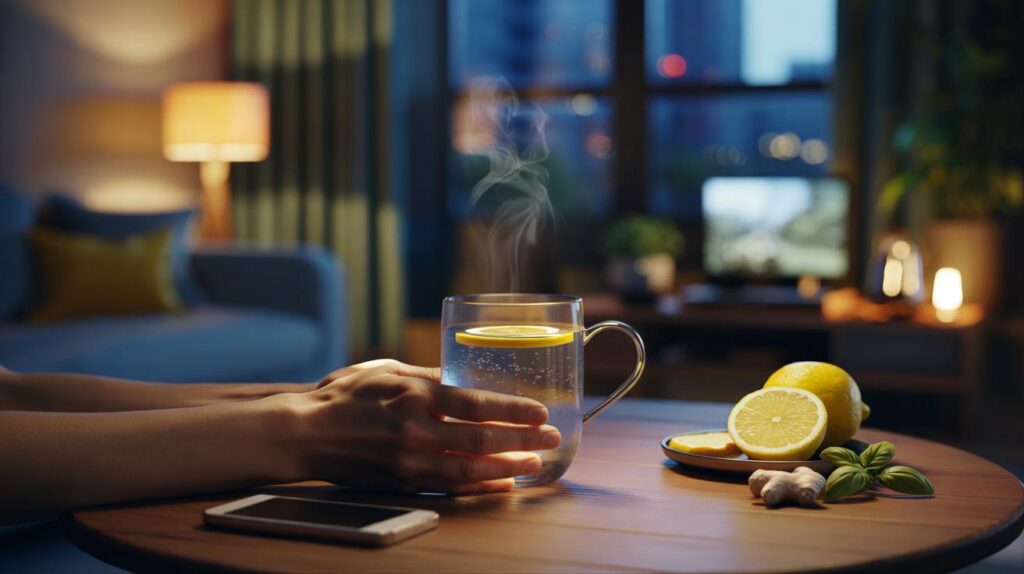
We almost all reach for lemon water in the morning. At night, the same ritual quietly rewires the end of your day — and it does something sly to your fatigue.
The flat feels heavy after 9pm. The television breathes blue light, the inbox won’t stop twitching, and the silence in the kitchen is oddly loud. I flick the kettle, slice a thumb-width of lemon, and the room fills with that soft, clean citrus that smells like starting over.
The mug warms my hands as the steam rises. Not hot, not cold — just that pleasing, body-temperature middle that asks nothing and gives a lot. First sip, shoulders drop a notch, the jaw unclenches, and the day starts exiting the body like a crowd leaving a stadium.
We’ve all had that moment when your energy is gone but your brain is still running laps. This tiny evening ritual meets both. It’s small. It’s oddly powerful. And it’s hiding in plain sight.
The evening switch that your energy never sees coming
Most people assign lemon water to bright 7am kitchens and ambitious lists. At night, the same drink plays a different role: not a starter’s pistol, but a dimmer switch. The warmth nudges your parasympathetic system, the part that says, “We’re safe now.”
Add the lemon and you get two extra wins: flavour that makes you actually want to drink, and a scent that signals clean-up time to a tired brain. The result isn’t hype-level “detox.” It’s gentler — a state change from wired-tired to simply tired. **Warm lemon water at night isn’t a detox; it’s a downshift.**
Let’s be honest: nobody really does this every day. And you don’t need to. Used on the nights when fatigue feels sticky and uncooperative, it’s a lightweight nudge with outsized returns. The trick is the timing and the temperature.
From anecdote to pattern: why this simple drink can feel like an energy release
One commuter told me she started sipping lemony warm water while packing tomorrow’s lunch. Two weeks later she wasn’t sleeping more, but she felt less “sandpapered” at 10pm. Another swears it stopped his doom-scroll spiral — cup in hand, screens suddenly less magnetic. It’s not magic; it’s habit plus chemistry.
Hydration late in the day plugs micro-dehydration, the quiet thief of evening energy. Warmth coaxes vessels to relax, while the lemon’s scent behaves like a tiny reset button for a brain stuffed with tabs. *It felt like someone dimmed the noise.* None of this knocks you out — it simply reduces the friction of getting to bed.
There’s a logic underneath the cosy. Warm drinks can trigger a slight heat release afterwards, which your body reads as “time to settle.” Lemon’s citric brightness encourages sipping, so you actually drink enough to matter. **Hydration at night, small and steady, softens that late-evening slump.** The cup becomes a cue: day is folding up, now we land.
Make the night-time version work: what to do, what to change, what to skip
Go lukewarm, not hot: roughly 40–50°C — warm enough to comfort, cool enough to sip without caution. Half a mug to a full mug, 200–300 ml, with one or two thin lemon slices. Squeeze lightly, then drop a slice in for the oils. Sip it 60–90 minutes before bed. That window reduces night-time bathroom trips and keeps the ritual away from the pillow.
If you’re sensitive, dilute more: think whisper of lemon, not lemonade. Skip sugar; it pushes your energy the wrong way. A pinch of mineral salt works on hard-training days, but keep it tiny or skip if you’re watching sodium. If reflux is your nemesis, peel the zest to keep the aroma without as much acid. **If reflux or enamel sensitivity is your thing, dilute more and go gentler.**
People burn out on routines that feel like school. Keep it light. Rotate with a slice of fresh ginger on nights you need muscle comfort, or a few basil leaves when your brain feels buzzy. Build the cue: same mug, same corner of the sofa, same playlist. That’s when a drink becomes a wind-down anchor.
“The win isn’t in the lemon. It’s in asking your nervous system to switch setting — and giving it a pleasant reason to obey.”
- Water: warm, not hot (40–50°C). Mug size: 200–300 ml.
- Lemon: one thin slice, lightly squeezed, plus the slice dropped in.
- Timing: 60–90 minutes before bed to reduce wake-ups.
- Add-ins: tiny pinch of salt after heavy sweat days; fresh ginger if muscles ache.
- Avoid: sugar, too much lemon, boiling water, last-minute chugging.
The small pattern that quietly resets your nights
Evening energy isn’t a battery, it’s a conversation. This drink teaches your body a line: warmth says soften, scent says clear, liquid says top up. You’re reframing fatigue from something to fight into something to ease. And a simple cup is easier to repeat than motivation.
There’s a social side, too. The ritual is shareable in a low-effort way — a partner’s mug, a friend on FaceTime, a quick “breathing room” moment at the sink. That’s how habits stick. And yes, on chaotic nights you’ll forget. The point is the arc across a week, not the scoreboard of perfect days.
Notice what changes when the cup appears. Fewer snacks before bed. Less wandering scroll. A bed that feels like an option, not a lecture. The lemon is only the messenger. The real news is that your evening has a new boundary — warm, slight, and on your side.
| Point clé | Détail | Intérêt pour le lecteur |
|---|---|---|
| Evening over morning | Lukewarm lemon water 60–90 minutes before bed calms the system and restores gentle hydration | Reduces wired-tired fatigue and smooths the glide into sleep |
| Keep it gentle | One thin slice, lightly squeezed; avoid sugar and boiling water | Comfort without reflux, enamel stress, or energy spikes |
| Ritual beats willpower | Same mug, same corner, same soundtrack turns a drink into a cue | Makes the habit automatic, even on messy days |
FAQ :
- How much lemon should I use at night?One thin slice is plenty. Light squeeze for flavour, then drop it in for the aroma and oils.
- Won’t citrus keep me awake?In small amounts, the scent relaxes many people. Go milder or switch to ginger if you’re sensitive.
- When should I drink it to avoid wake-ups?About 60–90 minutes before bed gives time to settle and to visit the loo once, not twice.
- Is this a detox?No. It’s hydration, warmth, and a cue. Think downshift, not cleanse.
- What if I have reflux or sensitive teeth?Dilute more, peel the zest, rinse with plain water after. Or try warm water with ginger instead.



Merci pour cet article, super claire. Je l’ai testé 3 soirs: eau tiède citronnée ~1h avant dodo. Résultat: épaules qui descendent, moins de doomscroll, et je me couche sans me débattre. Le combo même mug + coin du canapé fait une vraie ancre. Je garde l’option gingembre pour les jours sport.