
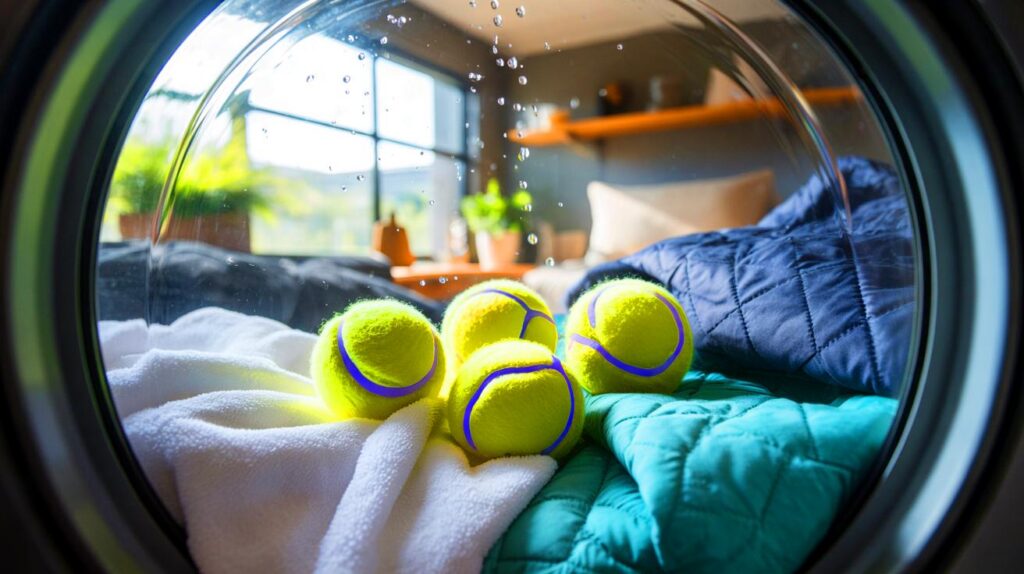
Across France, a budget laundry tweak is trending, promising softer towels, springy duvets and fewer creases, using kit many households own.
A humble courtside staple is being tossed into washing machines to boost the scrub, lift odours and knock out creases. The idea is simple: add a few tennis balls to the drum and let physics do the work. It is cheap, quick to try and, for many fabrics, surprisingly effective.
Why tennis balls in the wash change the result
As the drum turns, the balls bounce through the load. Each rebound separates clumps, opens the weave and helps water and detergent move through the fibres. That extra mechanical action mimics a firmer hand‑wash and can leave fabrics cleaner and looser at the end of the spin.
Extra agitation increases water circulation and fibre aeration, which can reduce creasing and improve soil removal.
This added movement can also help the spin cycle push out more water. With less moisture left behind, drying is quicker and garments feel less flat. Many people notice the effect most on bulky pieces that tend to mat together.
How to do it safely at home
Use 3 to 4 clean, older tennis balls per 3 kg of laundry. Avoid brand‑new, neon‑dyed balls on light loads.
Drop the balls straight into the drum. Do not overfill the machine, or they cannot move freely. Check that the balls are intact and not crumbling; perished rubber sheds bits and can mark fabrics. Once the cycle ends, remove the balls immediately so any retained moisture does not sit against textiles.
Quick setup guide
- Weigh the load roughly by feel: a standard 3 kg mixed wash should feel half the drum when dry.
- Add 3–4 clean, older tennis balls. If in doubt, place each inside a thin cotton sock and knot it.
- Choose your usual programme and temperature for the fabric type.
- Use normal detergent dose; do not double up.
- Start the cycle. Expect a firmer knocking sound during the wash and spin.
What to wash with tennis balls — and what to skip
The technique suits robust, voluminous items that trap water or clump in the drum. Delicate textiles can snag or crease under the extra pummelling, so keep them separate.
| Item | Recommended? | Notes |
|---|---|---|
| Duvets and quilted jackets | Yes | Helps keep filling distributed and restores loft during wash and tumble‑dry. |
| Pillows and mattress toppers | Yes | Prevents clumps; use a gentle, longer rinse to clear detergent. |
| Thick jumpers and fleece | Yes, with care | Turn inside out to reduce pilling; use a wool‑safe programme. |
| Towels and jeans | Mixed | Can soften and reduce creasing; noise level is higher on heavy loads. |
| Silk, cashmere, tulle, lace | No | Risk of distortion, snagging and creasing; hand‑wash or ultra‑delicate cycle instead. |
| Bed sheets | Limited benefit | Large flats can twist; consider a lower spin and a dash of white vinegar for softness. |
Avoid silk, cashmere and fine tulle. Save the ball method for sturdier fabrics and bulky fills.
Results you can expect
On puffy items, the difference is often visible. Quilted coats keep their bounce instead of drying into lumpy patches. Duvets come out more evenly drained and dry faster. Thick knits recover some spring and drape better after drying. Everyday loads tend to show fewer set‑in creases, which cuts ironing time.
There is a small energy angle as well. Improved drainage after the spin can shorten tumble‑dry times, and better agitation may let you choose a cooler programme for some mixed loads. That saving varies by machine and fabric type, so treat it as a bonus rather than a promise.
Smell, softness and simple add‑ons
For people who avoid fabric conditioner, a few low‑risk tweaks pair neatly with the ball method. Keep doses modest and test on a small load first.
- White vinegar: add half a glass to the softener drawer to soften fibres and help limit limescale.
- Bicarbonate of soda: sprinkle a tablespoon into the drum to tackle odours in sportswear.
- Essential oils: 2–3 drops on each ball, then let them dry before use for a light scent. Avoid direct contact with silk or wool.
- Machine care: wipe the door seal, clean the filter monthly and run a maintenance wash every few weeks.
Keep additives minimal. Let the balls do the heavy lifting, and use fragrances sparingly to avoid residue.
Noise, dye transfer and other pitfalls to watch
Bouncing balls make a thud during spin. If you use the machine late at night, set a lower spin speed or place the machine on a vibration mat. New balls can release dye onto light cottons, so older, well‑rinsed balls are safer. If you only have bright new ones, put each inside a white sock to create a colour barrier.
Check the drum and door glass for scuffs after the first run. Modern machines cope well with the extra movement, but avoid using cracked or de‑skinned balls that can crumble. If you share a home with pets, keep the laundry balls separate from play toys to prevent cross‑contamination.
What about the tumble dryer?
The bounce effect carries over to drying. Add the same balls to a low‑to‑medium heat cycle to keep fillings loose and speed up moisture release. Wool dryer balls are a quieter alternative and can be scented in the same way. Always follow the care label for down and feather items to protect the fill.
A step further: load sizing, cost and fabric care
Unsure about load size? A 3 kg dry load usually fills the drum to about half. If your machine shows weight on the display, aim for that figure when testing the method. Tennis balls last many washes; rinse and air‑dry them between uses to limit odour build‑up.
The outlay is low if you already own a few balls. If buying, look for low‑lint felt and neutral colours. For down duvets and technical outdoor gear, use a detergent designed for feathers or membranes, and run an extra rinse. That protects the loft and avoids film build‑up that can trap odours.
If the result disappoints, try this
- Reduce the load size so the balls can move freely.
- Lower the spin speed on delicate synthetics to cut friction and pilling.
- Pre‑treat visible stains; the ball method improves agitation but does not replace stain work.
- Switch to wool dryer balls for less noise and similar separation during drying.
The bigger picture: fibres, micro‑shedding and garment life
Extra agitation can increase microfibre shedding from synthetics. Use a capture bag or a filter in the drain to trap fibres if you wash lots of polyester fleece. Balance the method with careful fabric choices: better‑made knits, cooler programmes and slower spins all help garments last longer. For delicate wardrobes, reserve the ball trick for duvets and pillows, and keep everyday loads gentle.



I tried this today with a quilted jacket and a 3 kg‑ish load—definately softer and dried quicker. Used 3 older balls in socks, normal detergant, no softener. The thud was a bit loud but fine. Nice low‑cost trick!