
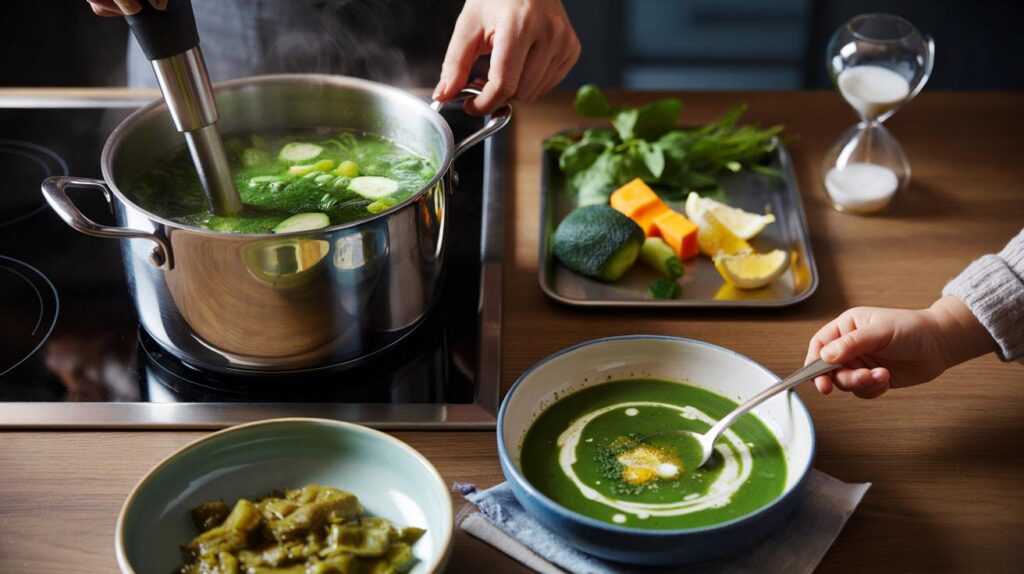
Cold nights return and a quiet tweak is spreading through home kitchens. It changes soup bowls without changing your shopping list.
Across Britain, busy cooks are flipping one small rule and getting louder colours, brighter flavours and better nutrition in the same pot. No gadgets. No cheffy faff. Just timing.
A kitchen myth that wastes flavour
For years, the routine felt fixed. Pile everything into the pan, cover with water, simmer until soft, then blitz. It works, but it blunts taste. Long boils wash out colour and push delicate nutrients into the water. The result sits politely in the bowl. It rarely sings.
What long simmering really does
Water-soluble vitamins, notably vitamin C and several B vitamins, fade fast in hot water. The longer the pot burbles, the more they drift away. Texture loses lift as well. Greens turn dull. Orange squash slips towards beige. You still get warmth and fullness, yet you trade away brightness and value.
Stop cooking every vegetable for the same duration. The clock is the missing ingredient.
The 10-minute trick changing weekday soup
The shift is simple. Cook your aromatic base as usual. Then, in the last 10 minutes, add a good share of fresh vegetables and blitz while they remain barely tender. You keep heat, you keep speed, and you keep more of what you paid for.
How to do it in three steps
- Build a base: sweat onion, garlic and a root veg (carrot or celery) in a little oil, then add stock and simmer until soft.
- Stagger the veg: add tough veg early, but hold back about half of the quick-cooking veg for the final 5–10 minutes.
- Blend while vibrant: turn off the heat and blitz immediately. Finish with herbs, a squeeze of lemon, or a spoon of yoghurt.
| Vegetable | Final-add time (minutes) | Texture after blending | Noted benefit |
|---|---|---|---|
| Spinach | 2–3 | Silky | Colour stays emerald |
| Frozen peas | 3–4 | Velvety | Sweetness pops |
| Broccoli florets | 5–6 | Light and airy | Greener taste |
| Courgette | 6–7 | Creamy | Fresher aroma |
| Cauliflower | 7–8 | Thick and smooth | Less sulphurous note |
| Butternut or pumpkin | 8–10 | Rich and plush | Deeper orange |
| Leek (sliced) | 6–8 | Silken | Sweeter finish |
Add a portion of veg at the end, then blitz while hot. You bank colour, flavour and vitamins in one move.
Does it actually keep more nutrients?
Short answer: yes, to a useful degree. Shorter exposure and less water contact reduce nutrient losses. Dietitians often point to better retention of vitamin C and folate when you cut cooking time and avoid a rolling boil. Home tests show a clear difference in taste and look. In practical terms, that can mean keeping roughly 30–40% more vitamin C than a 25-minute all-in simmer. It is not a laboratory number, but it tracks with how water-soluble vitamins behave.
Flavour, colour and kids’ plates
Families notice fast. Blended soups made with late-add greens keep a lively hue and a fresh snap under the creaminess. Children see green rather than grey. That nudge helps bowls come back empty. Adults taste more vegetable and need less salt to feel satisfied.
Real-world gains you can measure
This tweak helps more than nutrition. It can trim time, energy use and food waste as well. You use the same kit and the same shopping, yet the numbers shift in your favour.
- Time: cut simmering by 8–12 minutes on a school night without losing warmth.
- Energy: a shorter boil can reduce hob use by roughly 15–20%, depending on pan and burner.
- Salt: brighter flavour lets many cooks drop added salt by 20–30% while keeping taste.
- Yield: 1 litre of soup serves four bowls; late-add veg improves body without extra cream.
- Cost: frozen peas, spinach and broccoli all work. You get the benefits for pennies per portion.
Common mistakes to dodge
- Waiting too long to blend: the colour fades as heat lingers. Blitz straight off the heat.
- Overfilling the blender: hot liquid expands. Fill halfway, vent the lid, and pulse before a full blend.
- Adding dairy early: milk may split. Blend first, then stir in yoghurt, cream or grated cheese.
- Neglecting seasoning at the end: taste after blending. A squeeze of lemon or splash of vinegar lifts the whole bowl.
- Using only water for a base: a quick stock cube or miso paste adds backbone, so veg brightness shines rather than shouts.
Seasonal variants you can try this week
Autumn loves a pumpkin base, then a late swirl of spinach. Winter leans on leek and parsnip, perked up with peas at the end. Spring brings pea and mint, with half the peas saved for the final minutes. Summer suits courgette and basil, with a late hand of courgette for a fresher finish.
Four ideas with timings and finishes
- Pumpkin, ginger and spinach: simmer pumpkin with ginger. Add spinach for 2 minutes. Blend, finish with yoghurt.
- Leek, potato and peas: cook leek and potato until soft. Add peas for 3 minutes. Blend, top with mint.
- Broccoli, almond and lemon: cook stalks and a few florets. Add most florets for 5 minutes. Blend, add lemon zest.
- Courgette, basil and Parmesan: simmer courgette and onion. Hold back half the courgette for 6 minutes. Blend, grate cheese.
For batch cooks and lunch flasks
Cool quickly and refrigerate within two hours. Reheat to steaming, not boiling, to protect texture and aroma. Freeze in flat bags for speed. Label with the date. Most blends keep well for three months frozen and three days chilled.
If you meal prep, keep a bag of final-add veg ready in the fridge. Drop them into the pot near the end and blend. You get the same colour lift on day three that you got on day one.
Pressure pots, slow cookers and blenders
Pressure cookers are handy for bases. Cook the base under pressure, release steam, add the quick veg, and blend after a short simmer with the lid off. Slow cookers suit roots and aromatics. Finish on the hob with late-add greens to bring back punch. High-speed blenders create a creamier texture, but a stick blender does a tidy job with fewer dishes.
Allergy swaps, protein boosts and waste wins
Skip dairy with oat drink or coconut milk. Swap nuts for toasted seeds if needed. Add a tin of white beans to the base for protein and a thicker pour. Keep broccoli stalks, cauliflower cores and parsley stems for the pot. They soften into silk once blended and cut waste to near zero.



Tried the late-add spinach + peas tonight and wow—the color actually stayed emerald and the kids ate seconds 🙂 Tasted fresher, needed less salt too. New weeknight keeper!
Interesting, but where does the “keep 30–40% more vitamin C” number come from? Any links to studies? I worry about confirmation bias in home testz.