
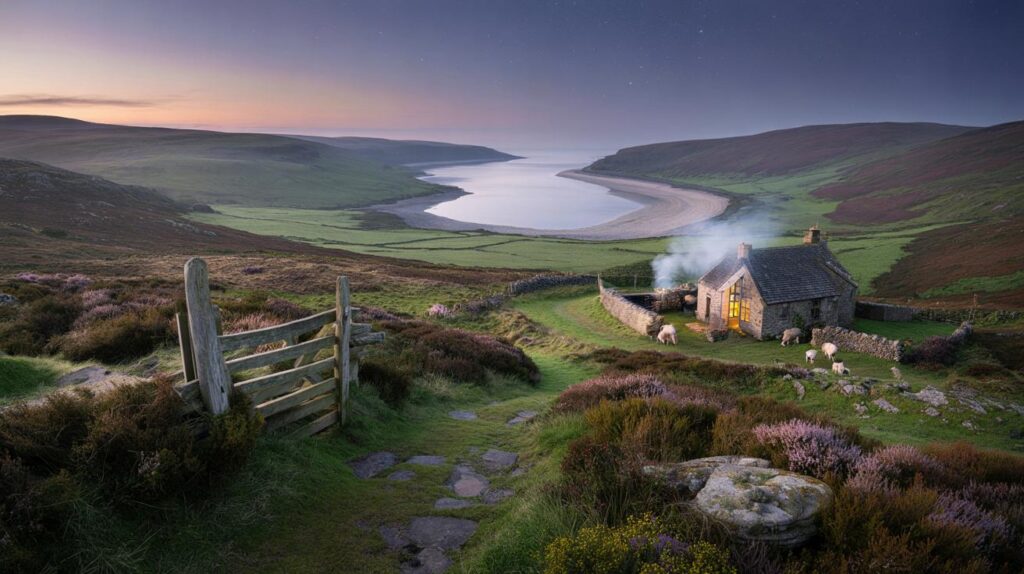
Busy weeks have a way of swallowing weekends whole. You blink, it’s Sunday night, and the only green you saw was your phone’s battery indicator. There’s a fix for that, tucked into the quiet folds of the UK: short hops to wide-open places where the soundtrack is wind through grass and tide on shingle.
I left the office with the sun still smudged on the glass towers and a rucksack that creaked like an old door. The Friday train rolled east, then everything softened — hedgerows, light, shoulders. A farmer closed a gate with a gentle clack as we rattled by. The city’s noise still buzzed in my ears. By dusk I was stepping onto a small platform where the smell of rain and woodsmoke felt like a reunion. In the cottage, a kettle clicked and a blackbird tested the air. Outside, the lane unspooled into a quiet I hadn’t earned but desperately needed. The silence had a sound.
Quiet corners that feel a world away
For a weekend that truly lowers your pulse, go where space outnumbers selfies. Northumberland’s Coquet Valley opens like a slow breath, its hills rolling in understated greens and purples. The Galloway Forest Park in south-west Scotland wears the night like velvet — it’s a certified Dark Sky Park, so the stars turn brazen once the sun slips.
On the western edge of the Lakes, Ennerdale keeps its distance — no through-road, just a long glacial valley where larch and lichen do most of the talking. Across the water, the Isle of Arran is Scotland in miniature: a slice of granite peaks, seal-bobbled bays, and sleepy villages that shut the door softly. The UK counts 15 national parks and around 140,000 miles of rights of way; the trick is choosing the quieter seams between the famous threads.
Peace isn’t only about remoteness; it’s about rhythm. Think tidal marsh at RSPB Snettisham when the waders lift like smoke, or the Preseli Hills where the wind stitches old stories into the heather. **Pick space, not fame.** You’ll find it in places with soft infrastructure — fewer roads, fewer coaches, more sky — and accommodation that blends in rather than shouts.
How to plan calm that actually lasts past Monday
Start small on Friday night. Land, walk 20 minutes on a footpath, and let your shoulders recalibrate before dinner. Book a base with doorstep trails — a bothy-style cabin in the Wye Valley, a B&B above Porlock Weir, a riverside pod on the Dee — so you can wander without touching your car again.
Keep your Saturday human. Choose one long-ish loop or two short ambles with a book-break in the middle. Go early to honeypots, or swing by when the day-trippers peel off. Let’s be honest: nobody actually does that every day. A gentle kayak at first light on the Norfolk Broads, or a sunset trudge to a trig point in the Shropshire Hills, beats a frantic checklist by miles.
When in doubt, borrow three rules from the quiet.
“If you can hear your breath and the place still feels bigger than you, you’re doing it right.”
- Travel light: boots, layers, flask, headtorch, OS app saved offline.
- Eat simple: a village bakery, a pub that opens for walkers even in drizzle.
- Pause often: edges of woods, small piers, a stile with a view.
Where peace lingers after you leave
Some places gift you a soundtrack to take home. The Stiperstones’ quartz spine crunching underfoot. The soft thud of hooves on Knole Park’s bracken at dawn. On Arran, the ferry wake carves a white line and you suddenly realise you’ve been looking further, not just at screens. We’ve all had that moment when the smell of wet fern breaks a week wide open.
There’s a kind of hospitality in landscapes that don’t try to entertain you. Exmoor’s moorland glows umber as the light drops and the first stars prick the sky without fuss. A Northumberland beach at low tide is a room you can cross in any direction, and the only furniture is wind. **You don’t need a grand plan, just a good horizon.** That’s the quiet you bring back: the knowing that space is a choice you get to make, two days at a time.
| Point clé | Détail | Intérêt pour le lecteur |
|---|---|---|
| Choose space over fame | Opt for valleys, dark-sky forests, and lesser-known coasts | Fewer crowds, deeper calm, better photos without elbows |
| Design a gentle rhythm | One main walk, early or late visits, doorstep trails | More restorative, less faff, time to actually feel present |
| Pack for freedom | Light layers, offline maps, snacks, headtorch | Safer, more spontaneous routes, no stress if signal drops |
FAQ :
- What are the best quick escapes from London that still feel wild?The Chilterns’ beechwoods near Turville at first light, the heaths of the Surrey Hills around Winterfold, and Kent’s Romney Marsh when the sky goes silver. All reachable in under two hours by train and a short taxi hop.
- Where can I find proper dark skies without a huge drive?Northumberland International Dark Sky Park and Galloway Forest Park are the standouts. For a shorter hop in the south, try Exmoor or parts of the South Downs around Harting Down on a clear night.
- Is wild camping legal in the UK?In Scotland, it’s broadly allowed if you follow the Scottish Outdoor Access Code. In England and Wales, it’s only legal with landowner permission, with limited tolerance in parts of Dartmoor after recent changes. Always leave no trace.
- How do I avoid crowds in national parks?Target the edges, not the icons. Western Lakes over Windermere, the Glyderau’s quieter flanks instead of Snowdon’s summit, midweek or shoulder seasons, and go early or late for the best hush.
- Any underrated coastal spots for a peaceful weekend?Northumberland’s Druridge Bay, Pembrokeshire’s Marloes peninsula outside puffin rush hours, and the Holderness coast’s big-sky beaches. Simple, windswept, generous with space.



Loved the tip about Ennerdale—no through-road? Bliss 🙂 Any recommendations for a quiet cabin nearby that won’t break the bank in late autumn?
Sounds dreamy, but aren’t Coquet Valley and Arran getting busy now? ‘Pick space, not fame’ is nice, yet some of these places feel Instagram-famous already. How do you actually avoid the crowds on a sunny bank holidday?