
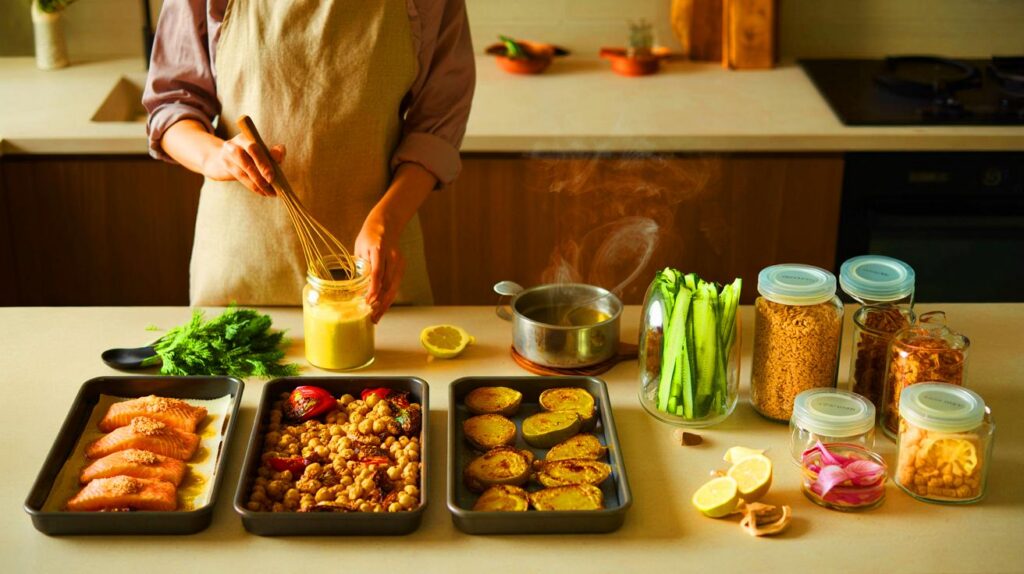
You work, you plan, you care for everyone. Dinner still turns up every night demanding attention like a needy houseplant. “Batch cooking” sounds useful, yet it often looks like plastic boxes and boredom. The feminine take shifts the mood. It’s about flavour, softness, rhythm – and keeping your week in flow without losing style or joy.
Sunday, 4:17 p.m. A kettle hums, a playlist leans mellow, and a row of glass jars waits like clean notebooks. A friend stacks roasted carrots by shade, from ember to gold, and smiles at the citrus steam lifting from a small pan. Her phone lights up with texts, but she’s stirring tahini with lemon and a pinch of smoked salt. This isn’t martyrdom, it’s set design for the week to come. Pans cool on racks, labels scribbled, lids click softly. The kitchen feels like a studio about to open. The timer isn’t for the oven.
The feminine shift: ease, mood, and meals that look good
Think of batch cooking not as bulk, but as a capsule wardrobe for your meals. A few versatile pieces, mixed with intuition and zest. A leafy green you can dress three ways. A grain that flips from warm bowl to crisp salad. A sauce with attitude. Food that looks good invites you to eat well, and that’s the point.
Maya, a product designer in Hackney, does a 60-minute “reset cook” every Sunday. One tin of cumin-roasted chickpeas, a tray of lemony courgettes and red onions, a pot of barley, and a jar of spicy yoghurt. On Monday she adds a fried egg and herbs, on Wednesday she goes cold with cucumbers and mint, on Friday she tucks it all into a wrap. Same base, new mood. She says the quiet joy is not staring into the fridge like it’s a riddle.
Why it works is simple: decision fatigue is real. By prepping components, you reduce micro-choices at 7 p.m., when your brain is done negotiating. Shortcuts shouldn’t feel like compromise. They should feel like you were kind to your future self. The feminine tilt adds tone, colour, texture, and small rituals that make the cooking feel human, not industrial.
Practical playbook: simple, zen, styled
Use the three-tray method. One protein, one veg, one carb, same oven, different personalities. Set the oven to 200°C. Toss chicken thighs with miso and honey, spread broccoli with olive oil and garlic, lay out sweet potatoes with paprika. Slide all three in, staggered by five minutes. While they roast, shake a lemon-tahini dressing in a jar and rinse herbs.
Most mistakes come from trying to season every component like a showstopper. Keep two things quiet and let one sing. Crowded trays turn veg into a steam room, so give everything space. Cold boxes dull flavour, so add a fresh element at serving – herbs, citrus, pickles. We’ve all been there, stuffing a sad fridge-leftover into a wrap and praying it tastes okay. Let’s be honest: no one really does that every day.
Build a small flavour bench that saves you on tired nights. Two dressings, one pickled thing, one crunchy topping. An herby oil that glints on everything.
“My batch cook stopped feeling like homework when I started finishing dishes with a fresh flourish,” says Noor, a home cook who swears by chilli-lime breadcrumbs.
Try this mini-menu for a calm, stylish week:
- Miso-honey salmon (190°C, 12–14 mins) + cucumber ribbons + sesame.
- Smoky chickpeas + charred peppers + yoghurt with lemon zest.
- Roasted cauliflower with turmeric + raisin-coriander rice.
- Barley salad with preserved lemon + dill + toasted almonds.
- 10-minute dressings: lemon-tahini; harissa-yoghurt; herb oil with parsley, mint, and garlic.
Style that soothes: kit, colour, and tiny rituals
Here’s the quiet magic: your kit shapes your habit. Choose three container sizes that nest and stack cleanly, preferably glass so colours glow in the fridge. A white pen for labels, a set of shallow trays, and one good knife. Keep your palette seasonal – spring greens, summer reds, autumn golds – and your fridge looks like a mood board.
Small rituals keep it zen. A playlist you only use for prep. A timer that chimes soft, not shrill. Plate with one glossy element and one crunchy note, and dinner feels thought-through even when you’re on autopilot. Some nights, beauty is the only seasoning you have time for. Add a squeeze of citrus or a swipe of pesto and the whole thing wakes up. That’s when style meets substance.
This approach is less a system than a conversation with your week. The food adapts to your energy, not the other way around. You can roast aubergines on Sunday and still decide on Thursday whether they want yoghurt, tahini, or a kiss of pomegranate molasses. It leaves room for appetite, for weather, for plans that change. It leaves room for you.
| Point clé | Détail | Intérêt pour le lecteur |
|---|---|---|
| Capsule components | 3 trays + 1 dressing + 1 fresh herb | Fewer decisions, faster dinners, better flavour |
| Finish, don’t fuss | Keep bases simple; add bright toppings at the table | Meals feel new without extra cooking |
| Styled storage | Glass, clear labels, seasonal colour palette | Fridge looks inviting, waste goes down |
FAQ :
- How long can I keep cooked components?Most cooked grains, veg, and proteins last 3–4 days in the fridge. Dressings often last a week. Freeze portions you won’t touch within three days.
- What if I don’t eat meat?Use beans, lentils, tofu, or halloumi as your protein tray. Roast chickpeas until crisp, bake harissa tofu, or grill halloumi last minute.
- How do I stop soggy veg?Space on the tray, high heat, and dry surfaces. Pat veg dry, use a light slick of oil, and roast at 200°C. Finish with a crunchy element.
- Do I need special containers?No, but glass with tight lids helps with visibility and flavour. Jars for sauces, shallow boxes for veg, and a couple of freezer-safe tubs for overflow.
- What’s a quick flavour boost on a tired night?A squeeze of lemon, a spoon of pesto, chilli oil, or pickled onions. Two minutes, big lift. That tiny flourish resets the whole bowl.



Super idée de penser le batch cooking comme une garde-robe capsule. La méthode des trois plaques (protéine, légume, féculent) à 200°C, puis un finish frais, cest clair et actionnable. J’aime le rappel “finir, ne pas sur-assaisonner”. Vous avez une astuce pour que le miso-miel n’attache pas? Mon four caramélise un peu trop.