
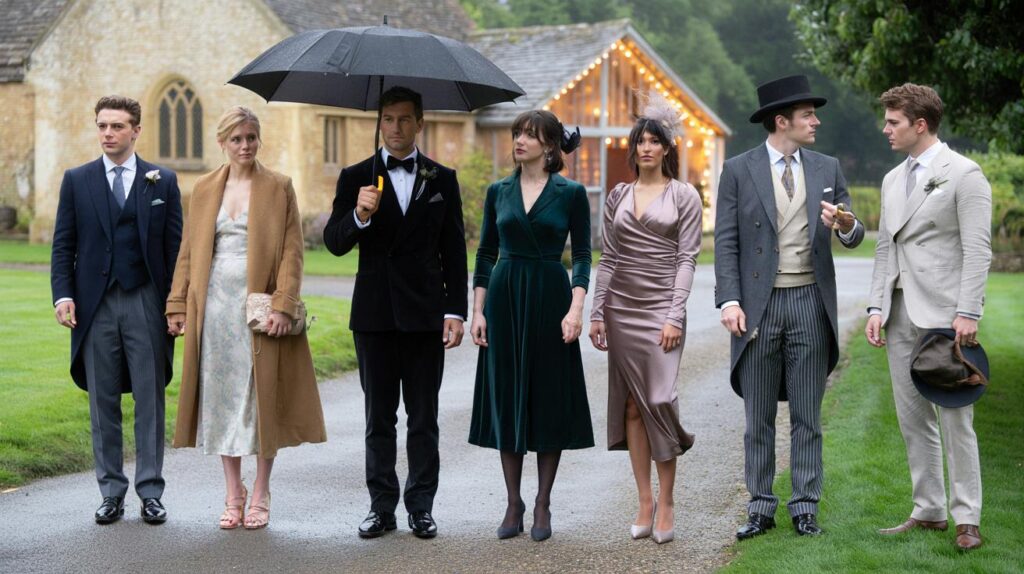
You’re invited. The venue is a chapel in the Cotswolds, the reception is a barn with fairy lights, and the forecast wobbles between “glorious” and “bring a brolly”. The dress code says something British and mysterious. Welcome to the classic UK wedding wardrobe dilemma.
I watched a June sky over London change its mind three times before breakfast and thought about shoes. The invitation read “lounge suit”, the ceremony was in a village church, and the reception was somewhere with cows in the distance and a saxophonist on standby. I could almost hear the WhatsApp group groaning: tights or no tights, tie or knitted tie, hat or fascinator, and what on earth counts as a summer jacket that won’t steam me alive in a crowded marquee. The forecast said “light showers”. The champagne would still taste the same if I got it wrong, but dress codes are memory-making things as much as they are rules. The lawn had a secret.
Dress codes, translated into something you can wear
Here’s the plain-English version of British wedding speak. When an invitation says lounge suit, it means a suit and tie for men or a dress/jumpsuit and smart layer for women, not a blazer with jeans. Black tie is tuxedo after dark, with a bow tie, or a full-length or sleek midi for women. For very formal daytime, you might see morning dress: tailcoat and striped trousers, with hats and hemlines that nod to tradition. Smart casual is the loosest—still polished, still wedding-level, but you can play with separates, statement sleeves, or a patterned shirt that doesn’t shout.
I once watched an usher rescue a guest with a pocket square outside a Somerset registry office. She’d come in a satin co-ord that looked perfect at brunch and too bare in a pew. One silk square and a cropped blazer later, she looked like she belonged in the photographs. I’ve seen a Scottish cousin arrive in a kilt and Prince Charlie jacket, the bride’s grandmother beam with pride, and a Kent marquee erupt in approval when a navy tuxedo met the brief like a glove. Met Office data says the UK sees rain on roughly one in three days, which is why umbrellas at black tie weddings are basically a second accessory.
The logic is simple once you read the clues. Time of day sets the tone: daylight leans lighter and more traditional, evenings lean glossier and sleeker. Venue whispers the dress material—country house calls for structure and polish, beach or barn invites texture and earthier tones. The couple’s style is your compass too; their photography, music and font choices aren’t random. And yes, the colour rule still holds: skip white, ivory and anything so pale it looks bridal in flash photography. If you’re in a church, think shoulders and hemlines you won’t fuss with at the altar. Hats and fascinators? Joyful in the day, unnecessary at night, and always a conversation starter outside.
Season-by-season: the outfit playbook you’ll actually use
Build a three-part system that survives British weather: base, shield, sparkle. Your base is breathable and season-led—spring likes silk-cotton blends and light wool, summer loves linen, crepe and seersucker, autumn leans satin-backed crepe, winter goes velvet and heavier twill. Your shield is what meets the wind: a trench for spring showers, a linen-blend blazer for July, a wrap or shawl for sea breezes, a tailored coat for December. Sparkle is the personality piece—tie bar, statement earring, pocket flower, a hat that turns a photograph into a memory. Wear the base all day, deploy the shield between venues, and let the sparkle move with you.
The mistakes are small but mighty. Brand-new shoes turn into tiny prisons by the first toast; break them in and stash blister plasters. Stiletto heels vanish into lawns; go block heel or add discreet heel protectors. Linen crumples in cars; hang it, steam in the bathroom, and sit like you’re posing for portraits on the way there. Bright white jackets can photobomb the bride; choose cream, stone or dove grey. We’ve all had that moment when a gust of wind lifts a hem and your confidence with it. Pack a couple of safety pins. They save days.
What about colour, prints, and that British knack for looking dressy without looking try-hard? Think tonal palettes with one lively accent, and prints that read elegant from ten paces. Let’s be honest: no one actually does that every day. It’s why weddings feel like play.
“Dress codes are guardrails, not handcuffs. Pick fabrics that suit the season, then add one thing that feels unmistakably you.” — a London stylist who sees more confetti than most
- Spring: silk-cotton midi, trench, soft pastels, leather loafers or block heels.
- Summer: linen suit or crepe dress, straw clutch, breathable shirt, low slingbacks.
- Autumn: satin-backed crepe, rich tones (forest, aubergine), suede shoes, light coat.
- Winter: velvet jacket, long-sleeve midi, thermal tights, wool overcoat or cape.
Make it yours without missing the brief
A British wedding isn’t a red carpet; it’s a warm, slightly chaotic, deeply personal day where your clothes should help you dance, eat, and tell stories. Choose one anchor—fabric or silhouette—then add a nod to the couple: a pocket square in their colour, a floral hairpin that echoes the bouquet, a tie that smiles in photos. Clothes that work on a lawn and a dance floor beat any trend list. Pack a compact brolly, tuck tissues into your cuff or clutch, and keep your phone light-free for the ceremony. There’s real ease in reading the room and then dressing like yourself inside it. That’s the sweet spot guests remember and photographers catch when no one’s looking.
| Point clé | Détail | Intérêt pour le lecteur |
|---|---|---|
| Decode the dress code | Translate “lounge suit”, “black tie”, and “morning dress” into actual outfits | Instant clarity on what to wear and what to skip |
| Seasonal system | Base, shield, sparkle for spring, summer, autumn, winter | Weather-proof elegance without overpacking |
| Venue cues | Church vs. barn vs. city hotel = fabric and footwear choices | Look appropriate in photos and feel comfortable all day |
FAQ :
- Can I wear black to a UK wedding?Yes. Black is fine now, especially for evening, as long as the fabric reads celebratory—think satin, crepe, velvet—and you lift it with jewellery, texture, or a lighter accessory.
- Do I need a hat or fascinator?Great for daytime and church weddings, optional for evening. If you wear one, keep the brim short enough that you can hug people without headbutting them.
- Are trainers ever acceptable?Only if the invitation says casual or the couple’s vibe is very modern city-cool. For everyone else, choose dress shoes or sleek loafers you can dance in.
- What colours should I avoid?Skip white, ivory and bridal-adjacent blush that flashes pale in photos. Neon can jar in a church; jewel tones or pastels photograph better.
- What if the weather turns on the day?Layer smartly: pack a compact umbrella, add a shawl or blazer, and switch to block heels or loafers. A trench or wool coat can still look dressy over formalwear.



Quick Q: for a “lounge suit” in July, is a tie manditory or can I skip it if I wear a crisp shirt and pocket square? Asking as someone who melts at 23°C.
Loved the base–shield–sparkle framework. Honestly, this is the first guide that made British weather feel manageable. One tiny ask: could you reccomend budget-friendly linen suits that don’t crease like an accordion?