
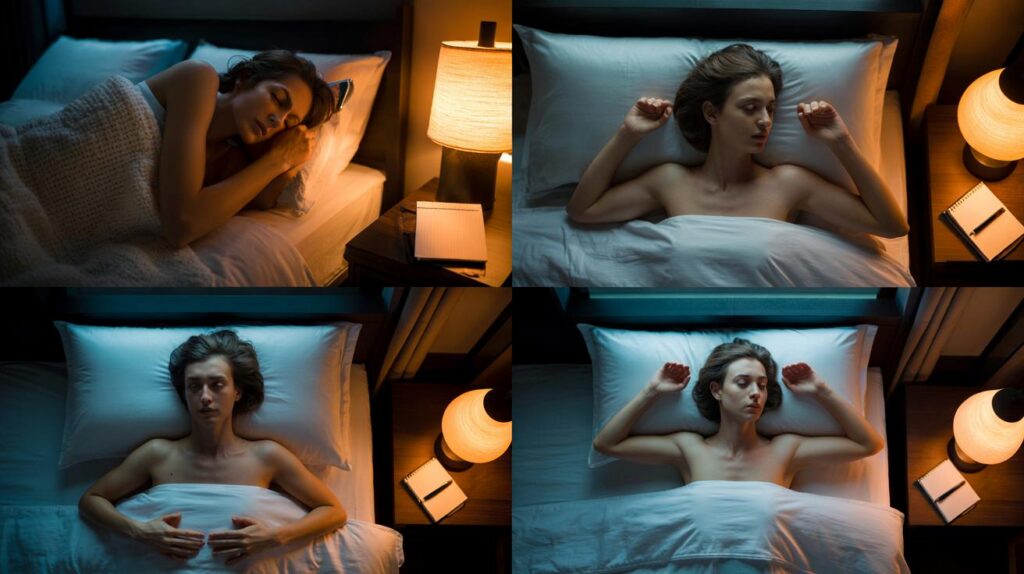
You fall into bed and fold yourself into the same shape you always do. Curled tight. Sprawled wide. Face-down like a plank. It feels like habit, nothing more. Yet a growing body of research — and a thousand sleepy observations — suggests your night-time posture can echo what’s going on upstairs. Not a diagnosis. A signal. The way you tuck your knees or open your chest might reveal how safe, exposed, in control or connected you feel. It’s a quiet language your body speaks when no one’s watching.
I first noticed it during a bleak winter week, the kind where the sky never fully wakes. A friend crashed on my sofa and slept in a tidy little knot, knees to chest, hands tucked under her chin like she was keeping a secret warm. In the next room my partner lay on his back, arms open, like he was sunning himself in July. The contrast nagged at me. I started asking people how they sleep. I started noticing how I sleep when work runs hot, when money feels thin, when love feels steady. The patterns weren’t perfect. But they were there. The bed keeps score.
What your sleeping shape whispers about your mind
Sleep positions can mirror emotional weather. Curled on your side, especially the fetal shape, often arrives when the mind seeks a little armour. Back sleeping looks like openness and confidence, the chest on show, the throat unguarded. Stomach sleeping signals control, even defiance; you pin yourself to the mattress like you’re keeping the world still. The starfish — arms up, legs spread — speaks of space and trust. It’s not fortune-telling. It’s a mood map.
In one well-circulated UK survey, the fetal position topped the chart, with around four in ten respondents choosing it as their go-to. I think of Maya, who moved to a new city and started sleeping tighter, like she was packing herself for travel. Two months later, after new friends and a pay rise, she woke more often on her back, arms out, breathing slower. One week she landed a tough contract, and she flipped onto her stomach again, palms flat as paper. The choreography of a life, traced in the dark.
Why might this happen? Your brain and body trade messages all night. When you curl, you reduce exposure of the torso and soften the front line of the body; your nervous system reads safety cues from that folded shape. Back sleeping widens the breath and opens the heart space, which can nudge the system towards calm confidence. Stomach sleeping presses the belly and throat, a posture that can feel braced yet steady, like clenching around the day’s chaos. It’s not fixed, it’s fluid. Position follows feeling — and sometimes feeling follows position.
Work with your posture, not against it
Run a one-week “sleep map”. Each morning jot down how you woke: side, back, stomach, curled, spread. Note a word for your mood. Over seven days, patterns pop. Then make micro-tweaks. Side sleepers: hug a pillow or a rolled blanket; it gives the nervous system a gentle anchor. Back sleepers: place a thin pillow under your knees to relax the lower back. Stomach sleepers trying to shift: slide a flat cushion under one hip and turn the head less sharply. **Small shifts beat grand overhauls.**
Don’t wrestle yourself into a pose that feels wrong. Start with comfort. If anxiety runs high, try a body pillow; it creates contact and signals “held” without another person there. If you snore on your back, tilt the mattress slightly or try a side-lean wedge. We’ve all had that moment when the night feels longer than the day. Let’s be honest: nobody actually does this every single day. Progress is messy. Keep what soothes, bin what doesn’t.
“Treat posture as a conversation, not a command. Ask your body what it’s trying to say, then whisper back with a pillow, a breath, a tiny shift.”
- Fetal/curled: often linked with self-protection and rumination; add warmth and grounding rituals.
- Back/soldier: signals openness; pair with a pre-sleep gratitude note to deepen that ease.
- Stomach/freefall: can hint at control or bracing; soften with side-lean support and slower exhales.
- Starfish: space and trust; if it strains shoulders, lower the arms and widen at the hips.
The stories we tell — and the ones our bodies tell
None of this needs to be strict or scientific to be useful. Think of sleep position as a clue on the dashboard. If you wake curled three nights running, maybe your mind wants softness by day: fewer meetings, more soup, a walk without your phone. If you’ve spread like a starfish, perhaps you’re ready to say yes to something bigger. **Your bed is a mirror, not a diagnosis.** Share the pattern with a partner, compare notes for a week, laugh at the oddities. *The night is honest in ways we rarely are in daylight.*
| Point clé | Détail | Intérêt pour le lecteur |
|---|---|---|
| Posture as signal | Curled, back, stomach and starfish shapes can echo mood and stress | Gives a simple lens to notice mental patterns |
| Micro-tweaks | Pillows, wedges and one-degree shifts beat drastic changes | Easy, realistic actions that improve comfort |
| Pattern mapping | One-week “sleep map” linking position and morning mood | Turns vague feelings into trackable data |
FAQ :
- Does my sleeping position cause anxiety, or just reflect it?Mostly reflect. There’s a two-way street: posture can echo how you feel, and gentle shifts can nudge the nervous system. Use it as a cue, not a cure.
- Is side sleeping better on the left or right?Left can reduce reflux for some, right can feel easier on certain shoulders. Comfort wins. If one side aches, rotate or add a knee pillow to balance hips.
- Can I train myself to stop stomach sleeping?Yes, but think “gradual”. Try a side-lean wedge, a body pillow in front, and a small cushion behind your back to make turning onto your stomach less likely.
- What if I flop all over the bed at night?You’re normal. Movement is part of healthy sleep cycles. Track your wake position and mood, not every flip. Stabilise the room: cool, dark, quiet, and a consistent wind-down.
- When should I talk to a professional?If pain, snoring, breath pauses, nightmares or insomnia persist, speak to a GP or sleep specialist. Posture insights are helpful, but persistent symptoms need proper care.



Je n’avais jamais pensé que ma “position étoile de mer” pouvait dire quelque chose de mon humeur. Merci pour la clarté !