
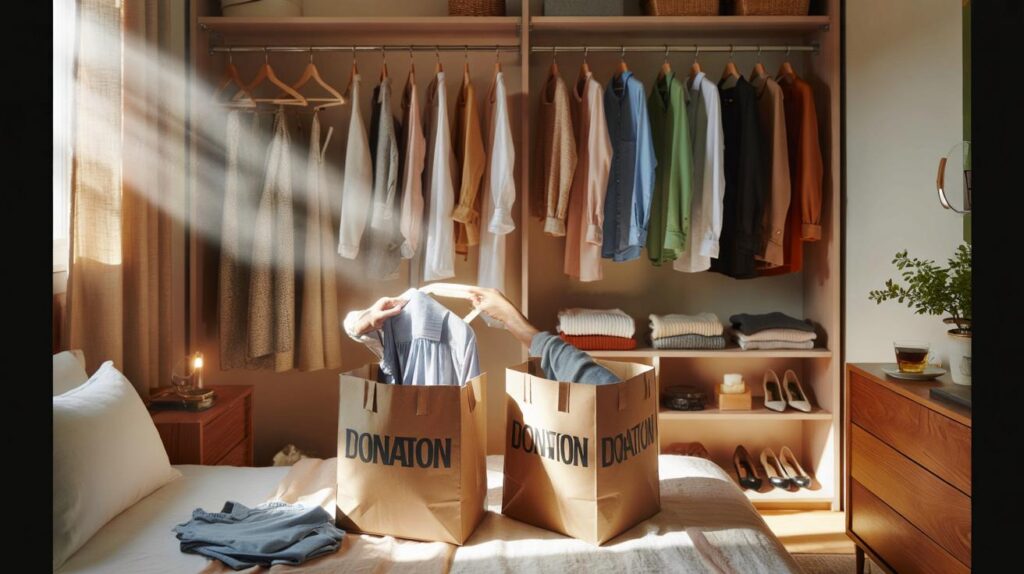
Your wardrobe door sticks a little, and inside lives a jumble of last winter, the summer that never quite arrived, purchases you meant to return, and an old shirt that still smells faintly like a night you can’t forget. Mornings turn into tiny negotiations with yourself. Wear the thing that pinches, or the thing that doesn’t feel like you anymore? We’ve all had that moment when your day starts with a sigh in front of the hangers.
It happened to me on a wet Tuesday. I pulled the rail and a blouse I loved slipped to the floor, crumpled like a tired idea. The pile on the chair had become a second, less honest wardrobe. I kept thinking, if I can’t find myself in here, what chance does today have out there? I made a cup of tea and started pulling pieces, one by one, onto the bed. What shifts when the hangers breathe?
The quiet psychology of a cleared rail
Open a cluttered closet and your brain lights up with small decisions you didn’t ask for. Is this clean? Does that fit? Could I get away with that in the office? The noise is subtle but constant. A tidy rail lowers the volume. Fewer options, clearer signals. The clothes you keep begin to act like a friendly script for your morning, not a test you have to pass.
I watched a friend, Maya, do a one-hour edit on a Sunday with her toddler tugging at her sleeve. She pulled out 17 items she hadn’t worn in a year, folded them for donation, and grouped the rest by colour and sleeve length. On Monday, she got ready in eight minutes. Not magic, just less friction. Researchers have linked visual mess to spiking stress hormones, and you can feel why: every hanger asks a question.
Your wardrobe is a daily decision engine. Reduce the junk inputs, and the outputs improve. Decision fatigue steals energy at the start of the day, when you need it most. A leaner selection nudges you toward clothes that fit your life as it is, not as it was. That alignment creates flow. This is where your next season begins.
How to declutter your wardrobe without losing your soul
Start with a single rail or shelf. Set a 20‑minute timer and play your favourite album. Touch every item and ask one practical question: does this earn its space today? If yes, it stays. If not, it goes into a clear pile. Create three bags: keep, donate, repair. Put the “maybe” things in quarantine for 30 days, out of sight. If you don’t think of them, they’re ready to leave. Keep what fits your life now.
Common traps are sneaky. The “aspirational size” dress that judges you from its hanger. The shoes that look brilliant and feel like a punishment. Gifts you don’t like but keep out of guilt. Let’s be honest: no one actually does that every day. Rotate by season and box off heavy knits in summer, then revisit. If you worry about waste, focus on dignified exits: charity shops, clothes swaps, or a friend who will actually wear the piece with joy.
There’s a simple truth that lands once you’ve filled a donation bag.
“Clutter tells old stories. Editing your wardrobe makes space for the next chapter to walk in.”
Use small rules that do the heavy lifting for you:
- Start with one rail and finish it the same day.
- Adopt a one‑in, one‑out policy for new buys.
- Flip hangers backwards; turn them forward only after you wear the item.
- Repair what you love within the week, or release it.
Choose movement over perfection. The goal isn’t empty. It’s clarity.
What changes when you edit your clothes
Something quiet shifts when the wardrobe stops arguing with you. You get five minutes back, then ten. You dress for the day you’re actually having, with a little more grace. A lean rail reflects you without the static, and that self-recognition sets a tone. Maybe you stand taller in a jacket that finally fits your shoulders. Maybe you walk faster because your shoes don’t rub. Clothes are time. When your things help instead of hinder, the day moves.
| Point clé | Détail | Intérêt pour le lecteur |
|---|---|---|
| Less decision fatigue | Fewer, better options reduce morning micro-choices | More energy left for real work and joy |
| Clearer personal style | Only current, loved pieces remain on the rail | Outfits feel consistent, confident, effortless |
| Better flow at home | Storage works hard; everything has a place | Rooms feel calmer, time runs smoother |
FAQ :
- How often should I declutter a wardrobe?Twice a year works for most people: spring and autumn. Do quick 10‑minute edits monthly to keep it honest.
- What if I regret letting something go?Use a quarantine box for 30 days. If you don’t miss it, release it. If regret hits later, learn the lesson and move on.
- Where can I donate clothes in the UK?Local charity shops, TRAID, Oxfam, clothing banks at supermarkets. Many offer collection or clear guidance on what they accept.
- How many clothes do I really need?Enough to dress for your week without stress. A tight capsule for work and weekend is often plenty; your number is personal.
- What about sentimental items?Keep a small memory box for the truly special. Photograph the rest, then pass them on so the stories keep moving.



Just did the hanger-flip trick and wow—my mornings are quieter already 🙂 “Clothes are time” might be my new mantra.
Honest question: doesn’t donating simply shift the waste downstream? Charity shops discard tons. How do we declutter responsibly without fueling overproduction?