
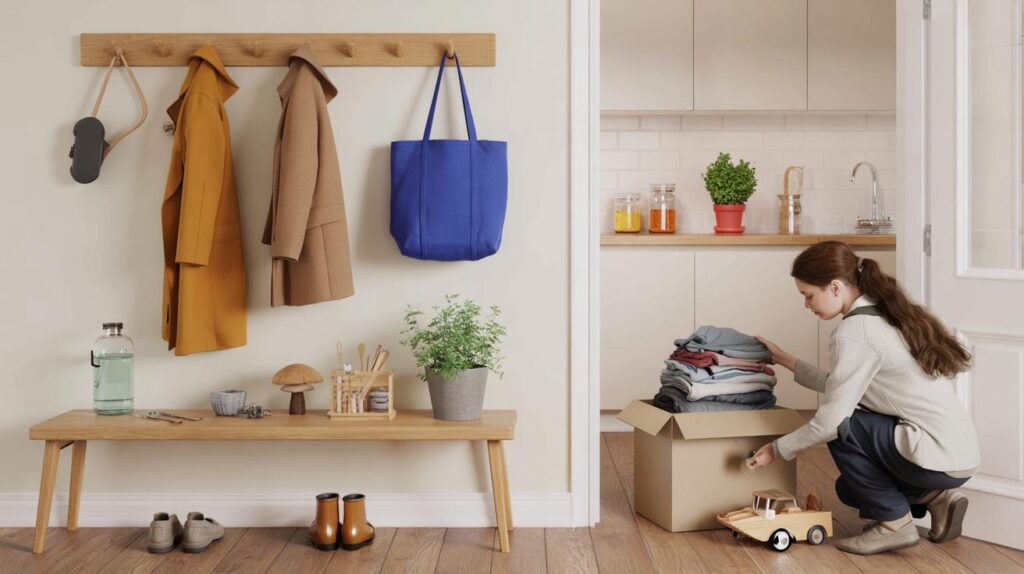
There’s a particular kind of mess that hides in plain sight: the stack on the chair, the extras in the drawer, the “just in case” gadgets we never use. It blurs the edges of our rooms and our routines, stealing minutes and attention. Living minimally isn’t about empty shelves; it’s about reclaiming order and growing habits that quietly cut waste.
On a wet Thursday in Leeds, a family empties their hallway cupboard onto the floor. Coats they’d forgotten, four umbrellas, three half-used shoe polishes, a curling ribbon from someone’s birthday. The room feels smaller for a moment, then, oddly, calmer — as if the noise has been turned down and you can finally hear yourself think. They keep what works, donate what doesn’t, and the door closes without a shove for the first time in years. The change isn’t flashy. The change is breathable. Then something clicks.
Why less clears the way for order
Minimal living is less a design choice and more a daily rhythm. When you cut what’s excess, tasks line up and decisions thin out, like traffic easing after the school run. The kitchen counter becomes a place to cook again, not a landing zone for life’s overflow.
We’ve all had that moment when you spend ten minutes looking for scissors you bought twice. In homes with fewer, chosen objects, tools have obvious places and routines stick. You don’t forget the grocery bag because there isn’t a muddle of twenty to sort through — there’s one sturdy tote on the hook by the door.
There’s a cognitive reason this feels so different. Every object you own pulls a thread of attention, even quietly. Fewer threads mean fewer pulls, less **decision fatigue**, and less friction each time you tidy, cook, get dressed, or head out. Order doesn’t require a weekly miracle; it stems from a smaller, better-fitting set of things.
From calmer rooms to sustainable habits
Minimalism seems personal, but the ripple is practical and public. When you buy less and choose well, you automatically slow the inflow of packaging, duplicates, and novelty clutter. The bin goes out lighter. The recycling makes more sense. You begin to repair a chair leg rather than replace the chair.
Think of a small London flat where two adults share a wardrobe and a hallway shelf. They set one rule: if a new coat comes in, something goes out to a neighbour or charity. Over a year, the habit becomes a reflex. Fewer impulse buys, fewer parcels, more space to breathe — and a quiet pride in seeing things used by someone else rather than dying in storage.
Sustainability thrives on repetition. Minimal living sets up that repetition by cutting options down to the reliable few. You wash and refill a single bottle, not five. You learn where to repair trainers, because you chose a pair that can take a stitch. You default to borrow, swap, and mend because your home isn’t stuffed with the almost-right option gathering dust.
Practical steps that stick
Start with one room and a short timer — say 30 minutes. Work with three bags: keep, pass on, recycle. Stop when the timer ends, put the pass-ons in the car or by the door, and take the recycle bag out the same day. Small, finished loops create proof you’ll trust tomorrow.
Common traps? Buying storage boxes before you’ve let go of anything. Decluttering sentimental items first. Expecting a Pinterest result in an hour. Be kind to yourself and pick low-emotion zones: toiletries, pantry duplicates, cables. Let’s be honest: nobody really does this every day. What works is a weekly “reset” hour and a gentle rule of one in, one out.
Minimalism isn’t a dare to live with nothing; it’s a promise to live with what serves you. The quiet you feel is not emptiness, it’s room for the life you actually have.
“Keep the best, use the rest, and let the rest bless someone else.”
- Start with easy categories, not memories.
- Pick a visible win each week: a drawer, a surface, a shelf.
- Create one drop-zone that clears daily.
- Choose durable over disposable when you buy.
- Track what leaves the house — it motivates future edits.
The knock-on effect that lasts
Once order takes root, behaviour shifts without the pep talks. A tidy boot tray invites muddy shoes to stop at the door, saving the mop and the laundry. A small capsule wardrobe makes air-drying simple and quick, cutting tumble dryer time and the energy bill in one casual gesture.
In families, children learn the loop by watching it. A toy comes in, a toy goes to the community group. Sharing becomes normal because it’s practiced, not preached. The home stops being a storehouse and becomes a flow — items moving in, being used hard, then moving on to a second life.
Minimal living also changes how you think about value. You stop asking “Can I afford it?” and start asking “Will I use it a lot?” The answer pushes you towards the sturdy pan that will outlive five flimsy ones, the refill pack over the new bottle, the repair cafe on Saturday. The planet benefits, your home breathes easier, and your calendar frees up a little each week. That’s momentum, not a makeover.
| Key points | Details | Interest for reader |
|---|---|---|
| Less stuff, more order | Fewer items reduce visual and mental noise, making routines smoother | Quicker mornings, easier tidying, calmer rooms |
| Minimalism fuels green habits | Choosing durable, repairing, borrowing, and donating becomes default | Lower waste, lighter bills, feel-good impact beyond your home |
| Start small, repeat often | Short sessions, clear exits for items, one-in-one-out rule | Real results without burnout; **progress, not perfection** |
FAQ :
- How do I begin without feeling overwhelmed?Set a 30-minute timer and tackle one small zone you see daily, like a bedside table. Finish fully — items removed the same day — to bank a win.
- What about sentimental things?Leave them for last. Photograph items, keep a tiny “story box”, and let the rest go to someone who’ll use them. Meaning stays even when objects move on.
- Isn’t minimalism boring?Not when it’s yours. Edit to your taste: colours you love, tools you use, books you reread. The point is to make space for your kind of life.
- How do I get the family on board?Model it in one shared area and invite small choices, not ultimatums. A toy library visit or a swap with friends can make it fun and visible.
- Do I have to buy new “sustainable” stuff?No. The greenest option is to **use what you own**. When you must buy, go for repairable, second-hand, or refillable — and only what fits your routine.



Love how you reframed minimalism as a daily rhythm, not bare shelves. The Leeds hallway story hit me—“the change is breathable” is exactly it. Decision fatigue is real, and the “one sturdy tote” example made me rethink my 12 crumpled bags.
I get the idea, but isn’t “buy durable, repairable” often expensiv upfront? For families juggling shifts and childcare, decluttering takes time we don’t have. Any low-cost, low-time strategies beyond the 30-minute timer?