
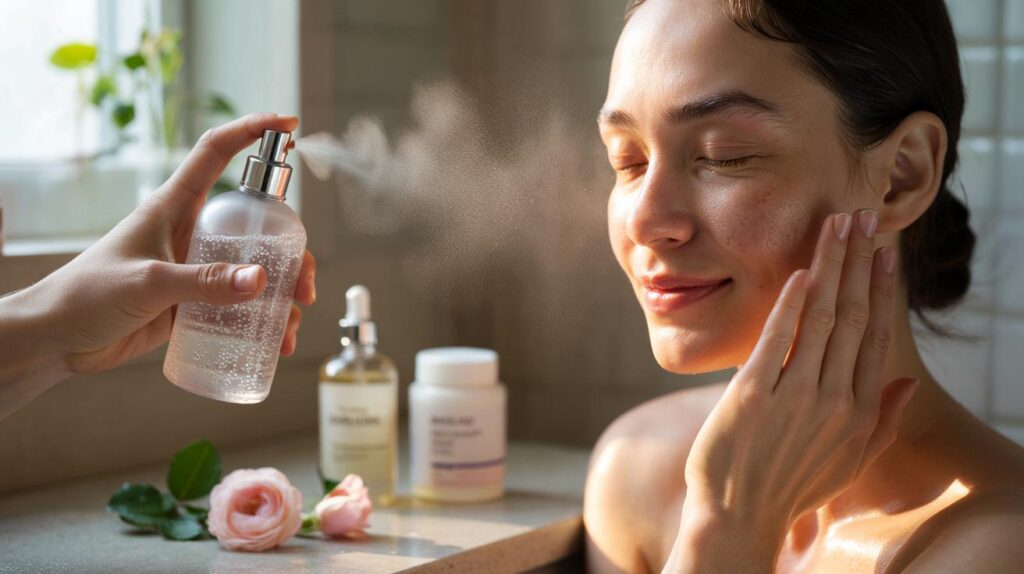
Skin that looks angry for no clear reason. A mirror that reflects every flush. And a small glass bottle that promises to take the heat out of it all. Rose water has slipped back into bathrooms and handbags, not as a nostalgic flourish, but as the quiet fix our faces keep asking for. Why does it work, and how do you use it so the glow lasts longer than a single spritz?
The bottle was cool in my hand, the bathroom steamed from a too-hot shower, and my cheeks were the colour of a late bus. I pressed the nozzle and the mist landed like soft rain, almost theatrical in its calm. The scent was faint, not sweet, more garden-at-dawn. The redness eased as if someone turned down a dimmer switch. It wasn’t magic. It felt like relief.
Why rose water calms your skin
Rose water is a hydrosol: the gentle, water-based distillate left after extracting rose essential oil. That means you get whisper-light actives without the heavy hit that can rile up sensitive faces. It’s slightly acidic, so it sits near the skin’s natural pH, which helps keep your barrier tidy and unbothered. There’s a cooling touch in the way a fine mist evaporates, too, taking some heat with it. **Think of it as a soft pause button for irritation.**
Backstage at a humid studio shoot in Shoreditch, a make-up artist misted rose water between each base layer, like a conductor cueing strings. One model, flushed from the lights, stopped fanning her face after two passes. “It’s the only thing that doesn’t sting,” she said, holding the bottle like a talisman. Another friend with easily roused redness swaps cotton pads for a direct spritz, then presses hands to cheeks for ten slow breaths. The ritual is short. The effect, she swears, is not.
Why does it calm things down? Rose hydrosols contain low levels of phenolic compounds and flavonoids—tiny plant molecules that can help quiet the cascade that leads to redness. The pH support lowers the chance of barrier wobble, which keeps transepidermal water loss in check. There’s also a physical thing happening: a cool mist briefly drops surface temperature and nudges blood vessels to relax. It’s not a cure-all, but it’s a kindly nudge back to baseline.
How to use it for a glowing complexion
Use rose water like a spacer between steps. Cleanse, pat until just damp, then mist from about 20 cm so the droplets land evenly. Press, don’t rub. Follow with a humectant serum while the skin is still slightly wet, then lock it in with a moisturiser. Morning mists wake sunscreen nicely. Evening mists settle retinoids and exfoliants into friendlier territory. Three to four spritzes are enough; it should feel like dew, not drizzle.
A common mistake: letting the mist evaporate on bare skin. That can tug moisture out as it dries. Pair your spritz with something that holds water in—glycerin, hyaluronic acid, squalane, then a moisturiser. If you like cotton pads, saturate them and press, don’t sweep. We’ve all had that moment when a rushed swipe turns into a red patch around the nose. Let’s be honest: nobody really does this every day. Keep your bottle in the fridge for extra calm on flare-up days or post-gym skin.
Choose a short INCI list—“Rosa damascena flower water” near the top, no heady perfume. Patch-test along your jaw for two days if your skin is the negotiating type. **Small habits beat heroic routines.**
“Keep it simple: mist, press, seal. Skin loves rhythm more than surprises,” says a London facialist who uses rose hydrosols on models minutes before they step under the lights.
- Best moment: after cleansing, before serum and moisturiser
- Distance: 20–30 cm for a fine cloud
- Pairing: humectant serum + moisturiser to seal
- Frequency: morning and night, plus mid-day if you’re overheating
- Storage: cool, dark place; fridge for extra calm
The gentle ritual that keeps on giving
Your skin remembers patterns. A light mist, hands pressed like bookends, a breath you didn’t know you were holding—these are not grand gestures, but they add up. Rose water’s gift isn’t a before-and-after shock; it’s the steady return to a face that looks like it slept. *It’s the quiet kind of glow that makes strangers ask if you’ve changed your routine.* You might find yourself misting after a Zoom call, on a warm train, or before a walk at lunch. Share the bottle. Or don’t. The best part is how little drama it needs.
| Key points | Details | Interest for reader |
|---|---|---|
| Rose water soothes without heaviness | Hydrosol format, near-skin pH, gentle plant compounds | Calm redness fast with minimal risk |
| Mist, press, seal for glow | Apply after cleansing, follow with humectant and moisturiser | Turns a spritz into lasting hydration |
| Keep it simple and consistent | Short INCI list, fridge storage, avoid over-spritzing | Practical steps that actually fit real life |
FAQ :
- Can rose water replace my toner?Yes, if your toner’s job is to refresh and balance. If you rely on acids for exfoliation, keep those separate and use rose water for calm and hydration.
- Will it help with acne?It can help reduce visible redness around spots and support the barrier. For breakouts, keep your actives, and use rose water as the soothing bridge between them.
- Is any rose water fine?Look for “Rosa damascena flower water” or similar, minimal fragrance, and no heavy alcohol. Organic hydrosols tend to smell like fresh petals, not potpourri.
- How often can I mist?Twice daily as a step, and as needed through the day. Pair mid-day spritzes with a dab of moisturiser if your skin feels tight so you don’t lose water as it dries.
- Can I make rose water at home?You can, but home brews vary a lot and can spoil. For skin, a properly distilled hydrosol with a batch date is safer and more consistent. **Your face deserves the good stuff.**



Love the ‘mist, press, seal’ rhythm—my dehydrated skin finally makes sense. I tried spritzing from ~25 cm and pressing for ten breaths and the rednesss actually cooled down. Keeping it in the fridge is a genius tip. Also appreciate the short INCI reminder; so many rose waters are perfumey. Definitley bookmarking this.