
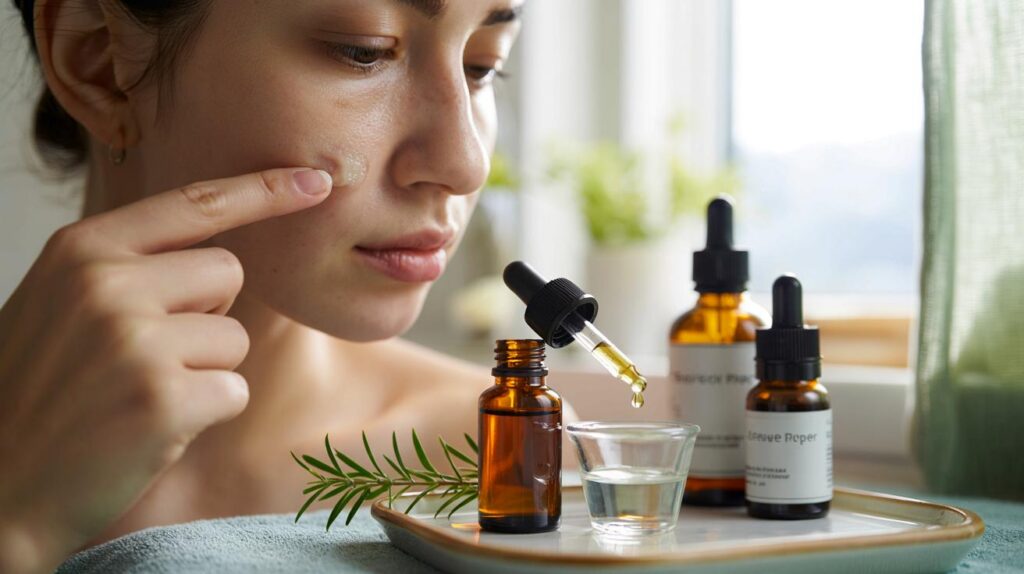
Your skin misbehaves at the worst times. Tiny red peaks appear before a meeting, along your jaw after a late train, on your chin when you finally book a date. You want something that calms the riot without nuking your face. Tea tree oil has lived in bathroom cabinets for decades, whispered about like a herbal secret that actually works. It smells like eucalyptus and gum leaves and the school nurse’s cupboard. And it promises one thing you crave when you spot a spot: control, without carnage.
The first time I watched tea tree oil earn its keep, it was in a shared flat with a squeaky mirror and an overworked kettle. My housemate dabbed a clear gel on a hot-headed whitehead. We made tea, forgot about it, came back an hour later. The angry ring had blurred. By morning the bump had deflated enough to pass in daylight. The scent lingered on the towels, sharp and clean. Something about it felt almost old-fashioned, like your gran’s remedy that modern life overlooked. A small bottle. A surprising effect. What else is happening on that skin shelf?
What tea tree oil actually does to a pimple
Watch a breakout up close and you’ll notice two things: redness that feels hot, and a little dome where oil, bacteria and dead cells have jammed the exit. Tea tree oil works on both fronts. The star molecule, terpinen-4-ol, pokes holes in the membranes of acne-causing bacteria, which makes them less rowdy. It also nudges inflammatory pathways down a notch, so that throbbing halo looks less livid. *Not magic, just chemistry with good bedside manners.*
On a week that felt like one long deadline, I swapped my harsh benzoyl peroxide for a 5% tea tree gel at night. The change wasn’t instant. Spots still formed, though they didn’t gather the same angry crowd. By week two, new bumps seemed smaller, less shiny, faster to flatten. Randomised trials echo that rhythm: tea tree gel can trim inflamed lesions over six to eight weeks in a way that rivals benzoyl peroxide, just with fewer flaky edges. It’s the tortoise in a world of hares. Slow, steady, less cranky skin.
Here’s the logic under the lid. Breakouts thrive when pores clog, oil builds, and Cutibacterium acnes throw a little biofilm party. Terpinen-4-ol disrupts those films and changes how that bacteria behaves. It also talks to your skin’s immune cells, which calms the cascade that turns a clogged pore into a full-blown eruption. There’s a side bonus too: many tea tree formulas sit in lightweight gels, so you’re not suffocating pores with heavy creams. You won’t bulldoze sebum production with it, yet you tilt the odds back toward balance.
How to use it safely every day
Daily use is about sensible dilution and smart placement. For the whole face, look for a cleanser or toner with 0.5–2% tea tree extract. For leave-on care, a 1–2% serum or moisturiser is a good ceiling, keeping 5% for true spot treatment only. If you mix at home, think kitchen maths: 1% equals 1 drop of tea tree in 1 teaspoon (5 ml) of a non-comedogenic carrier like squalane or jojoba. Tap on the T-zone and around the jaw after cleansing, before moisturiser. **Never use it neat.** Your barrier pays the price.
The classic errors? Using far too much, painting it over broken skin, or stacking it with strong acids and retinoids on the same night. We’ve all had that moment when a tiny sting feels like progress and we chase it. Resist. Alternate with soothing friends like niacinamide and ceramides. If your face flushes or tingles beyond a minute, pull back to every other night. Let’s be honest: nobody does that every day. Shelf sense matters too—keep the bottle tightly closed, out of sunlight, and bin it if the smell turns sour or medicinally “off”. Oxidised oil can irritate more.
When in doubt, think of tea tree as a helpful supporting act, not the headliner. It’s brilliant at keeping the peace, less brilliant at rewriting the script on deep cysts overnight. Dermatology nurses like to keep it in the toolkit for combination skin, oilier foreheads, and those little chin clusters that appear with stress and cycle shifts.
“Tea tree oil is a steadying hand. Use low percentages regularly, give it time, and let barrier-building ingredients do the heavy lifting alongside it.”
- Patch test first: a pea-sized swipe behind the ear or on the inner arm, wait 24 hours.
- Best pairings: niacinamide, panthenol, centella, lightweight gel moisturisers.
- Rotate with actives: use tea tree on nights off from retinoids or strong acids.
- Keep away from pets: tea tree oil is toxic if ingested and risky for cats and dogs.
The bigger picture, beyond a single bottle
There’s a quiet confidence that comes from a routine that doesn’t pick a fight with your face. Tea tree oil can be part of that rhythm. It’s plant power with boundaries: daily at 1–2% for balance, 5% only where the drama lives, stored well, used with kindness. Pair it with consistent sleep, a gentle cleanser, and a moisturiser that feels like a sigh. If your breakouts dive deep or scar, loop in a GP or dermatologist and let tea tree take the supporting role. Skin is a long game. What happens if you give it a month of steady, thoughtful care?
| Key points | Details | Interest for reader |
|---|---|---|
| How it works | Terpinen-4-ol targets acne bacteria and cools inflammation, shrinking the look and feel of spots over weeks. | Understand why it’s gentler than many harsh treatments while still effective. |
| Safe daily use | 0.5–2% for all-over; up to 5% as a spot gel; patch test; store tightly closed away from heat and light. | Clear, doable routine without wrecking your barrier or wasting product. |
| Smart pairings | Mix with niacinamide and ceramides; alternate with retinoids/acids; avoid applying on broken skin; watch for oxidation. | Better results with fewer flare-ups, and fewer bathroom-shelf regrets. |
FAQ :
- Can I use tea tree oil every day?Yes—if you keep it gentle. Daily use at 1–2% in a leave-on or rinse-off product suits many skins. Step back to every other night if you feel prickly or dry.
- Will it help with cystic or hormonal acne?It helps with surface inflammation and small inflamed bumps. Deep, painful nodules usually need prescription care; use tea tree as a calmer alongside that plan.
- Is it safe in pregnancy or while breastfeeding?Topical, low-strength products are commonly used, but data is limited. Stick to diluted formulas and avoid applying on areas a baby might mouthing-contact. Speak with your midwife if unsure.
- Can I layer it with retinoids, benzoyl peroxide, or acids?You can rotate. Use tea tree on alternate nights to potent actives to cut irritation. If you do layer, keep strengths low and watch your skin’s feedback.
- Any risks I should know about?Allergic reactions can happen, especially with old, oxidised oil. Never ingest it. Keep away from pets and young children, and be cautious on prepubertal skin due to rare hormonal case reports.



Loved the “tortoise in a world of hares” line. I swapped from benzoyl peroxide to a 5% tea tree gel last month and my skin is definitley less cranky—fewer flakes, calmer rednes. Thanks for the clear % breakdown and the reminder not to go neat; my barrier says thank you too.
Interesting read, but do you have links to the randomized trials you mentioned? Curious about sample sizes, whether they used terpinen-4-ol standardized extracts, and if results differ between gel vs oil-in-cream vehicles. Also: were outcomes clinician-graded or just self-reported? Evidence > anecdotes.