
Across Britain, more women are stepping into the weight room, claiming the rack, and discovering that strength isn’t a niche—it’s a new normal. The question is no longer “Should I lift?” but “How do I start without feeling watched, judged, or lost?”
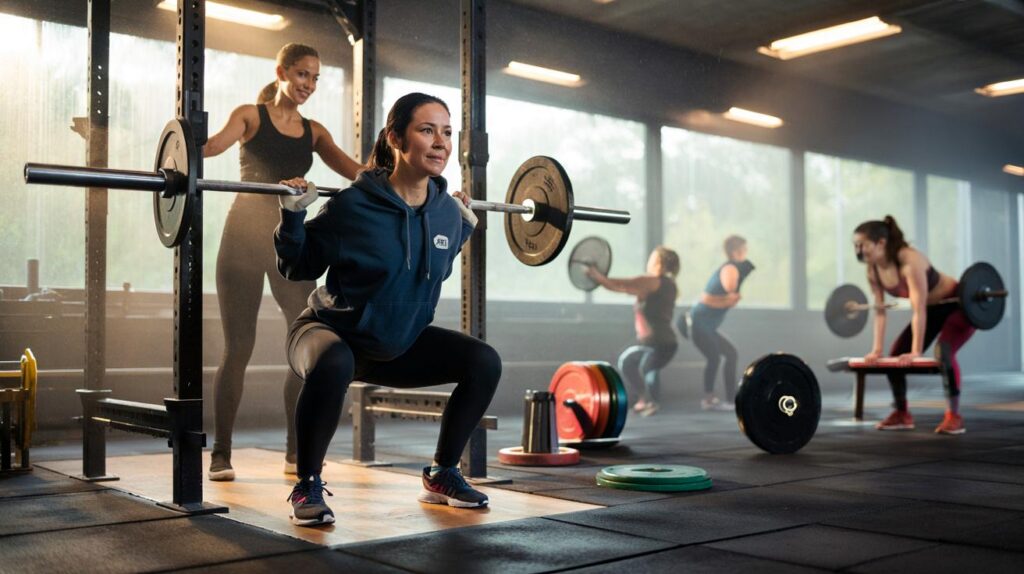
On a drizzly Tuesday in a Manchester gym, a woman in a navy hoodie hovers by the squat rack. She’s tucked her phone into her sleeve, a quiet guide disguised as a playlist. Two deep breaths, bar on her back, heels rooted—she drops into a careful squat as if lowering a secret onto a shelf. A trainer catches her eye, nods, and the city noise fades under the clink of plates. In that small, fierce moment, the room belongs to her. The edges of fear soften. The mirror still reflects flaws she learned to catalogue, yet her body tells a different story—one of competence. Something undeniable happens the first time you feel solid under a bar. A thought that won’t let go.
The quiet shift: why women are choosing strength
For years, fitness marketing promised shrinkage—burn, tone, slim. The mood has shifted. Women are chasing capacity instead of “after” photos, and it shows in the free-weights zone. The logic is real-world: carry the shopping, climb stairs without a second thought, protect joints, keep bones resilient for decades.
UK guidance asks adults to include muscle-strengthening work twice a week, and many women are taking that literally. It’s not about chasing bulk. It’s about better posture, fewer back twinges, a steadier heart. It’s also about what your brain does with a win at the rack—confidence leaks into meetings, commutes, and bedtime routines.
A 38-year-old designer I met in Bristol started with two adjustable dumbbells at home. Ten minutes, three moves, every other day while the pasta boiled. She didn’t talk about aesthetics; she talked about sleeping better and lifting her toddler without bracing. After eight weeks, she noticed her knees stopped complaining on hills. The next time she entered a gym, she no longer felt like a visitor. A tiny habit rewired the room.
Menopause has pushed the trend along, too. Muscle helps with metabolism and protects bone density, which can dip sharply in midlife. Many women are tired of being told to eat less and move more without a map. Strength training offers maths that makes sense: add muscle, add stability, add options. Periods, pregnancies, long commutes—life throws plenty at the body. Lifting offers a buffer and a choice. Strength is a quiet revolt.
How to start without the fear factor
Begin with five moves that cover most of life: hinge, squat, push, pull, carry. That might look like Romanian deadlifts, goblet squats, press-ups (hands on a bench if needed), dumbbell rows, and a farmer’s carry. Pick weights that feel like a seven out of ten effort by the last two reps. Do two sets of eight to ten. Rest longer than you think. Walk out before you’re cooked.
We’ve all had that moment when you feel eyes on you and your brain turns to porridge. Plan your session on your phone and keep it short—25 minutes beats a heroic hour that never happens. Choose quieter times if you can, or start at home with a pair of dumbbells and a resistance band. Let’s be honest: no one actually does that every day. Two or three sessions a week is plenty.
Form beats load. Record a set on your phone to check your hinge looks like a door, not a squat. If your knees cave in on squats, lighten the weight and slow the descent. Progress beats perfection. Try this starter flow for four weeks. Rotate the days, take rest when you need, and write down what you lifted—numbers are mood-proof.
“You don’t need permission to be here,” said a coach in Leeds, as she slid the safety pins a notch higher. “Your strength is allowed to take up space.”
- Day A: Romanian deadlift, goblet squat, press-ups (bench), farmer’s carry.
- Day B: Dumbbell row, split squat, overhead press (seated), suitcase carry.
- Day C: Hip thrust, lateral lunge, assisted pull-up or band pulldown, plank.
What changes when strength becomes a habit
After a month, the magic is less dramatic and more domestic. You’ll stack chairs after a village hall meeting without thinking. The jar that used to fight you will lose. Your sleep edges deeper when your body is gently tired, not wrung out. You’ll feel more anchored in your own skin, which tends to quiet the noise of comparison. Strong is a feeling before it is a look.
There’s an identity piece too. When you lift regularly, you start to keep promises to yourself in tiny, repeatable ways. You won’t always want to go. You’ll go anyway, or you’ll pivot to a 15‑minute garage session, and that still counts. The habit becomes a thread you can hold when life frays. You do not have to get smaller to be worthy.
The culture is catching up. More gyms are adding women’s strength classes, more workplaces talk about bone health, and your feed probably shows fewer detox teas and more deadlifts. Trends aside, this is practical feminism: add capability, reduce fragility, and take up the space your life actually needs.
| Point clé | Détail | Intérêt pour le lecteur |
|---|---|---|
| Start simple | Five patterns: hinge, squat, push, pull, carry | Removes guesswork and saves time |
| Train 2–3 times weekly | Short, focused sessions beat long, rare ones | Fits real life and still delivers results |
| Track loads | Note reps and weights each session | Builds confidence and visible progress |
FAQ :
- Will lifting make me bulky?Most women don’t gain large muscle size without specific nutrition and high training volume. You’ll likely look firmer, not bigger.
- Can I start if I’ve never been to a gym?Yes. Begin at home with dumbbells and a band, or book a gym intro. Learn the five movement patterns and progress slowly.
- What about periods, pregnancy, or menopause?Adjust intensity around symptoms, use support where needed, and seek tailored advice during pregnancy. Strength helps through all stages.
- How heavy should I lift?Choose a load that feels like a 7/10 effort by the last two reps while keeping form tidy. Increase when the top end feels smooth.
- Do I need supplements?Not to start. Aim for protein with each meal, hydrate, and sleep. If curious later, get guidance from a qualified professional.



Definately saving the five-move template—hinge, squat, push, pull, carry. The “plan it on your phone and leave before you’re cooked” tip is gold. This reads like permission to start small without feeling silly. Strong as a feeling, not a look, might be the line that gets me through the door.
I’m skeptical about the “you won’t get bulky” line. Genetics vary, and some women do add size faster. Do you have sources on typical hypertrophy rates for beginners and how nutrition volume interacts? Also, where does the 7/10 effort reccomendation come from—RPE studies or just coaching lore?