
The restaurant had gone quiet by the time the last glass was poured, that soft lull after dessert where conversation turns into whispers and coats are fetched. On the bar, a couple of bottles sat with their shoulders slumped, a red and a white, both too good to waste and too little to warrant a ceremony. I watched the bartender tip a splash down the sink and winced, the way you wince when someone drops a book spine-first. We’ve all had that moment when the bottle looks back at you, faintly accusing, and you pretend you’ll make a sauce tomorrow. Let’s be honest: nobody actually does that every day. The trick that changed my kitchen came from a chef with calloused hands and a freezer full of secrets. So I tried it.
Why freezing wine beats the bin
Wine is an ingredient before it’s a drink once the cork is back in. A few frozen cubes of Merlot or Sauvignon Blanc turn an ordinary weeknight into something quietly smug. You’re not drinking it, you’re cooking with it, and suddenly it’s simple.
There’s also the waste thing, which nags. WRAP has long flagged that UK households pour away tens of millions of litres of drinkable wine each year, a small river gurgling down our sinks. That’s money and flavour gone. Slip it into the freezer instead and you’ve effectively banked future dinners. A tiny act, a big result.
Freezing doesn’t preserve wine for sipping. It locks in the useful stuff: acidity, body, and those shy aromatics that wake up onions and deepen sauces. Alcohol lowers the freezing point, so wine sets softer than water, more like a slush that pops out of trays with a satisfying twist. It’s practical magic for the hob.
How to freeze wine well (and what not to do)
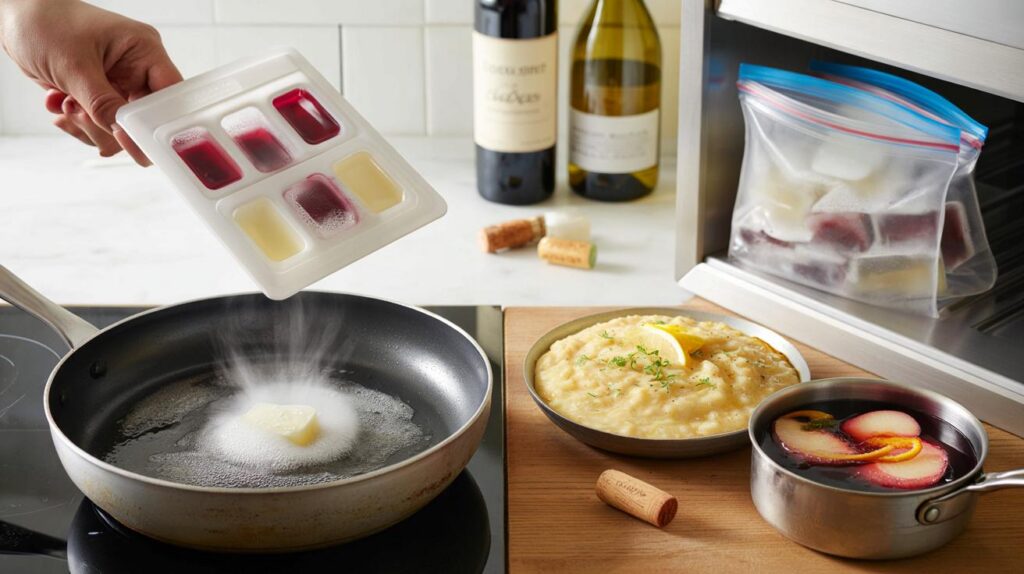
Pour leftover wine into clean ice cube trays, filling each pocket about four-fifths full. The expansion as it freezes needs a little headroom. Label a freezer bag with the wine and rough measure per cube — 1 cube is roughly 20–25 ml — then tip the set cubes into it and keep them handy near the peas.
Use silicone trays for easy release and stash reds and whites separately. A neutral white suits pan sauces and risotto, while a juicy red loves stews and slow cooks. Skip freezing sparkling wine for drinking; it loses its joy. You can still use it for poaching pears or in fish batters, but the bubbles won’t survive the chill.
Think of frozen wine like stock: a building block rather than a soloist. Drop a cube into a hot pan to deglaze, or fold two into a bubbling pot for depth and gloss. The best kitchen cheats are the quiet ones waiting in the freezer.
“Treat frozen wine as seasoning. A cube adds acidity, aroma and story to food.”
- Silicone trays and a labelled bag keep things tidy and quick.
- Dry whites = bright sauce work; fruity reds = stews, braises, ragù.
- A cube equals about a generous tablespoon — count, don’t guess.
- Freeze in clean portions; avoid trays that smell of onions or garlic.
- Use within three months for the best flavour pop.
Three genius ways to use those cubes later
Speed-sauce on a Tuesday. Sear chicken thighs or mushrooms until sticky bits cling to the pan. Toss in a garlic clove, then a cube or two of white wine — the hiss is instant. Swirl in a knob of butter and a spoon of crème fraîche. You’ve just made a silky pan sauce with pub-level swagger. It takes four minutes and no recipe.
Risotto that behaves itself. Start the rice with stock as usual, then drop in one red or white wine cube midway. The acidity tightens the grains and balances richness, so each spoonful tastes round, not flat. Finish with parmesan and lemon zest. The cube does the quiet, crucial work a splash-from-the-bottle rarely nails.
Fruit and desserts with glow. Poach pears in a pan with two red wine cubes, sugar and a strip of orange peel, or blitz white wine cubes with strawberries for a slushy granita. No faff, just chilled joy. For midweek crumbles, melt a cube into the fruit in the last minute; the aroma turns familiar into memorable, fast.
Small cubes, big pay-off
Freezing leftover wine isn’t about thrift for the sake of it. It’s about flavour on tap, tiny pockets of potential that wait quietly in the cold. One cube means you can cook like someone who planned things, even when you didn’t. One cube means dinner gets a lift.
We’ve all had that midweek slump where the idea of a “proper sauce” feels like homework. This is the antidote. *Freeze wine like an ingredient, not a drink,* and you’ll start to see opportunities everywhere: the browned onions, the little pan fond, the berries that want a glow-up.
Here’s the thing: once you’ve got a bag of wine cubes, you start saying yes to flavour. You deglaze in seconds. You poach fruit without a shop run. You spend less, waste less, and cook a little braver. It’s a small habit with a big kitchen personality.
| Point clé | Détail | Intérêt pour le lecteur |
|---|---|---|
| Freeze leftover wine in trays | Fill 80%, label by colour and cube volume | Zero waste, maximum flavour with minimal effort |
| Use like seasoning | 1–2 cubes to deglaze or lift sauces | Deglaze in seconds and add acidity without measuring |
| Pick the right wine for the job | Dry whites for brightness, fruity reds for depth | Cleaner, more consistent results every time |
FAQ :
- Can you refreeze wine after it’s been thawed?Keep it simple: freeze once. Thaw only what you’ll use, like stock. The flavour stays sharper and your freezer stays saner.
- Will frozen wine change the taste of my food?It won’t taste exactly like fresh wine in a glass, which is fine. In cooking it adds acidity, aroma and backbone — all you really want.
- Is there a best wine to freeze for cooking?Go for wines you’d happily drink. A crisp white (Sauvignon, Pinot Grigio) and a medium red (Merlot, Tempranillo) cover most recipes.
- Can I freeze rosé or fortified wine?Rosé freezes well for sauces and granita. Fortified wines freeze softer but add gorgeous depth to gravies and desserts in tiny amounts.
- How long do wine cubes last in the freezer?Up to three months for best flavour. They’ll be safe beyond that, but the aromatics fade, like spices left at the back of the cupboard.



Brilliant tip—treating frozen wine like seasoning finally clicked for me. I labelled silicone trays and now one cube saves my sauces, risottos, even rushed ragùs. Waste less, cook braver: this feels like having flavor on tap.
Does freezing affect tannins enough to make reds taste bitter in stews? I’ve heard alcohol volatilizes differently once frozen; any science on that beyond “it keeps acidity”? Curious if Tempranillo vs Merlot behave differently in long braises.