
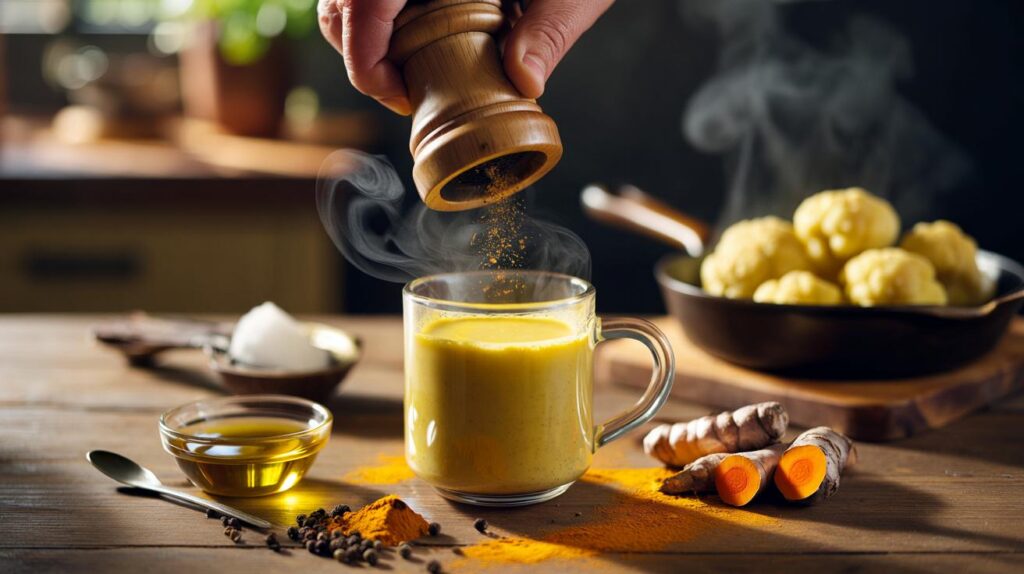
You sprinkle turmeric on everything and feel virtuous, yet the glow never quite shows up. The body is picky about what it lets in, and turmeric on its own is a tough guest at the door. The key is sitting in your pepper mill.
The café was loud with steam and small talk when a barista slid over a turmeric latte crowned with a dark dusting. I asked for the pepper on purpose, the way a runner asks for laces—quietly but with intent. The first sip tasted warmer, rounder, and I thought of my grandmother, who never sent a curry to the table without a few sharp twists of the grinder. The mug smelled like a walk through a spice market. A nutritionist beside me smiled and said, almost offhand, that the pepper wasn’t garnish at all. It was a shortcut to actually getting turmeric where it needs to go. One simple pinch changes the story.
The strange science sitting in your spice rack
Here’s the awkward truth about turmeric: most of its star compound, curcumin, doesn’t make it past your gut wall. It’s fat‑loving, metabolised quickly, and hustled out before it can do much. **Add black pepper, and a naturally occurring molecule called piperine flips that script.** In research, piperine has boosted curcumin’s bioavailability by up to 2,000%, taking a shy nutrient and handing it a VIP pass.
Picture this at dinner: you pan-roast cauliflower with a teaspoon of turmeric, a splash of olive oil, and finish with a quick grind of pepper. That last move isn’t theatre. In South Asian kitchens, the pairing is so ordinary nobody blinks, yet it maps onto what lab data keeps finding—piperine helps curcumin stick around long enough to matter. One runner I met swears her evening “golden milk” only settled her legs when she started adding pepper and a dribble of coconut oil. Small shifts, real difference.
What’s going on under the lid is simple and kind of brilliant. Piperine slows some of the enzymes in your gut and liver that would otherwise tag curcumin for a speedy exit. It also seems to change how the intestines ferry it along. When you throw in a source of fat and a bit of heat, curcumin dissolves and disperses more easily, which means your body can pick it up. **Turmeric thrives in company: pepper for the ride, fat for the suit, heat for the handshake.**
Make the pair work in real life
Think of it as the three-second rule. When you reach for turmeric, reach for pepper in the same move, then add a little fat. For everyday cooking, a workable ratio is a pinch of freshly ground black pepper—roughly 1/20 of a teaspoon—for each teaspoon of ground turmeric. Heat the turmeric gently in oil or ghee for 30–60 seconds to wake it up, add your veg or lentils, and finish with pepper so the aroma stays lively. That’s it: a habit, not a hassle.
Common slip-ups are sneaky. People stir turmeric into water and skip both pepper and fat, then wonder why it “does nothing.” We’ve all had that moment when health feels like a list of rules you can’t keep. If you love smoothies, blend turmeric with yogurt or nut butter and a little pepper; it tastes better than it sounds. Store-bought turmeric shots often forget the pepper, so read the label. Let’s be honest: nobody really does that every day.
Here’s how the expert puts it:
“Turmeric isn’t underperforming. We’re under-pairing,” says London-based registered nutritionist Amira Patel. “Piperine from black pepper is the unlock, and a source of fat plus a little heat amplifies the effect. It’s kitchen chemistry the grandmothers already knew.”
- Quick win: for every teaspoon of turmeric, add a pinch of pepper and cook with oil.
- Golden milk: warm milk of choice with 1 tsp turmeric, a grind of pepper, 1 tsp honey, and 1 tsp coconut oil.
- Dusting rule: finish soups, eggs, or roasted veg with pepper right before serving.
- Supplements: curcumin with piperine can be potent—speak to a clinician if on meds.
- Fresh matters: grind peppercorns just before using for better piperine potency.
Beyond the spice duo: a nudge toward smarter eating
There’s a bigger lesson tucked in that grind of pepper. Food synergy isn’t a buzzword; it’s built into traditional cooking. Tomatoes and olive oil. Beans and rice. Turmeric and pepper. When we combine ingredients that help each other along, we eat like people who remember where flavour and function meet. **The magic often isn’t in more, it’s in together.** It changes how you shop, how you cook, how you feel at 3pm.
| Key points | Details | Interest for reader |
|---|---|---|
| Curcumin needs help | On its own, curcumin is poorly absorbed and rapidly cleared | Explains why solo turmeric can disappoint |
| Black pepper boosts absorption | Piperine increases curcumin bioavailability up to 2,000% | Justifies adding a pinch of pepper to every turmeric use |
| Cook with fat and gentle heat | Fat dissolves curcumin; warming helps dispersal and flavour | Actionable kitchen steps for better results |
FAQ :
- How much black pepper should I pair with turmeric?A small pinch per teaspoon of turmeric is enough—roughly 1/20 tsp. Freshly ground works best.
- Do I need fat as well as pepper?Yes. Curcumin is fat‑soluble, so cooking with olive oil, ghee, or coconut oil helps your body use it.
- Can I just take a curcumin supplement?Many include piperine, which helps. If you take medications or are pregnant, check with a clinician first.
- Is there a best time to consume turmeric and pepper?With meals is easy and effective. Warm dishes or milky drinks make the pairing simple and tasty.
- Any side effects or interactions I should know about?High doses may upset the stomach. Turmeric and piperine can interact with blood thinners and some drugs—seek medical advice if unsure.



Loved the “pepper for the ride, fat for the suit” line—definitley makes it easier to remember. I’ve been tossing turmeric into soups without oil; now I see why it felt meh. Thanks for the practical ratio tip!
Curious but cautious here: is that “up to 2,000%” increase in bioavailablity from a single small human study, or has it been replicated across multiple trials and doses? Also, does peperine affect absorption of medications at typical kitchen amounts?