
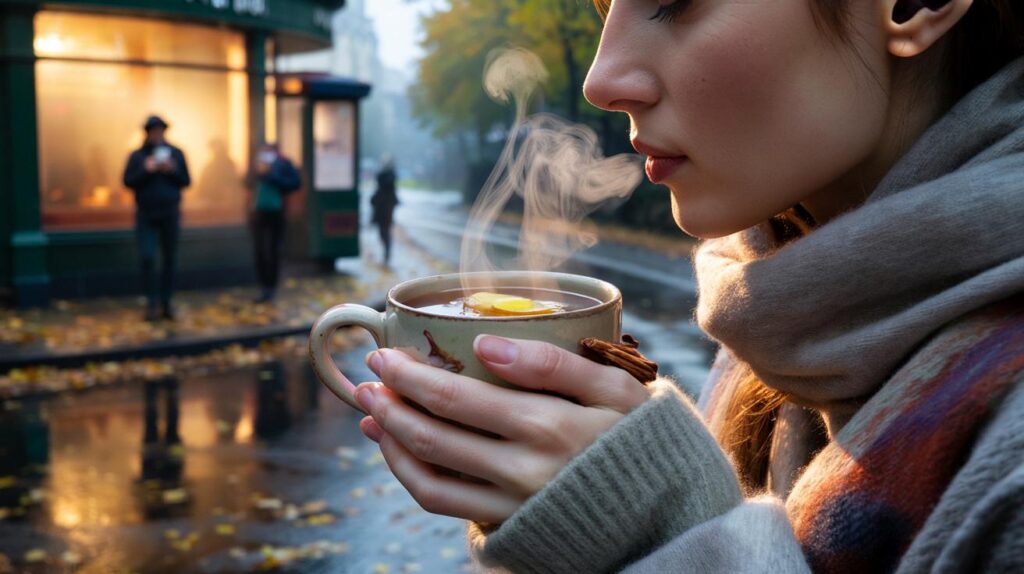
That first week of October does something to the kettle. Mornings sharpen, the air thins, and suddenly a lukewarm bottle of water feels absurd. You’re not imagining it: your body starts asking for heat you can hold, sip, inhale. The question is why the craving arrives so quickly — and why it feels so right.
The bus stop steamed yesterday. The little bakery by the corner was a fogged-up aquarium of people clutching cups, shoulders dropped, cheeks pinked by the wind. I watched a man take his first swallow of tea like a blessing, then breathe out as if he’d moved house. That same night, back in a kitchen with a reluctant radiator, I felt my hands soften around a mug and understood what he knew. The room wasn’t warmer. I was.
The October switch inside your body
Drop the temperature a few degrees and your brain starts renegotiating comfort. Skin blood vessels tighten to protect core warmth, fingers cool, and your nervous system scans for low-energy ways to cheat the chill. A hot drink is the simplest shortcut: heat on the tongue, warmth in the hands, steam in the sinuses. Tiny heat sensors in your mouth and throat light up, and the body reads relief. On cold mornings, warmth tastes like permission.
Look around an office kitchen on a grey Monday and you’ll see the pattern. Daylight shortens by roughly two hours across October in much of the UK, and average daytime temperatures slide by 3–5°C. The kettle boils more often, meetings shift around tea rounds, and someone brings in ginger biscuits like clockwork. **Your kettle is reading the forecast before you do.** It isn’t just habit. It’s physics you can sip.
Here’s the deeper mechanism. Warm fluid hitting the mouth stimulates TRPV1 receptors that signal “heat” up to the brain; the steam you inhale warms nasal passages and subtly eases breathing. That gentle rise in perceived warmth relaxes the stress response, which is already nudged by darker evenings and earlier melatonin release. Spices like cinnamon and ginger add a mild vasodilating nudge and a memory cue of kitchens and safety. The whole thing is a small, honest negotiation between body temperature, hormones, and comfort-seeking. You win by holding a cup.
Drink heat wisely: small habits that actually work
Try a three-step warm-up. First, warm your hands for 30–60 seconds on the mug before your first sip; you’ll feel calmer before the heat even hits your tongue. Then sip slowly and breathe through your nose to draw steam into the sinuses. Aim to sip in the 60–65°C range — hot enough to soothe, not hot enough to scald. **Temperature, not caffeine, is the first lever.**
Common missteps are sneaky. Loading your brew with sugar chases a quick high that fades fast, and late-afternoon caffeine makes sleep pickier when nights are already stretching. Alcohol feels warm, yet dilates vessels and speeds heat loss, so it’s a false friend on a chilly walk home. We’ve all had that moment when you cradle a mulled something and immediately regret the shiver later. Soyons honnêtes: nobody calibrates beverage temperature with a thermometer at 9 p.m. Listen to your mouth — if it makes you sip in tiny, fearful sips, it’s too hot.
There’s a simple rule for mood: go spiced in the day, go soft at night. Peppery ginger or masala lifts the tempo before 3 p.m.; honeyed chamomile or mint lands the plane after. I heard a café owner put it best.
“Hot drinks won’t change the weather, but they can change your weather.”
- Mid-morning: fresh ginger, lemon, a pinch of salt after a brisk walk.
- Post-lunch: black tea with cardamom if you need focus without a jitter.
- Evening: lemon and honey, or rooibos with a dash of oat milk for warmth minus buzz.
- Outdoors: a small thermos lives in your bag; your future self says thanks.
What the craving is really telling you
October cravings are clues, not weaknesses. Your body is quietly budgeting energy as temperatures fall and light thins, and it’s asking for heat that comforts more than it costs. A hot drink is a near-instant mood edit: hands warm, jaw softens, shoulders stop hunching. The ritual matters as much as the chemistry — the pause, the breath, the story you learned from the kitchens that raised you. Share a mug, and the room’s weather shifts too. **October is an invitation, not an alarm.** It’s your cue to add small, warm moments through the day rather than wrestle the season into submission. Talk to people about their go-to brews and you’ll hear family recipes, travel memories, and the little hacks that get them out the door when the sky is undecided. A craving is your body’s way of saying, kindly, give me heat I can hold.
| Point clé | Détail | Intérêt pour le lecteur |
|---|---|---|
| Thermoregulation | Warm drinks stimulate heat receptors, ease vasoconstriction discomfort, and raise perceived warmth fast. | Feel warmer without cranking the heating or piling on extra layers. |
| Light and mood | Shorter days shift melatonin earlier; gentle heat and scent calm the stress response. | Use drinks to smooth energy dips and fend off the 4 p.m. slump. |
| Smart sipping | Sip at 60–65°C, mind caffeine timing, favour spices by day and soft herbs by night. | Better sleep, steadier mood, fewer jitters — and tastier cups. |
FAQ :
- Do hot drinks actually raise core temperature?Only a little, and briefly. The bigger effect is on thermal sensation — you feel warmer because mouth, throat, and hands tell the brain “heat is here.”
- Are “very hot” drinks risky?Regularly drinking liquids above about 65°C is linked with a higher risk of oesophageal irritation. Let your cup cool to a comfortable sip.
- Is decaf better in the evening?Yes if you’re sensitive. Decaf still has a trace of caffeine, yet far less than regular, and herbal infusions are a calmer bet after dusk.
- Do hot drinks dehydrate you?Moderate tea and coffee hydrate overall. Very high caffeine can nudge you to the loo more, so balance with water and non-caffeinated sips.
- What’s a good non-caffeinated option for October?Ginger-lemon with a pinch of salt after a cold walk, or rooibos with cinnamon and a splash of milk for cosy, steady warmth.



I can feel that “October switch” too — this explains it perfectly. Thanks for the cozy science and the practical tips!
Do you have sources for the 60–65°C sweet spot and TRPV1 activation? Would love to read the primary research.