
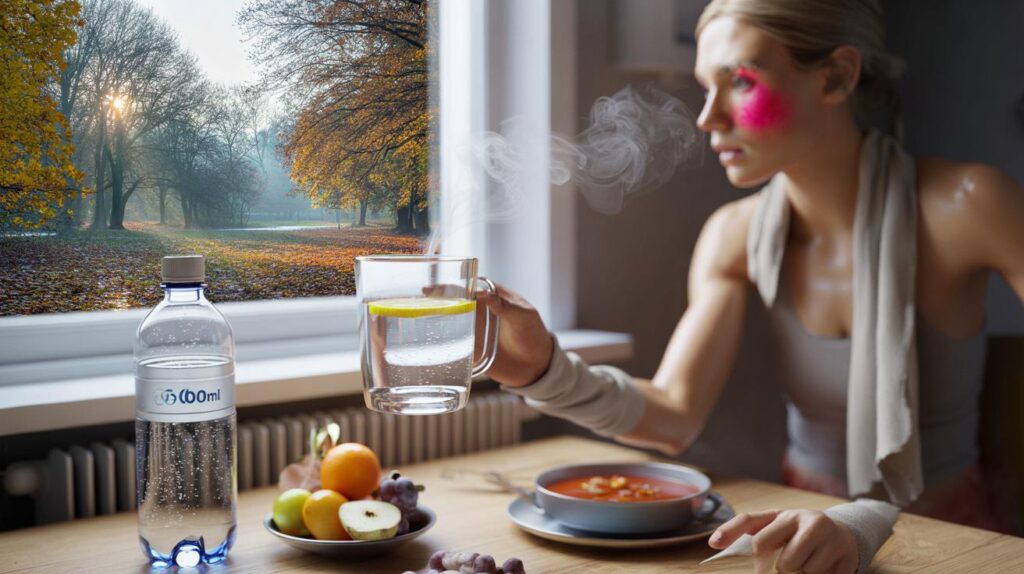
The first cold morning of October catches you off guard. The park looks rinsed in silver, your breath a small cloud, the sun a thin coin behind the trees. You don’t sweat much on the run, which feels like a gift after summer. Back home the radiator kicks awake, the air turns papery, and by mid-afternoon your lips are cracked and your head is dull. You reach for coffee because that’s the habit, and you tell yourself you’re fine because the weather is cool. By evening your throat is scratchy, your skin tight across your knuckles, and the glass by the sink is still full. A strange thing happens in October. The body asks for water in a whisper.
October’s dehydration trap
There’s a trick the season plays. Cooler air dulls the thirst reflex, so you feel less urge to drink even as you lose water faster into dry air. Turn on the heating and indoor humidity can drop like a lift, making invisible evaporation happen all day long. You don’t see sweat, yet you’re still leaking moisture with every breath.
Picture the school run: scarf on, cheeks stinging, hot train, office heating, then back into the breeze. That’s five humidity shifts before lunch. Studies show thirst cues drop sharply in cool conditions, and cold-induced diuresis nudges the kidneys to send fluid out. It’s the perfect storm for “quiet dehydration” that doesn’t look dramatic, just tiring.
Physiology has its reasons. Blood vessels in the skin tighten in the cold, which reroutes fluids and tricks the brain into thinking volume is high. The kidneys oblige by making more urine. Mucous membranes dry, the skin barrier thins, and even your eyes blink harder to keep up. *Dry air steals water you never see.*
Hydrate smarter, not colder
Build an October rhythm: two glasses on waking, one mid-morning, one mid-afternoon. Call it the 2–1–1. Warm it up if that helps you drink. A mug of hot water with lemon, a light broth, or a fruit tea still counts. If you exercise, add 300–500 ml across the hour before you head out, and consider a pinch of electrolytes after longer, sweaty sessions.
Tea and coffee do contribute to hydration. The diuretic effect is mild for regular drinkers. Go steady on alcohol, which pushes fluid out and can wreck sleep. Saltier comfort foods sneak in with colder nights, so aim for balance: a bowl of soup with vegetables, potassium-rich sides like roast squash or a banana. Let’s be honest: nobody weighs their water each day.
We’ve all had that moment when the radiator clicks on and your lips start to crack before dinner. That’s your cue to nudge the routine, not panic.
“In cool weather we don’t stop losing water. We just stop noticing,” says a sports dietitian I spoke to. “Match your sips to your day, not the thermometer.”
Here’s a small autumn toolkit that fits most lives:
- Keep a 600 ml bottle on your desk and finish it twice by 4 p.m.
- Swap one afternoon coffee for a mug of hot water, lemon and a pinch of salt if you’ve trained.
- Add water-rich foods: pears, grapes, clementines, stewed apples, cucumber, leafy salads.
- Cook hydrating sides: tomato-based stews, bean soups, miso broth, gentle curries.
- Do a quick check: **urine should be the colour of straw** by early afternoon.
The why beneath the sip
Hydration isn’t just about thirst. In October, **indoor heating** lowers ambient humidity, so the water you breathe out isn’t replaced by the air you breathe in. Your skin barrier struggles, which is why moisturiser works better after you’ve had a glass of water. Respiratory tissues need moisture to trap viruses efficiently. Parched mucosa are like lint rollers without glue.
Cold weather ramps up urination through **cold-induced diuresis**, so you pay for long walks with extra trips to the loo. That can flush sodium and dilute electrolytes a touch, which is why a post-run soup or a light electrolyte drink can make you feel more human. Skipping water because it’s chilly only deepens the slump.
There’s also the energy piece. Even mild dehydration nudges fatigue, fuzzes concentration and can make a training session flatter than it should be. Warm drinks support intake because they’re cosy. Soups deliver fluid, sodium and carbs in one ladle. Soyons honnêtes : personne ne fait vraiment ça tous les jours — but a simple schedule beats a spreadsheet.
Carry this into the rest of autumn
October asks for a small pivot: not more rules, just kinder habits. Consider your day as a series of air changes and drink to meet them. If you commute in cold air or work next to a radiator, give yourself a morning head start. If your evenings run on tea and telly, slip a water break in before the kettle.
Some days you’ll nail it, others you’ll forget and feel that familiar drag by 3 p.m. That’s fine. The body forgives. Share a pot of soup, leave a glass by the bed, bring back the water bottle that went missing in summer. Your skin will quieten, the afternoon headache will back off, and your sleep may land softer. The season will still bite your cheeks. Your cells will be ready.
| Point clé | Détail | Intérêt pour le lecteur |
|---|---|---|
| Dry air effect | Heating lowers humidity, speeding invisible water loss | Explains dehydration without sweat |
| Cold-induced diuresis | Cold cues kidneys to increase urine output | Why you need a steadier intake |
| 2–1–1 routine | Two glasses on waking, one late morning, one mid-afternoon | Easy daily framework that sticks |
FAQ :
- How much should I drink in October?Start around 6–8 glasses a day, then adjust for activity, body size and how dry your home or office feels.
- Do tea and coffee count as hydration?Yes. For regular drinkers, they contribute fluid. Balance them with water and herbal teas.
- Do I need electrolytes if I’m not sweating?If you exercise or pee more in the cold, a light electrolyte drink or salty soup can help you feel steadier.
- Why is my skin drier even when I’m drinking?Heated rooms strip moisture from skin. Pair water with a moisturiser applied after bathing to lock it in.
- What are the subtle signs I’m under-hydrated?Headache, tight skin, sticky mouth, darker urine, low energy and that mid-afternoon fog in cool, dry rooms.



Love the 2–1–1 rhythm—simple enough that I might actually stick to it. I always assumed my endless coffee counted against me, so the clarification on tea/coffee is reassuring. Also, the line about the body asking for water in a whisper… oof, felt that on my commute. Adding warm lemon water to my mornings, definitly.