
Strange smells, soggy salad and a fridge that never feels truly fresh have a common cause few people ever check.
Hidden behind produce and condiments, a cold, damp recess collects grime and feeds microbes. It takes seconds to clear, yet skipping it lets odours bloom, mould spread and waste rise. The fix costs pennies and slots neatly into a weekly tidy.
The hidden drain that turns your fridge into a germ taxi
Modern fridges push warm air out and wick moisture away from food. Condensation forms on the back wall and runs into a shallow channel. From there, it should slip through a pinhole drain into a tray near the compressor, where heat evaporates it. When the channel gums up with crumbs, grease and milk residue, water stagnates. That’s when problems start.
Damp invites mould. Mould throws spores. Each door opening sends a small puff of air across shelves. Those spores travel, settle on lids, cling to fruit skins and find tiny cracks in packaging. You smell it first: a sour, musty tang that cleaning the shelves won’t shift because the source sits a few centimetres deeper.
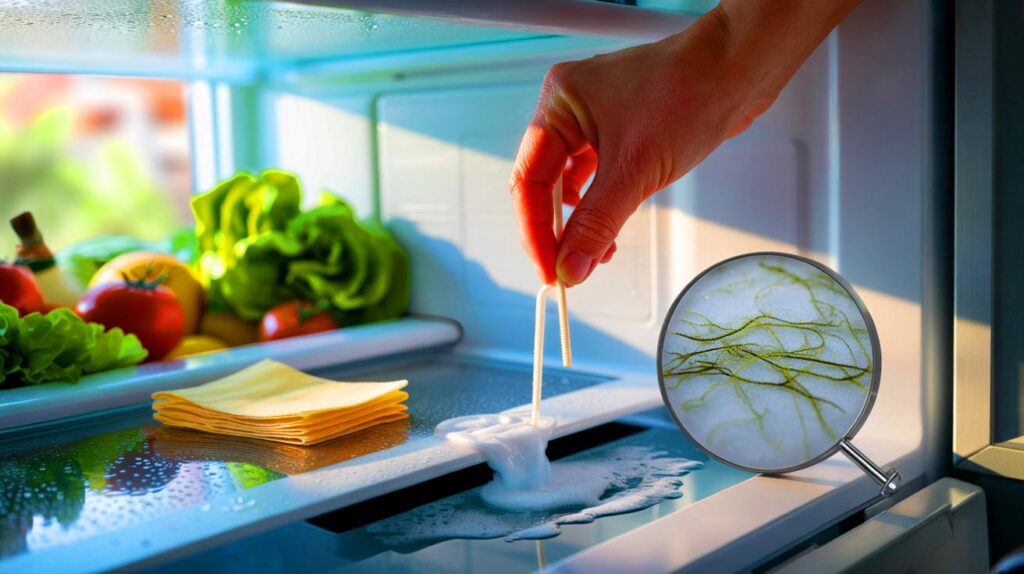
This pea-sized drain hole can host biofilm, mould threads and food residue within days in a wet, chilly well.
An obstructed drain also nudges temperatures up and down. The compressor works harder to deal with excess moisture and frequent defrost cycles. That can shorten the life of fresh produce and nudge energy use higher than it needs to be.
What happens when the drain clogs
When the drain blocks, water pools on the fridge floor or freezes into a thin sheet along the back. Lettuce sticks to the wall. Bottles acquire sticky rings. The drip tray at the rear overfills and turns sour. None of this is dramatic, but it chips away at hygiene every single day.
A one-minute clean once a month keeps water flowing, cuts odours and slows mould growth around food.
How to clean it in 60 seconds
You don’t need to switch the fridge off for this quick job. Work gently, use warm water and avoid sharp tools.
- Slide out the bottom shelf or salad drawers to expose the back wall channel.
- Find the small hole in the centre of the channel. It may sit behind a tiny plastic flap.
- Push a cotton bud, pipe cleaner or the plastic tool many fridges ship with into the hole. Twist to lift slime.
- Flush with 50–100 ml of warm water mixed with a drop of washing-up liquid or a pinch of bicarbonate of soda.
- Wipe the channel clean and dry with a paper towel to stop fresh ice from forming.
- Pull out the rear drip tray if accessible. Wash it in hot, soapy water. Rinse, dry and slot it back.
| Item | Purpose | Approximate cost | Time used |
|---|---|---|---|
| Pipe cleaner or cotton bud | Dislodges slime and crumbs in the hole | £1–£3 | 20 seconds |
| Warm water + washing-up liquid | Flushes and degreases the channel | Pennies | 20 seconds |
| Paper towel or clean cloth | Dries the channel to prevent icing | Pennies | 10 seconds |
| Sink access to the rear tray | Stops smells at the source | Free | 10 seconds |
How often to do it, and signs you need it now
Most households can clear the drain monthly. Big families or keen cooks who open the door often may benefit from a fortnightly check. Act sooner if you notice these clues:
- Puddles or thin ice along the back wall or fridge floor.
- Persistent musty or sour odours after surface cleaning.
- Damp produce drawers or bottles with sticky rings underneath.
- Visible crumbs or residue in the back channel.
- More rapid mould on soft fruit and open cheese.
- A louder, longer-running compressor on humid days.
Safety, hygiene and what not to use
Skip sharp skewers and metal wire. They can puncture the drain tube. Choose soft plastic or fibre tools. Avoid neat bleach or harsh chemicals inside the cabinet. Fumes linger and can taint food. Warm water with a little detergent works well for grease. For odour control, bicarbonate of soda is mild and food-safe. Don’t pour boiling water into a cold, plastic-lined cavity; thermal shock can warp parts. If you have a frost-free model, the approach is the same, but the access point may sit lower behind drawers; check your manual for the exact location.
Why the rear drip tray matters
The tray above the compressor evaporates condensed water. Grease and dust settle there and turn rancid. Pull it out twice a year if the design allows. Wash, dry and refit. If it’s fixed, wipe the exposed edges and vacuum nearby dust to help evaporation.
Keep the problem from coming back
- Cover leftovers and store cut produce in sealed containers to reduce condensation and spore spread.
- Set the fridge to 3–5°C. Use a simple thermometer to verify the built-in display.
- Wipe spills as they happen, especially milk, fruit juices and brines that feed microbes.
- Leave space around internal vents. Packed shelves trap moisture and block airflow.
- Check door seals for splits. Replace tired gaskets to keep humid room air out.
- Let hot pans cool before chilling. Steam adds litres of moisture to the cabinet.
Cold slows mould, but moisture feeds it. Keep water moving and your fridge stays cleaner for longer.
What this means for food waste, bills and health
A clean drain helps the fridge shed water efficiently. That stabilises temperatures and keeps the compressor from cycling as aggressively on damp days. More stable cold means leaves stay crisp, berries last longer and open dairy resists surface mould. Throwing away less food softens the weekly shop and trims waste. Lower moisture load can also shave a little off electricity use over a year, especially in busy households where doors open often.
The science behind that slimy ring
The slick residue around the drain is a biofilm: a thin layer of microbes bound by sugars. Biofilms cling to plastic and resist a quick wipe because the matrix protects the organisms. Physical disruption with a soft brush or pipe cleaner breaks that shield. A mild detergent loosens fats and helps water lift debris away. Drying the channel robs the film of its favourite resource: constant moisture.
If you share a fridge or manage a rental
In shared kitchens, assign the drain check to the same person who empties the bin each week. Note the date on a small sticker inside the door. Landlords can add this to seasonal maintenance along with vacuuming coils and checking seals. A 10-minute quarterly session—coils, seals, drain, trays—keeps appliances fresher between tenancies and reduces callouts for leaks that are simply blocked drains.
When to get help
If water still pools after clearing the hole and flushing, the tube may be blocked further down. Some models allow you to remove the back panel inside to access the channel. If you’re unsure, book an appliance technician. Persistent leaks can damage flooring and kick up mould behind units.



Just did this in under a minute—cotton bud + warm soapy water. The musty smell vanished overnite. Who knew that tiny drain was the culprit? Genuinely helpful, and the tip about drying the channel is gold. Thanks!