
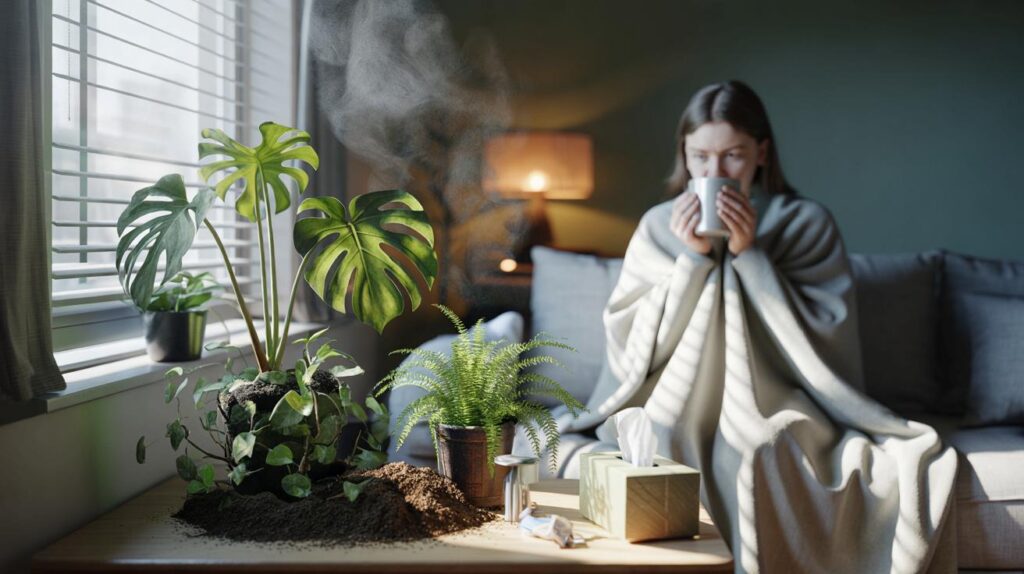
When you go down with a cold and your spider plant sags the very same week, it feels personal. The timing is eerie, the leaves look tired, and the room suddenly carries that stale, hushed air of sick days. The truth is less spooky and more human: your plants are reacting to the small ways you change your home when you’re ill.
I woke on a January morning with a throat like sandpaper and the weird, slow-time of fever. The blinds stayed half-closed; the radiator clicked into a steady drone. My monstera drooped like an unmade bed, a fern looked crisp at the edges, and the pothos had a few yellowing leaves I swear weren’t there last night. I sipped tea, didn’t move for hours, and the room took on that low, dry warmth of winter convalescence. We’ve all had that moment when the house falls quiet and nothing breathes properly. I stared at the plants and wondered if they were falling ill with me. Something else is happening.
Why your plants seem to crash when you do
Plants don’t catch colds from humans. **They’re not “catching” your virus**. What they do catch is the microclimate you create when you’re under the weather. You dim the room, push up the heating, stop opening windows, and forget your usual watering rhythm. Light drops sharply, air dries out, and circulation slows to a whisper. For a living thing built to trade water, air and light, that’s a jolt. Leaves droop, tips crisp, and some species shed to save energy.
Take a simple number: winter indoor humidity in heated homes often sinks below 30%. Most tropical houseplants are happiest around 40–60%. Drop the blinds and you can slash light by 60–80% in a second. Add two days of lukewarm, stagnant air, and fungus spores have a party on already stressed leaves. Now imagine you’re sipping broth on the sofa. Your watering routine slips by a day or three, or you water twice because the soil looks sad. That’s not bad luck. It’s a chain reaction.
Here’s the logic under the leaves. Raise the heating, the air gets drier, and the vapour pressure deficit spikes; plants lose water faster, close their stomata, and photosynthesis slows. Cut the light and the energy budget collapses further. Water either sits cold and heavy in a low-light pot (hello root rot) or the plant dries out faster and droops. Ventilation falls, so mould and pests love the stillness. **Shared environment, shared stress**. It feels like synchronicity, but it’s physics, physiology and habit.
What to do on sick days: small moves that matter
Set up a “sick-day micro-routine” that takes two minutes. Open the blinds fully, even if you plan to nap. Nudge a window for ten minutes of fresh air mid-morning and again late afternoon. If you own a humidifier, set it to 45–55% on a timer, not full blast. Water only after the old knuckle test: if the top 2–3 cm of soil is dry, go ahead, if not, wait. Move the thirstiest plants 50 cm away from radiators and cold panes. That’s it.
Avoid the heroics. Don’t repot while feverish, don’t drench leaves with a spray bottle, and don’t blast bleach around foliage. Let’s be honest: nobody really does that every day. Wipe dust with a barely damp cloth if you have the energy, or leave it. If your room is still dim, group plants closer to the brightest window rather than scattering them. If one pot smells swampy, hold back water and improve airflow. Some yellowing is a stress signal, not a tragedy.
Think of care like a dimmer, not a switch. **Tiny tweaks beat big fixes** in a week when you barely have appetite, let alone bandwidth.
“Plants don’t catch colds, they catch our habits,” says a North London grower who’s been rescuing rubber plants since the 90s. “When you change the room, they change too.”
- Light: blinds up, 20 minutes of daylight minimum.
- Water: test the soil, then water slowly to drain.
- Air: short, gentle bursts of ventilation.
- Heat: stable, not hot; keep leaves off radiators.
- Space: give foliage room so air can move.
The bigger picture: your rhythms, their rhythms
Houseplants are a living mirror for your domestic weather. When you’re ill, the home leans into stillness, heat and low light. When you recover, the room reopens and plants perk up with you. That doesn’t mean they’re fragile. It means they’re honest. If you start noticing the way your habits sculpt the air, the fixes stop feeling like chores and start feeling like tuning a dial.
Your life has seasons too. Winter work marathons. Long weekends away. A week of antibiotics that tastes like coins. Plants show these seasons in their own language: a flush of new growth when you open the window sooner; a burned tip after a radiator binge; a sigh of relief when you move a pot 30 cm into brighter shade. *Pay attention, and they’ll tell you what the room needs.*
If you share the room with a cold again, think small and kind. One notch less heat. One more notch of light. A little airflow. A pause before the watering can. Then watch. You’ll start to see the pattern that was hiding in the noise. And that’s where the calm grows.
| Point clé | Détail | Intérêt pour le lecteur |
|---|---|---|
| Shared environment drives stress | Heat, low light and still air arrive together on sick days | Explains why plants “get ill” when you do |
| Humidity and light are the levers | 45–55% humidity and open blinds transform plant mood | Clear targets you can act on quickly |
| Micro-routines beat big overhauls | Two-minute checks, gentle ventilation, soil testing | Saves time and prevents overwatering or shock |
FAQ :
- Can my cold infect my plants?No. Human cold and flu viruses don’t infect houseplants. They react to the room you create while you recover.
- What humidity should I aim for in winter?Most tropical houseplants prefer 40–60%. A steady 45–55% is a sweet spot in heated homes.
- Should I water more when I’m at home all week?Not automatically. Test the top 2–3 cm of soil. Water only if it’s dry; dim rooms mean slower use.
- Is it better to close windows to “keep warmth in” for plants?Short bursts of fresh air help more than a sealed room. Ten minutes of gentle ventilation twice a day keeps mould and pests down.
- Do cleaning sprays harm leaves?Aerosols and bleach fumes can scorch or stress foliage. Clean away from plants or use a mild, plant-safe solution.



Super article ! Je n’avais jamais relié ma fièvre à l’air sec et aux stores baissés. Le mini rituel “blinds up + 10 min d’air + test du sol” est simple et faisable même KO. J’ai un humidifcateur: viser 45–55% c’est parfait pour toutes les plantes ou certaines préferent moins? Et pour un ficus elastica près d’une baie vitrée, vous conseillez quelle distance du radiateur? Merci pour les explications claires.