
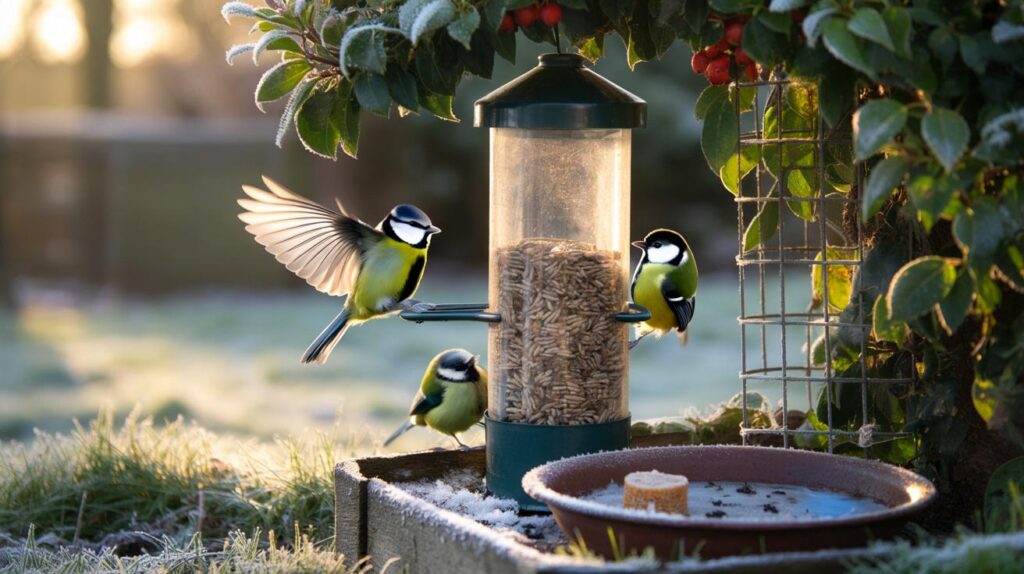
Frost edges the lawn and the chatter thins. Many households sense a lull, then wonder where familiar garden birds went.
The first cold nights change behaviour overnight. Blue tits and great tits slip from open lawns to sheltered corners. You can keep them close with simple, timely moves that cut risk and keep gardens alive.
Where do our tits go when the cold bites
Most blue tits and great tits stay in Britain all winter. They rarely leave the area. They switch to warmer pockets when food runs short or wind exposure rises. Small shifts of a few streets can feel like a disappearance.
Migration or toughing it out
These birds weigh around 10 grams. Crossing counties would burn precious reserves. Many form loose flocks and roam hedges, ivy-clad walls, yards and quiet courtyards. They target seed heads, larvae under bark and any reliable feeder they have already learned to trust.
Resident tits seldom go far; they track shelter, daylight and predictable calories within a local network of safe spots.
Cold snaps push them to sunlit edges, thick evergreen cover and barns or sheds with gaps. In towns, a single well-sited feeder can hold a flock through bleak spells.
Hunger, cold and predators
Winter brings a hard equation. Small bodies lose heat fast. A blue tit may need energy worth a third of its body mass in a day. Long nights raise the cost. Wind chill multiplies it again. Cats and sparrowhawks exploit bare borders. Sterile lawns leave nothing to pick over. Icy spells lock up insects and water.
One bitter night can undo a week’s progress if birds have no steady calories, clean water and safe cover.
The early warning signs you can spot at home
Watch the quiet edges of the garden at first light and dusk. Patterns tell a clear story.
How to recognise a bird in trouble
A struggling tit sits fluffed, moves hesitantly and feeds in short bursts. It visits a feeder often but stays briefly. It combs borders at ground level in daylight. It returns repeatedly to a window box or empty dish. Young birds loiter on open turf and ignore cover. That behaviour signals scarce food or poor shelter.
What a harsh winter does to local numbers
Severe cold and thin rations can cut a neighbourhood’s tit count by a quarter in weeks. Spring breeding then suffers. Fewer pairs mean more pests on fruit trees and roses. It can take seasons for numbers to rebound in heavily manicured streets or bare new estates.
The expert reflex: act before the first hard frost
Timing matters. Birds remember reliable sites and return. Set the table early and keep it clean and consistent.
Begin by late October or the first week of November so flocks map your feeder as a safe, regular source.
Set up a safe, reliable feeding station
- Place the feeder 1.5–2 metres high, near dense cover but with clear sightlines to spot predators.
- Offer energy-rich food: sunflower hearts, unsalted peanuts, quality fat cakes or suet pellets without plastic nets.
- Add small fruit pieces, such as apple or pear, to spark quick interest on day one.
- Provide fresh, unfrozen water in a shallow dish; refresh daily and break ice in the morning.
- Clean weekly with hot water and a mild disinfectant; rinse and dry before refilling.
Consistency helps birds budget their energy. Top up at the same time each day where possible. A bracket on a fence or a pole on a patio works on small plots. Keep seed off soggy soil to deter disease.
Mistakes that quietly make things worse
- Starting too late after a deep freeze has begun.
- Hanging fat balls in plastic nets that can trap feet or beaks.
- Putting feeders low and close to ambush cover for cats.
- Offering bread, salted foods, mouldy scraps or desiccated coconut.
- Leaving dirty trays that spread infection during crowded cold spells.
Turn any plot into a winter refuge
You do not need a large garden. Structure and cover matter more than size. Think layers, from ground mulch to evergreen canopy.
Natural and artificial shelters that work
Mix evergreen shrubs and tangled features that break the wind. Holly, ivy, viburnum tinus, cotoneaster, hawthorn and hazel add berries, insects and refuge. Leave hedges a little untidy until spring. A well-sited nest box doubles as a roost on freezing nights.
- Use 25 mm entrance holes for blue tits; 28 mm suits great tits.
- Mount boxes 2–4 metres high, facing between north and east to dodge rain and harsh sun.
- Secure boxes firmly and clean them in autumn before the cold sets in.
- Stack a few tiles, logs or stones to make frost-free nooks for overwintering insects.
Small-space hacks for balconies and courtyards
- Fix a window feeder either within 1 metre of the glass or over 10 metres away to reduce collisions.
- Float a ping‑pong ball in the water dish; movement slows surface ice.
- Make pine‑cone feeders with vegetable suet and seeds; hang them where cats cannot reach.
- Keep a tray of leaf litter; it shelters invertebrates that birds forage between cold snaps.
- Add lavender, sedum or hebe in pots; they hold structure and host insects across winter.
What to serve and what to skip
| Food or feature | How to use it | Why it helps | Avoid this pitfall |
|---|---|---|---|
| Sunflower hearts | In a tube feeder with a tray | High oil, easy to digest, low waste | Letting damp build up and clump seed |
| Unsalted peanuts | In a mesh feeder; crush for small beaks | Dense energy for long nights | Salted, candied or loose nuts that choke |
| Suet cakes/pellets | Hang without plastic nets | Fast calories in freezing weather | Nets that snag claws or bill tips |
| Fresh water | Shallow dish, changed daily | Hydration and feather care | Deep bowls that drown small birds |
| Leafy shelter | Evergreen shrubs, ivy, loose hedges | Wind break and safe staging posts | Over‑tidy pruning that strips cover |
Why this matters beyond your fence
Knock‑on benefits for gardens and biodiversity
Tits are diligent pest controllers. A single brood can require thousands of caterpillars in spring. That reduces sprays and keeps growth balanced. When the flock stays local through winter, your borders start the season with natural allies already on station.
Small habits, big winter survival gains
Set a reminder to top up seed and change water daily. Clean feeders weekly. Place a bell on the cat’s collar and keep it indoors at twilight. Fit simple dots or decals if window strikes occur. These modest habits cut needless losses and stabilise your patch’s population.
Extra help for readers who want to go further
Simple weekly plan you can copy
- Monday: refill seed and suet; sweep old husks from beneath feeders.
- Wednesday: refresh water and check for ice at dawn.
- Friday: wipe perches with hot water; rotate feeder positions slightly to break parasite cycles.
- Sunday: deep‑clean one feeder; rinse, dry and refill; trim one small clump of ivy for balance, not removal.
Risk management and quick wins
Cold snaps often coincide with nor’easter winds. Move the feeder leeward the day a cold front is forecast. Add a second, small feeder five metres away to reduce crowding and aggression. If disease appears—fluffed birds lingering, damp seed, visible lesions—close the station for a week and clean thoroughly before reopening.
A predictable, clean feeder near dense cover, installed before the first hard frost, is the single most effective move you can make today.
For households with children, keep a simple log of visitor counts each morning. You will spot declines early and act faster. For keen gardeners, plan winter structure now: one new shrub, one box, one brush pile. Those three steps pay back for years in birdsong, balance and colour when spring returns.



Brilliant guide—my feeder’s going up tonite. The ping‑pong ball trick is genious.
Do you have sources for the “cut by a quarter in weeks” stat? Sounds dramatic—curious where that figure comes from.