
Dark commutes, grey skies and foggy heads are back. Households across Britain are hunting practical ways to feel steady and awake.
One device is quietly climbing wish lists: a compact SAD lamp on Amazon that promises bright, daylight-like intensity for less than the cost of a monthly shop. At £42.99, the Caromolly Light Therapy Lamp has caught attention for packing 10,000 lux, three colour modes and four timer settings into a desk-friendly slab designed to make winter mornings feel manageable.
What’s driving the winter slump
Short days disrupt the body clock. Your brain sees less morning light, delays the release of wake-up hormones and keeps melatonin hanging around. That shift often brings low mood, sluggishness and broken sleep. Estimates suggest around one in 15 people in the UK experience seasonal affective disorder symptoms. Many more report a milder dip once the clocks change.
Bright light sent to the eyes early in the day can nudge circadian rhythms back on track. That is where high-lux lamps have a role: they deliver a concentrated dose of light that standard indoor bulbs cannot match.
10,000 lux, targeted at the face in the first hour after waking, is the benchmark many clinicians reference for winter light sessions.
How the Amazon favourite aims to help
The Caromolly SAD Light Therapy Lamp focuses on control and convenience. Users choose a warm white, a neutral daylight tone or a crisp daylight white. Brightness adjusts up and down for comfort. A remote and on-device touch panel handle power and timers, so you can nudge settings without breaking flow at your desk. The remote needs a CR2025 battery, sold separately.
- Maximum brightness: up to 10,000 lux at close range
- Colour options: warm white, natural light, daylight white
- Timers: 15, 30, 45, or 60 minutes
- Controls: touch panel and remote (CR2025 coin cell required)
- Form factor: compact, slim design for desks and bedside tables
Real-world use at home
Remote workers prop it beside laptops to counter dark spare rooms. Parents set it on a kitchen counter while packing lunches. Early risers link it to a smart plug to switch on at the same time each morning, making wake-ups more predictable. The idea is simple: give your eyes a reliable blast of bright, even light as you start the day, then carry on with normal tasks.
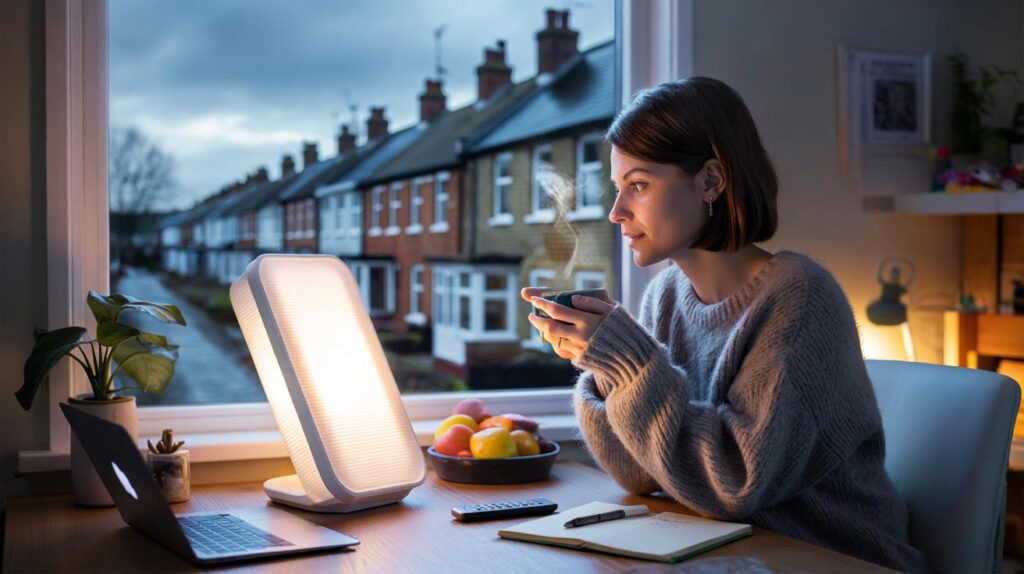
Keep the panel at arm’s length, slightly off to one side, and look towards it while you read, type or eat breakfast.
Does bright light therapy work?
Light therapy has a solid evidence base for seasonal mood symptoms. Morning sessions tend to yield the best results because they shift the body clock earlier, which helps energy and sleep timing. Many people report improvements within a week, with benefits building over two to four weeks of steady use.
You don’t need to stare at the lamp. The retina detects ambient light; a gentle, indirect gaze is enough. Distance matters. The further you sit, the more time you need. Most users aim for 20–30 minutes at high brightness in the first hour after waking, adjusting as comfort allows.
| When | Suggested duration | Placement guidance |
|---|---|---|
| First hour after waking | 20–30 minutes | 35–60 cm from face, off to the side at eye level |
| Mid-morning top-up | 10–20 minutes | Slightly dimmer if eyes feel strained |
| Afternoon slump | 10–15 minutes | Avoid late evening to protect sleep |
Price, practicality and where it fits
The draw here is value. Many light therapy lamps list between £60 and over £100. At £42.99, this unit undercuts much of the market while keeping the headline spec—10,000 lux—and the quality-of-life extras: timers, multiple colour temperatures and a remote. That combination explains why it keeps appearing on winter survival checklists.
The compact body helps. It sits beside a monitor without swallowing desk space, and the touch controls reduce faff. People sensitive to stark white light can start on warm white and nudge brighter as their eyes adapt. If your morning routine already fights for minutes, the auto-off timer keeps sessions consistent without another app to manage.
Three colour modes, four timers and a remote set it apart at this price—just remember to add a CR2025 battery to your basket.
Who might benefit most
Anyone who wakes before sunrise. People working in windowless rooms. Students in halls facing brick walls. Shift workers who need a strong cue to signal daytime. Parents juggling breakfast, uniforms and a grey sky outside. If winter leaves you drained and slow to start, morning light can anchor the day.
Who should be cautious
If you live with bipolar disorder, a strong morning light could trigger agitation or hypomania in some cases. Speak to your GP or specialist first. People with retinal conditions or photosensitive migraines should get medical guidance before starting. Certain medications increase light sensitivity; check the leaflet or ask a pharmacist. Keep sessions earlier in the day if you struggle to fall asleep.
Set-up tips for better results
- Build the habit: pair the lamp with coffee, journalling or emails so you use it at the same time daily.
- Angle the beam: keep it just out of your direct line of sight to reduce glare while maintaining brightness.
- Start gentle: use warm or natural light for the first few sessions, then step up to daylight white if needed.
- Avoid late sessions: bright light after dusk can delay sleep and make nights restless.
- Track changes: note energy, concentration and sleep for two weeks to see what timing works.
What people say it changes in daily life
Users often highlight simpler mornings: fewer snoozes, quicker starts, more even mood by mid-morning. Some keep it near a treadmill or yoga mat for a double cue—movement plus light. Others park it by a breakfast nook for a family-wide lift before the school run. The message is consistent: small environmental tweaks stack up when daylight is scarce.
Useful extras and related ideas
A sunrise alarm complements a SAD lamp by simulating dawn over 20–30 minutes before your target wake-up, while the therapy lamp offers a concentrated boost after you’re up. They address different parts of the morning window and can work together. Vitamin D supports bone and immune health but does not replace bright light for circadian timing; ask a clinician about supplementation if you rarely get outdoors.
For better winter resilience, bundle habits: keep lights bright in the first half of the day, step outside at lunchtime even on cloudy days, and dim household lighting two hours before bed. If low mood becomes persistent, if you lose interest in daily life, or if sleep patterns deteriorate, contact your GP—light can help, but support works best when it covers the full picture.



Tried a friend’s 10,000 lux lamp and it definitly helped my mornigns. Is the Caromolly less glary on warm white, or should I stick to natural? £42.99 is tempting.