
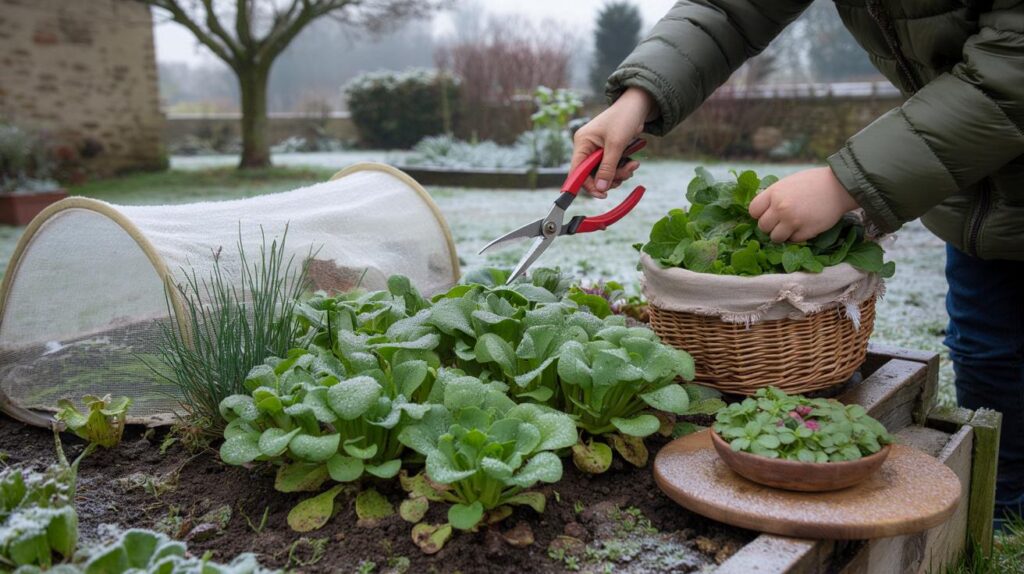
Most salads vanish at first frost, yet across France a hardy green keeps plates still full and gardeners oddly cheerful.
As cold fronts sweep in, an old favourite has crept back into raised beds and allotments. Winter purslane (Claytonia perfoliata), sometimes called miner’s lettuce, germinates in the chill, carpets soil with glossy rosettes, and serves fresh leaves long after lettuces collapse. Its return signals a quiet shift: growers are swapping disappointment for continuity in the leanest months.
Cold snaps, fresh leaves: why gardeners are betting on winter purslane
This soft, spoon‑shaped salad leaf shrugs at icy mornings. It hugs the ground, shelters its own growing points, and waits out snow without drama. Give it a brief thaw and it moves again, steadily enough to reward frequent snipping from December to March.
It germinates when soils sit between 7°C and 15°C, then keeps feeding households while beds around it freeze solid.
That reliable rhythm is winning attention in French gardens, where autumn sowings once ended with the last lamb’s lettuce and chicories. Winter purslane offers a different proposition: sow in late October, walk away, and harvest when the rest of the plot looks abandoned.
Where it thrives when beds freeze
The plant’s thick leaves hold moisture without turning to mush. Its low, sprawling habit traps a cushion of slightly warmer air at soil level. Light snow acts like a blanket. Cover is optional in many winters, though a simple fleece pays off during deep cold.
Partial shade suits it. North‑facing walls, the dapple beneath fruit trees, or gaps between slow brassicas become productive again. Even tired soil revives with a light top‑up of compost.
Why a forgotten salad suits modern plots
Urban gardeners like its speed and fuss‑free growth. Rural plots value its ability to occupy space between crops that are resting. Because it regrows after cutting, a square metre can meet the needs of a small family, with leaves ready for sandwiches, soups and salads across the week.
Timing and technique that actually work
Success starts with timing. Wait until the soil cools yet stays workable, then sow shallowly and keep moisture steady. The window is wider than many think, but a cold snap right after sowing can delay germination.
Soil, sowing window and spacing
| Task | When | Figures to watch |
|---|---|---|
| Prepare bed | Early to mid‑October | 2–3 cm compost on top; rake level |
| Sow seeds | Mid‑October to mid‑November | Soil 7–15°C; sow 1–2 cm deep, thin to 10–15 cm |
| Protect (optional) | During hard frost | Fleece or cloche if forecast dips below −5°C |
| First harvest | 8–12 weeks after sowing | Cut 2–3 cm above the crown for regrowth |
A light mulch of fine leaves or straw keeps swings in moisture under control and makes weeding easy. Water after sowing, then only when autumn turns unusually dry. Most slugs seem to pass it by, which reduces night‑time patrols.
Sow shallowly, keep it tidy, and treat it like cut‑and‑come‑again: one bed delivers for months.
Low care, steady pickings
From December, take handfuls as needed. Snip cleanly and leave the crown in place. In mild spells the bed bounces back within 7–14 days. Even after snowfall, rosettes perk up quickly once the crust melts. With this rhythm, one small patch supports regular lunches without the weekly dash to the shop.
Kitchen ideas that brighten grey months
Winter purslane tastes fresh and slightly sweet, with a whisper of cucumber. It pairs well with citrus and nuts, and it softens the punch of peppery leaves. A quick wilt brings a delicate, spinach‑like texture.
- Toss with rocket, orange segments and toasted hazelnuts; finish with a Dijon vinaigrette.
- Spread on toasted sourdough with soft goat’s cheese, lemon zest and black pepper.
- Layer into a ham, cheddar and mustard sandwich for crunch without bitterness.
- Wilt briefly in butter, then serve with poached eggs or smoked trout.
Nutrition adds to the appeal. The leaves offer a useful hit of vitamin C, gentle amounts of iron and plenty of fibre. Through short days and long coats, those elements keep meals lively when variety thins out.
Numbers that matter to your wallet and your week
Gardeners chasing value will notice the sums. A rough rule of thumb puts seed use at 0.5–1 g per square metre, enough to colonise a bed. From midwinter to early spring, that bed can supply repeated pickings amounting to several large bowls of leaves.
Compare that to shop‑bought salad bags. At €1.70 for 125 g, eight winter pickings totalling 1 kg equate to about €13.60 of leaves from a space the size of a small table. Even if your output dips in a harsh month, the numbers still favour the garden, and the taste beats plastic‑tired mixes.
One square metre, one packet of seed and around ten minutes of work can cover weeks of lunches.
Common pitfalls and easy fixes
Frost, crowding and the late‑sowing trap
Sow too late and germination slows or thins. Aim for mid‑October to mid‑November, then stop. Over‑thick sowings stall in gloomy weather, so thin early to 10–15 cm. In deep freezes, lay a simple fleece overnight and remove it for light on calmer days.
Keeping beds productive without a fuss
Rotate the patch each year to share nutrients around and to stop a volunteer carpet popping up in spring. If self‑seeders suit your style, let a handful of plants flower and set seed, then rake lightly after they drop. For neater plots, collect seed heads and store them in a paper envelope.
Ways to scale up or slot it into busy plots
Interplant between slow winter crops, such as purple sprouting broccoli or leeks, to fill the soil without stealing the show. In containers, choose a trough at least 20 cm deep and tuck it under a porch where wind eases. In a polytunnel, expect faster regrowth and earlier first cuts; keep ventilation moving to avoid mildness turning to mildew.
If you track your time, set a simple plan: sow once in late October, thin after three weeks, harvest every 10–14 days through winter, then clear in April when spring salads take over. The routine removes guesswork and keeps the kitchen supplied even when daylight runs short.
For families juggling budgets, this crop offers stability. Pair winter purslane with hardy herbs, roasted roots and a protein, and you build satisfying plates for less than the cost of ready‑washed bags. If you want to stretch value further, grow a second small patch and stagger sowing by two weeks to smooth out dips after cold spells.



Tempted—any tricks to stop bolting once days lengthen? I want those cut‑and‑come‑again leaves into April.
7°C soil and 10 weeks to harvest sounds neat, but is the flavour more than ‘watery cucmber’? Convince me it’s worth the bed space vs lamb’s lettuce.