
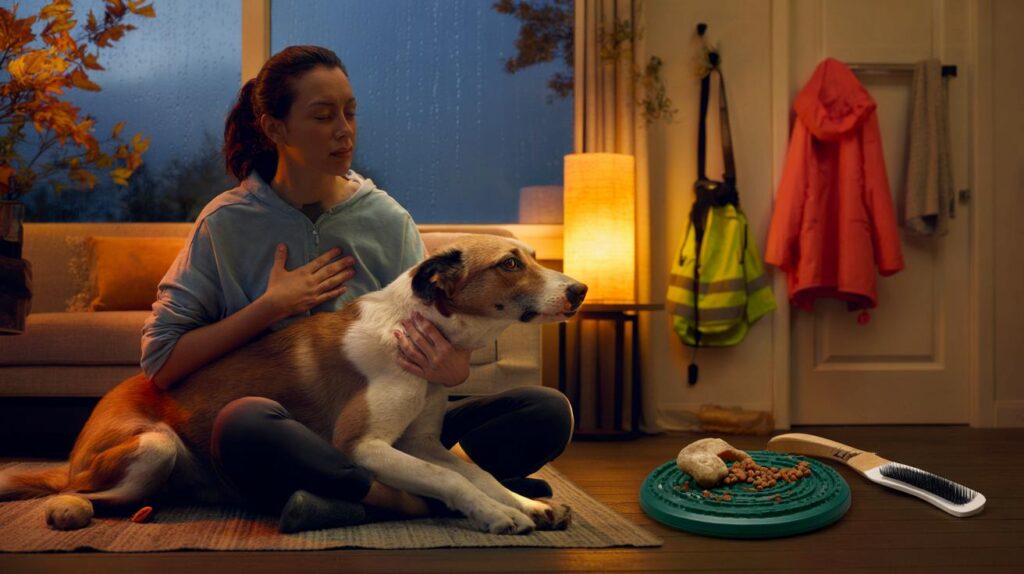
As nights stretch and routines tighten, your dog watches you closely. Small shifts in your mood ripple through the house.
That quiet tension is contagious. Dogs read tone, posture and pace better than most people. Your stress can nudge them off balance unless you reset the atmosphere with clear, repeatable habits.
How your stress jumps species
Dogs track human signals with remarkable accuracy. They notice clipped speech, shallow breathing, stiff shoulders and hurried steps. They match your tempo, then hold it, even when you sit down. Many households see the results after a tough day: a clingier dog, an avoidant dog, or one that switches rapidly between the two.
This mirroring has a biological side. When people run on edge for days, their sleep shifts and their routines wobble. Dogs feel that drift. Cortisol and adrenaline bump up, patience thins, and predictable cues become scattered. Sensitive breeds and rescue dogs show sharper spikes, yet even steady companions lose appetite or energy when pressure hangs in the room.
Your dog scans your body for clues every minute you share a room. Change your rhythm, and you change theirs.
Autumn factors that raise the stakes
Shorter daylight squeezes walks into darker hours. Cold rain cuts sniffs and social contact. Fireworks season looms in early November. Ticks linger in many parks until the first hard frost. These small frictions add up, and your dog’s tolerance shrinks when your own does.
- Subtle stress signals: repeated yawns outside sleepy times, ears held back, lip-licking with no food present.
- Pacing, panting at rest, body shake-offs indoors, a tucked tail on familiar routes.
- Appetite dips, soft stools or diarrhoea, extra shedding, or a sudden need to hide.
- More barking when you leave, chewing at doors or soft furnishings, repetitive licking of paws or flanks.
If noticeable changes last beyond 72 hours, treat them as a flag, not a phase.
Quick wins you can use tonight
Chasing perfect calm rarely works. Anchors do. A short, structured reset helps both species come down together.
The 12-minute home reset
Use this sequence after work or before bed. Keep your phone away. Keep the lights warm, the TV low, and your voice gentle.
| Step | Action | Minutes |
|---|---|---|
| 1 | Square breathing for you (4-4-4-4) while your dog rests beside you | 3 |
| 2 | Slow “sniffari” on lead at your dog’s pace, no chat, no phone | 5 |
| 3 | Gentle ear rub or slow brush strokes, count each breath | 2 |
| 4 | Foraging: scatter-feed kibble or use a snuffle mat | 2 |
Repeat nightly for a week. Most dogs settle faster by day three. You will, too.
Rituals beat willpower. The same steps, in the same order, shrink uncertainty and steady the room.
Return to the basics that build safety
- Predictable meals at fixed times; keep bowls clean and feeding spot quiet.
- Two to three walks, even when it rains; shorter is fine if sniff-rich.
- A true safe place: one bed that no one disturbs, away from doorways.
- Chews that last 10–20 minutes to channel jaw work and calm the gut-brain loop.
- Simple training games: nose-target, hand-touch, find-it with three hidden treats.
Consistency reduces guesswork. Guesswork fuels anxiety. When your cues align day after day, your dog stops scanning for surprises and starts to rest.
When to escalate and who to call
Phone your vet if you spot blood in stools, repeated vomiting, sudden weight loss, pain on touch, or growls that do not match the context. Ask for a physical exam before behaviour plans. Pain, infected ears, dental issues, arthritic flare-ups or persistent parasites can brew stress and then mask as “mood”.
Seek a qualified behaviour professional if you see fixed stare, air-snapping, resource guarding, or panic at separations. Early guidance prevents habits from hardening and keeps people safe.
Medical checks first, training second. Comfort lands faster when bodies feel right.
For the humans: reduce the signal you broadcast
Set a doorframe routine. Put your bag down, breathe for one minute, then greet briefly at your dog’s level. Move slowly to the kitchen. Sip water. Only then start conversation or chores. You lower your own heart rate and show your dog that arrivals mean calm, not chaos.
Build a phone-free walk each day. Five steady streets or one slow lap of the park, led by your dog’s nose. Speed is optional. Sniffing is not. The olfactory workload drains arousal better than an overexcited sprint.
Three costly errors owners make daily
- Flooding with fuss at peak stress. Fix: give one quiet touch, then model slow breathing before cuddles.
- Inconsistent rules. Fix: choose one cue per action, keep it the same, and reward every correct try for a week.
- Long absences with zero brain work. Fix: pre-load a frozen lickable chew or puzzle feeder before you leave.
Build a plan you can keep
Choose a rhythm that fits your life. Aim for a 15–20 minute morning loop, a midday toilet break if possible, and a richer evening session with sniffing, training, and chew time. Put it in your calendar. The plan should work on your worst day, not your best.
On rough days, trade intensity for texture. Swap ball-chasing for scent games. Trade long walks for indoor foraging. Move meals into scatter feeds to lengthen calm focus without extra effort.
Predictability, nose-led activity and chew time: three low-tech tools that deflate the stress balloon.
Seasonal add-ons that make a difference
Light helps. Open curtains at breakfast. Step outside for two minutes of daylight after waking. A dawn or dusk walk with a high-visibility lead and a simple coat keeps the routine alive when drizzle tempts you to skip it. Prep a towel station by the door so drying off feels quick and normal.
Noise matters in late October and early November. Many dogs brace at fireworks or backfiring cars. Close curtains at dusk, layer background sound, and offer a chew during peak bangs. If your dog panics, speak to your vet early about a tailored plan.
Extra guidance you can use this week
Try a seven-day log. Rate your stress out of ten each evening. Note your dog’s appetite, stools, energy and any vocalisation when you leave. Patterns usually reveal themselves by day five. The data makes conversations with vets or behaviourists faster and sharper.
Consider gentle touch as a daily practice, not a treat. Slow, predictable strokes down the chest or along the flanks often beat brisk pats. Count five breaths as you stroke. If your dog leans in, continue. If they turn away, pause and give space. Consent builds trust, and trust lowers the baseline.
Think about risk and reward. Pushing through bad weather risks skipped cues and rushed handling. Swapping to an indoor scent trail offers the same mental payoff with less friction. The advantage compounds when you repeat it across the week.
If you juggle multiple commitments, stack habits. Breathe while the kettle boils. Run the snuffle mat during your quick email check. Freeze two chew toys on Sunday so weeknights stay easy. Small preparations remove the hurdles that derail calm routines.



Tried the 12-minute reset tonight and my anxious beagle actually sighed and dozed by step 3. Definately keeping this in our evening routine—thank you!