
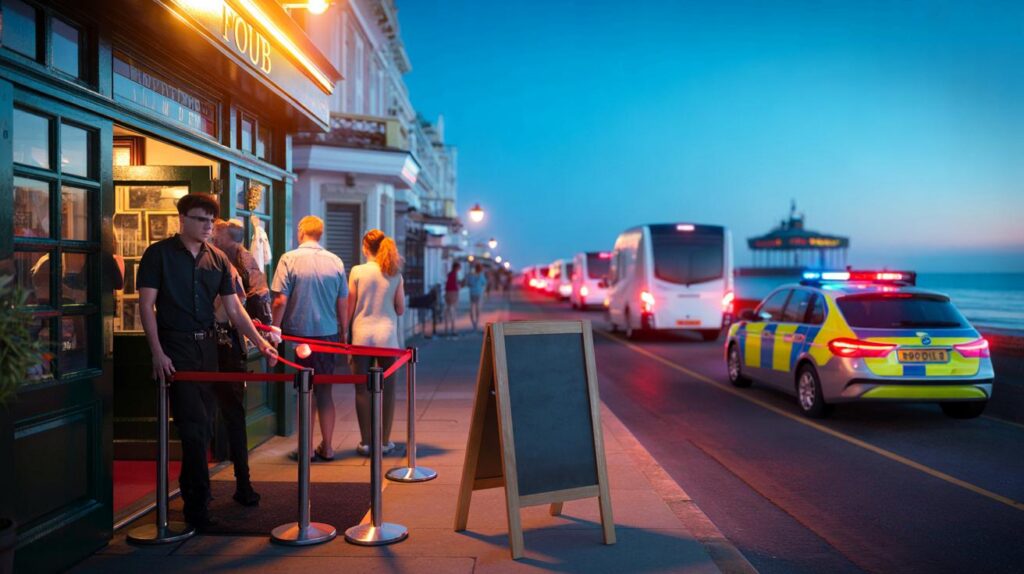
A warm August evening on Worthing’s seafront quickly shifted mood, sparking unexpected decisions in the heart of the town.
Motorhomes lined Marine Parade on 28 August, prompting a swift response from town-centre pubs and a visible police presence shortly before 8pm. By the next day, the vehicles had moved on and venues that had considered extra safety steps stood down their plans and reopened as usual.
What happened on the seafront
Residents reported a line of motorhomes along Marine Parade in Worthing on 28 August. The sight drew attention, given past tensions around unauthorised encampments in coastal towns during peak season. Police attended in the evening, and West Sussex County Council said it was reviewing available powers in case the situation escalated or persisted.
In the town centre, several pubs reacted early. Some shut overnight or drew up contingency measures for the following day. Among the venues mentioned by locals were Thieves Kitchen and Harlequins, which closed for the night. Others weighed limited entry policies or restricted hours to reduce risk and reassure regulars.
Pubs are trading normally again after the motorhomes moved on, and planned door checks have been scrapped.
How pubs prepared — and why plans changed
Hospitality managers moved quickly once the vehicles appeared. Risk assessments considered staffing levels, the small number of door supervisors available midweek, and the possibility of spillover from the seafront to the town centre.
Measures considered by local venues
- Temporary door policies prioritising known customers and nearby residents.
- Reduced hours to avoid late-night flashpoints.
- Extra staff on entry for ID checks and welfare monitoring.
- Rapid coordination with neighbouring venues and taxi ranks.
- Contingency contact with police for quick support if required.
Once reports confirmed the motorhomes had left, venues reverted to normal trading. Managers said they preferred not to inconvenience regulars or deter visitors during the summer holiday period. The Egremont, which had considered a later opening time, returned to its standard hours. O’Connor’s put aside a proposed knock-to-enter system that would have favoured regulars and nearby residents.
| Venue | Initial plan | Current status |
|---|---|---|
| Thieves Kitchen | Closed for the night | Open as normal |
| Harlequins | Closed for the night | Open as normal |
| O’Connor’s | Door policy prioritising regulars and locals | Open as normal |
| The Egremont | Shift to 4pm opening | Open as normal |
Police attended shortly before 8pm and the county council assessed its legal options while monitoring the situation.
Police and council response
Sussex Police were called in the evening as a precaution. West Sussex County Council said it was aware of the encampment and reviewed what it could lawfully do if the vehicles remained or if public safety concerns emerged. In such cases, councils and police consider a staged approach: checks on welfare and safeguarding, confirmation of land ownership, and engagement to encourage a timely departure.
Where problems arise, authorities may weigh legal powers, including sections of the Criminal Justice and Public Order Act 1994, highways regulations, or specific local byelaws. Any enforcement tends to balance proportionality, the impact on residents and businesses, and the rights of those present.
Why hospitality acts fast in uncertain moments
Pubs sit at the frontline of town-centre safety. A sudden shift in footfall, a spike in noise near the seafront, or rumours on messaging apps can change the tone of an evening. Managers rely on rapid, visible decisions to keep staff calm and customers confident. That can mean short closures or tighter entry for a few hours, even if incidents remain limited or never materialise.
Insurance conditions also play a role. Many policies require demonstrable risk mitigation: documented checks, a named duty manager, and liaison with police if a situation looks volatile. A temporary door policy can satisfy those obligations while avoiding heavy-handed measures.
What residents and visitors can do
- Check venue updates on social channels before heading out.
- Carry ID when venues tighten entry, especially around bank holidays.
- Report concerns calmly to staff; they can escalate to police if needed.
- Use licensed taxis and well-lit routes when town-centre dynamics shift.
If encampments return: likely steps and timelines
Should a similar encampment reappear, the usual pattern involves early engagement by local officers, welfare checks, and time-limited notices if the location proves unsuitable. Businesses typically respond in parallel, coordinating opening times to maintain a steady, manageable flow of customers while avoiding pinch points late at night.
As for residents, the most effective approach is to avoid speculative rumours. Verified updates from the council or police reduce unnecessary strain on pubs that depend on consistent trade. Hospitality groups in Worthing often encourage people to keep coming into town, support local staff, and report only what they directly observe.
Practical takeaways for businesses and patrons
For venues, a simple preparedness plan pays dividends. A one-page checklist covering entry protocols, staff briefings, and contacts for neighbouring pubs can stabilise a busy evening within minutes. For patrons, a flexible mindset helps: delays at the door or small detours between venues often reflect sensible crowd management rather than alarm.
To gauge the impact of short closures, consider a quick scenario. If a pub turning over 80 covers per hour pauses for two hours at early evening, that’s 160 missed covers. Recovering half of that trade later, with a slightly longer last entry, can limit the hit to manageable levels while keeping staff safe and customers relaxed. The calculation changes if concerns escalate, but the principle holds: early, proportionate action can prevent a longer shutdown.
Worthing’s response this week shows how quickly a town can reset. Vehicles came and went, pubs readied sensible safeguards, and then dropped them when the risk eased. The message from local hospitality remains steady: keep visiting, stay patient with door teams when plans tighten, and let verified information guide your night out.



Was anyone actually turned away at 8pm? I walked by Harlequins and the doors looked normal by 8:30—feels a bit OTT tbh.