
A hush falls over a Hampshire lane as a much-loved Georgian home prepares for its next chapter and keeper.
The house carries history in its brickwork and a gardener’s lifetime in its borders, with rooms for parties, study and quiet ritual.
A Georgian home with a working heart
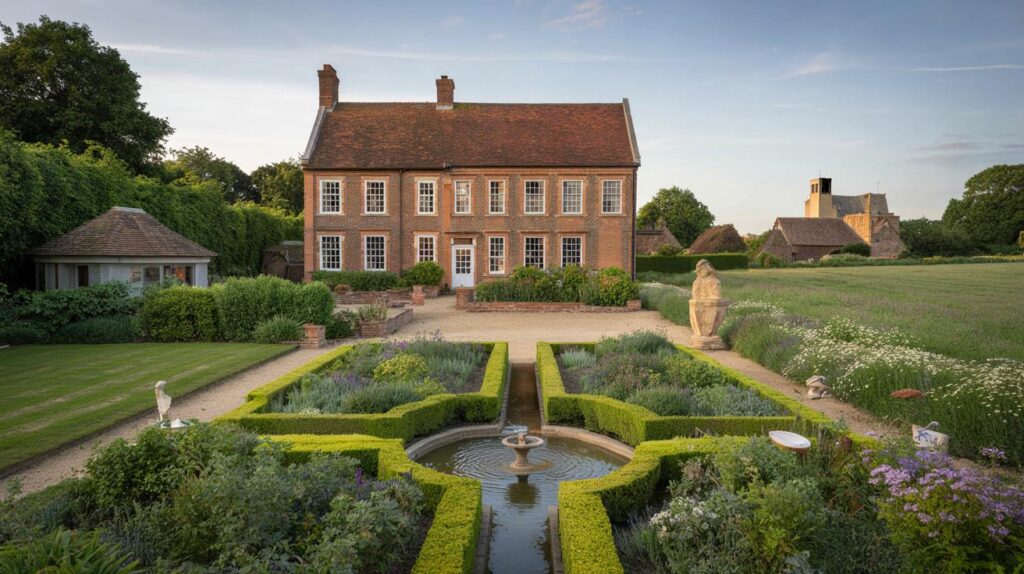
Set beside Holybourne’s Church of the Holy Rood near Alton, Manor Farm House presents late‑17th‑century substance shaped through the Georgian period. Red brick, five bays and a clay‑tiled hipped roof lift the street scene. Mullioned and transomed windows add rhythm and light. The right‑hand flank likely dates to about 1690, with 18th‑century enlargements and a double‑gabled rear section from 1777. Beneath the dining room sits a vaulted wine cellar thought to be 16th century.
Outbuildings stretch behind: flint‑walled former farm ranges, now reborn as useful spaces. The ensemble sits in a conservation area first designated in 1977, where streams rise near Church Lane to feed the River Wey. The Grade II* church next door brings a Norman nave and tower, a 13th‑century chancel and a distinctive 19th‑century oak‑shingled broach spire.
Guide price: £3.95 million via Savills (Farnham). Four acres. About 4,768 sq ft. Five bedrooms. A 42ft party barn/theatre. Grade II listing.
Space to gather, room to write
Inside the main house, the ground floor flows from a formal hall to a grand drawing room and a separate sitting room. The kitchen/breakfast space feels bright and practical, centred on an Aga and bespoke painted cabinetry. Upstairs, the principal bedroom suite faces the garden and sits alongside four further bedrooms and two bath/shower rooms. Attic rooms provide storage and potential, subject to consent.
The detached stone‑and‑brick range adds theatre to the mix: a 42ft party barn frames celebrations, while a generous library leads to a first‑floor office. Under the eaves, a tucked‑away writing room shows how the place has nurtured ideas as well as plants.
A four‑acre garden shaped by six decades in horticulture
Alan Titchmarsh bought the property in 2002 with two overgrown acres. He then purchased two adjoining acres of prime arable land and broadcast wildflower seed by hand from a bucket. Today the plot runs to four organic acres, stitched together by thoughtful planning, restraint where needed and bravura where fitting.
A broad Yorkstone terrace wraps the house and functions as a stage. A tall terracotta figure of Humphry Repton by Jim Keeling of Whichford Pottery will remain on site, a wry nod to gardening history. Steps drop to formal quarters where clipped topiary stands with confidence, rills and fountains sparkle, borders are densely stocked, and neat lawns thread towards seats and a pretty octagonal summerhouse. Beyond, a meadow brings seasonal drama and habitat.
Four organic acres blend formality with a hand‑sown meadow, a water rill, clipped lines and generous Yorkstone.
From infestation to restoration
When the couple arrived, the house was tired. Woodworm and death‑watch beetle had taken hold; decades of detritus needed clearing. The structure stayed intact, while chipboard made way for proper floorboards. Underfloor heating went into the ground floor and bathrooms, easing winter mornings. Colour lifted the Georgian proportions without smothering them.
Where it sits and why that matters
Holybourne’s origins run back to Saxon times, with a name linked to rites held beside sacred streams. The setting adds charm and responsibilities. Conservation status shapes what you can change, and the church brings village life to your doorstep. A long, low stable range restricts views from the north footpath, protecting privacy, while the broach spire anchors the skyline.
- Price: £3.95m guide
- Internal space: about 4,768 sq ft
- Plot: four acres (two acquired after 2002)
- Bedrooms: five, including a principal suite with garden outlook
- Bathrooms: two bath/shower rooms in addition to the principal suite facilities
- Outbuildings: 42ft party barn/theatre, substantial library, first‑floor office, eaves writing room
- Heating: underfloor on ground floor and in bathrooms; kitchen with Aga
- Designation: Grade II listed; within a conservation area
- Location: Holybourne, near Alton, Hampshire; next to Church of the Holy Rood
What a four‑acre show garden asks of its next owner
Beauty on this scale needs time, rhythm and a plan. The meadow wants a late‑summer cut and removal of arisings to keep fertility low. Hedges and topiary need shaping two or three times a season. Water features require pump servicing, leak checks and algae control. Trees need inspections and careful pruning. Organic methods suit the site and reduce chemical spend, but they demand vigilance and good composting.
| Task | Typical frequency | Indicative annual cost |
|---|---|---|
| Lawns and meadow (mow, scarify, meadow cut/collect) | Weekly in season; meadow once yearly | £4,000–£7,000 |
| Topiary and hedge work | 2–3 rounds per year | £2,000–£5,000 |
| Borders (mulch, staking, seasonal replanting) | Weekly in season | £3,000–£6,000 |
| Water features (pumps, cleaning, repairs) | Quarterly checks | £800–£2,000 |
| Trees (inspection and surgery) | Every 1–3 years | £1,000–£3,000 |
| Part‑time gardener (2 days/week, 48 weeks) | Ongoing | £17,000–£22,000 |
Totals vary with ambition, but many owners of comparable plots budget £25,000–£40,000 a year for care, excluding major redesigns.
You are not just buying a house; you are taking custody of a living, evolving garden with a public reputation.
Grade II and conservation checks before you bid
Listed status shapes future changes. Reconfiguring attic storage into bedrooms, altering windows or enlarging openings will need consent. Outbuilding works, water engineering and new hard landscaping also sit under this umbrella. Tree works often require notice within a conservation area, even for routine pruning. Engage a heritage architect early.
Proximity to a historic church raises practical questions. Bells chime. Major services draw cars on high days. For many buyers this adds charm; for others it sets a weekly soundtrack. Visit at different times to check traffic, light and sound.
Ask for records of timber treatments after the historic infestations, guarantees, and any monitoring for bats in roof voids. Check pump and liner paperwork for rills and ponds. With waterways nearby, confirm drainage, any flood history and insurance terms. The underfloor heating and Aga shape running costs; ask for recent bills and the energy assessment for a clear picture.
Why now, and what it means for fans of Britain’s best‑known gardener
After more than two decades, Alan Titchmarsh and his wife plan to downsize within Hampshire, closer to daughters and grandchildren. He says he still has another garden to make, which tracks with a career that spans the How to Garden books, the light‑hearted Ground Force series and recent works on great estates, including Chatsworth: The Gardens and the People Who Made Them (2023). The next owners inherit a landscape shaped by those years of practice, humour and patience.
For buyers who love plants, this is a turnkey stage set: the geometry is strong, the soil well‑worked, the framework mature. For those new to horticulture, a phased maintenance plan and a trusted head gardener will keep standards high while you learn the plot. The meadow can be overseeded in small sections to spread cost and risk, and the formal areas accommodate gradual changes without losing coherence.
Thinking of creating your own meadow on two acres? Start with a soil test and reduce fertility before sowing. Choose a mix suited to chalk or loam as found around Alton. Sow in late summer, roll lightly, and remove first‑year weed growth with high cuts. In year two, plan a single cut in August or September and cart off arisings. Hand broadcasting from a bucket still works; accuracy improves with a carrier like sand.
Buying next to an ancient church also brings privileges: architecture on your doorstep, open gardens days to inspire you, and a tight‑knit village scene. It asks for neighbourly give‑and‑take and respect for events. Walk the footpaths, speak to locals, and check the parish noticeboard before you sign. This house rewards that kind of care—just as the garden does.



That 42ft party barn plus the tucked‑away writing room is my dream combo. The Georgian bones, the flint outbuildings, and that hand‑sown meadow make it feel like a lived‑in estate rather than a show home. If Savills can show sensible running costs and timber treatment guarantees, I’d be seriously tempted to book a second viewing.