
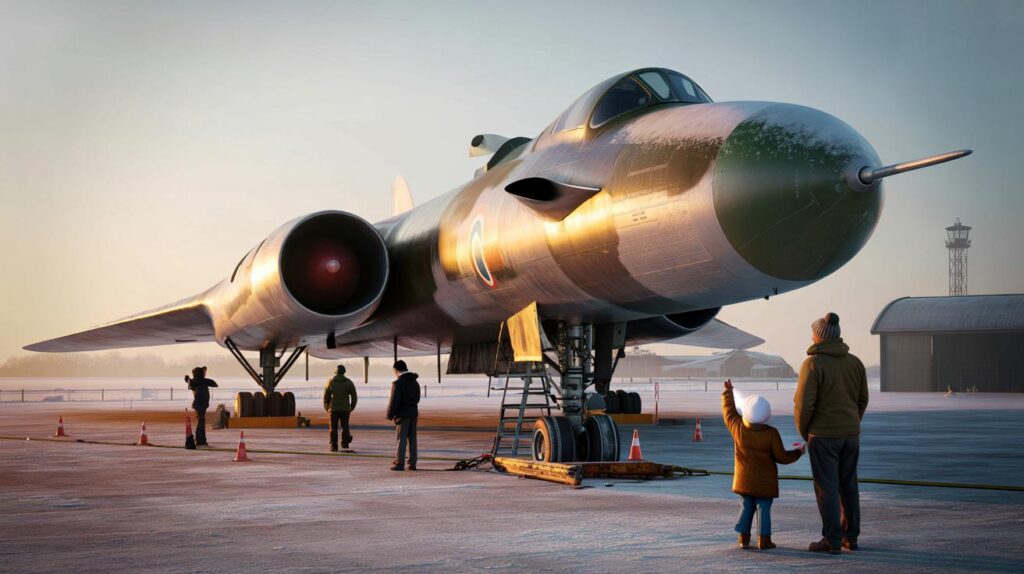
A thunderous icon sits quiet in South Yorkshire. Crowds remember the roar. Engineers count the days. The bills keep arriving.
The charity that stewards Avro Vulcan XH558 has launched an appeal, warning that the aircraft’s future at Doncaster now depends on fresh public support.
Why the appeal matters
Vulcan XH558, known as the Spirit of Great Britain, holds a unique place in British aviation. It served through the Cold War, carried nuclear-armed readiness in the V-Force, and became the final Vulcan to retire from Royal Air Force service in 1993. In 2015, it drew a defining line in the sky as the last of its kind to fly.
The Vulcan to the Sky Trust says years of disruption have drained reserves. A hangar move, the suspension of crowd-pleasing ground runs and the closure of Doncaster Sheffield Airport in 2022 created a financial squeeze. The trust’s leaders now warn of a simple dilemma: stabilise the aircraft and keep it in public view, or risk a slide into decay that would be costly to reverse.
The final flying Vulcan last took to the air in 2015. To keep it safe and accessible in 2025, the trust needs interim funding.
What is at stake at Doncaster
When the airport closed, uncertainty swirled around XH558’s home. At one point, a move away from the site looked likely. That decision has been reversed. Doncaster City Council now backs the aircraft staying long term. A company called FlyDoncaster Ltd, formed to pursue a revival of the airport, has identified land for a proposed visitor attraction called The Vulcan Experience.
The centre would place the aircraft at its heart. Plans set out a walk-through journey covering the RAF’s V-Force era, the Cold War standoff and how aviation now faces the climate challenge. The trust also wants to expand its education programme, using the aircraft to inspire future engineers, technicians and pilots.
Timelines and turning points
| Year | Event |
|---|---|
| 1960 | XH558 enters RAF service |
| 1993 | Final Vulcan retires from RAF duty |
| 2015 | Last flight of XH558, ending Vulcan flying era |
| 2017 | Operational pressures and costs begin to mount |
| 2022 | Doncaster Sheffield Airport closes; future location questioned |
| 2025 | Trust launches appeal for interim funding |
Inside the funding squeeze
Aircraft that no longer fly can still cost substantial sums. Insurance, inspections and specialist support do not disappear when the engines fall silent. The trust says the halt to fast taxi runs, once a vital income stream and a magnet for enthusiasts, removed a reliable source of cash and public visibility. The airport’s closure then compounded the problem, adding site uncertainty and logistical expense.
Chief executive Marc Walters frames the current push as a bridge to a new chapter. If supporters provide breathing space, the trust believes it can unlock partnerships and build The Vulcan Experience on a defined plot at Doncaster. That would give the aircraft a stable base, permanent facilities and room to deliver hands-on learning.
The plan hinges on a simple sequence: secure interim funds now, then build a permanent centre that pays its own way.
What the proposed centre would deliver
- A permanent exhibition featuring XH558 as the centrepiece, with guided access and technical displays.
- Interactive interpretation of the V-Force and the Cold War, including alert drills and bomber dispersal tactics.
- Workshops aligned to the school curriculum in physics, materials, aerodynamics and sustainability.
- Programmes for apprentices and undergraduates, with mentoring from experienced aerospace professionals.
- Public talks on aviation’s shift to low-carbon fuels, efficiency and the realities of lifecycle emissions.
The heritage case: why a Vulcan still matters
The Avro Vulcan remains one of Britain’s most recognisable aircraft. Its delta wing, Olympus engines and imposing presence symbolised a strategy that rested on speed, height and deterrence. The type showed remarkable reach, demonstrated by the RAF’s long-range raids during the Falklands conflict in 1982. XH558 itself later became the public face of the Vulcan story, touring airshows and serving as a high-profile ambassador for STEM education after its return to airworthiness in the 2000s.
Keeping a single aircraft safe may sound simple. It is not. A large airframe demands constant attention. Corrosion never takes a holiday. Seals dry, tyres age, and moisture finds every gap. The longer the pause in maintenance, the more expensive the restart. Preservation groups across the country know this pattern well, from Cold War jets on dispersal aprons to classic airliners under museum roofs.
Risks if the appeal stalls
- Extended outdoor storage increases corrosion and structural fatigue risks.
- Insurance and regulatory checks can lapse, raising costs to reinstate public access.
- Specialist skills may drift away if project timelines remain vague.
- Community support can fade without visible progress on site.
Time is the enemy of large, complex airframes. Small gaps in care can become large repair bills.
DSA’s uncertain runway and a potential revival
The future of Doncaster Sheffield Airport remains in play. FlyDoncaster Ltd aims to reopen the site and operate it commercially. A working airport would change the context for any visitor centre, bringing footfall, transport links and on-site services. Even without flights, the location offers space and recognition across South Yorkshire. Retaining XH558 at Doncaster gives the project a clear local identity and an anchor for wider regeneration.
City support matters here. Doncaster City Council has signalled that the aircraft can remain on a long-term basis. That commitment removes a disruptive variable and allows the trust to plan permanent works, rather than temporary fixes. It also gives potential partners clarity about where their investment would land.
How supporters can make a difference
People often ask what practical help looks like if they cannot write a large cheque. The answer usually lies in steady, predictable support and specialist volunteering. Engineers, project managers, electricians and educators can all contribute hours that would otherwise cost cash. Regular donors help a charity plan, because monthly income allows it to schedule inspections and commit to contracts.
- Join a skills bank for maintenance, documentation and visitor operations.
- Sponsor a component inspection or safety upgrade to a defined value.
- Back the education programme so schools can visit without prohibitive costs.
- Spread accurate information so rumours do not undermine confidence.
Context for readers: the V-force, climate and hands-on learning
The V-Force—Vulcan, Victor and Valiant—formed Britain’s airborne nuclear deterrent from the 1950s. That history carries difficult questions about strategy, risk and ethics. A well-curated centre can handle those questions with nuance while showing how policy shaped technology. It can also connect past to present. Aviation must now cut emissions while preserving connectivity and safety. Exhibits that explain airframe design, materials, fuel chemistry and operations help visitors understand the trade-offs rather than slogans.
For families and schools, a large aircraft offers a tangible classroom. Pupils can measure a wing sweep, calculate lift with simplified models and compare conventional jet fuel with sustainable alternatives. A volunteer can demonstrate how a hydraulic system works using clear piping, dyes and hand pumps. These activities turn a static exhibit into a working laboratory that demystifies engineering and sparks career choices.
A single preserved aircraft can carry two missions at once: protect heritage and train the next generation.
What happens next
The trust seeks interim funding to stabilise the project and bridge the gap to a full visitor centre. If the airport revival proceeds, The Vulcan Experience could become a cornerstone attraction with year-round activity and a clear educational offer. If it stalls, the aircraft still needs care, security and a managed visitor environment. Either path requires momentum now, not later.
For readers weighing the appeal, one point stands out. There is only one XH558. It last flew a decade ago and entered service 65 years back. Keeping it safe preserves a national asset and creates a platform where children learn by touching real metal, not just tapping glass. That feels like value you can hear, even when the engines no longer sound.



Brilliant to see a plan that links heritage with hands-on learning. If The Vulcan Experience delivers real workshops for schools and apprentices, that’s worth supporting. Set up a monthly donor option with clear milestones and I’ll sign up.
Before I chip in again, can we get a detailed breakdown of costs? Insurance, inspections, storage, security—line by line. Last time felt vague. Publish audited accounts and a timeline for Doncaster works; otherwise this just reads like another bridge-to-nowhere. Also, what happens if DSA doesnt reopen?