
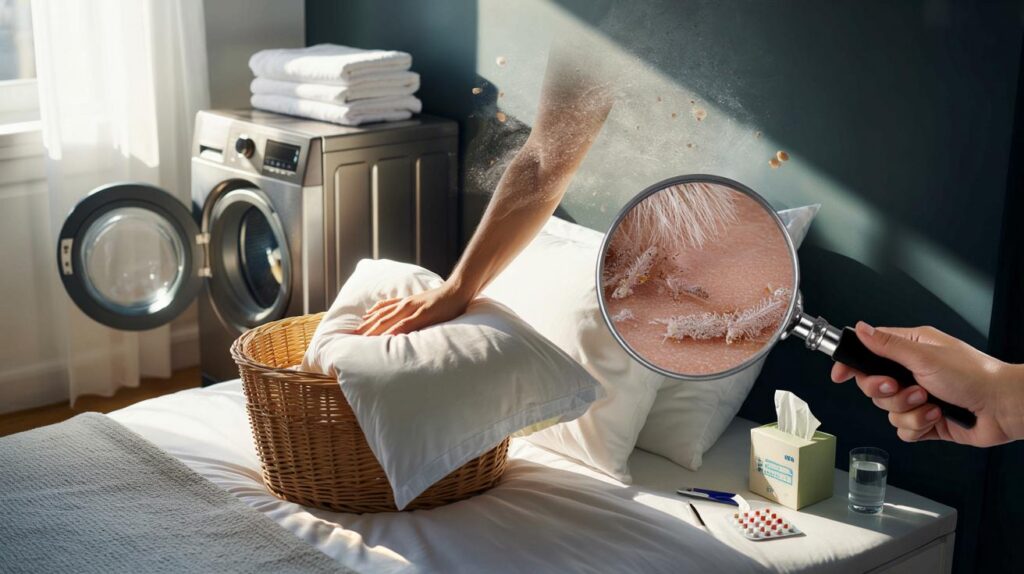
That crisp, clean-looking sheet tells a comforting story, yet the real plot unfolds in sweat, humidity and microscopic crumbs.
Hygiene specialists say fortnightly changes miss the mark, and monthly swaps fall short. Their updated guidance gives clear numbers you can use.
Why your sheets get dirty faster than you think
Your body keeps working while you sleep. It sheds skin cells. It leaks sweat and natural oils. It transfers saliva, cosmetics and pollen to the fabric. These residues add up night after night. They feed house dust mites and support bacterial growth.
Warmth and moisture inside the bed create a cosy microclimate. Mites thrive when bedroom air sits above 50% relative humidity and the mattress stays slightly damp from perspiration. That combination leads to odours, irritation and sneezing fits by midweek in many homes.
Clean-looking sheets can host a crowded ecosystem in days, not weeks, if sweat and skin cells build up unchecked.
What experts now recommend
Microbiologists and dermatologists align on a simple baseline: wash sheets and pillowcases every seven days. A 60°C programme helps cut bacteria, mites and allergens. That weekly reset supports clear skin and calmer breathing for many sleepers.
When illness hits, speed up the cycle. If you have a fever, a respiratory infection or heavy night sweats, plan a change every 48 hours. The same goes after bouts of vomiting or wound leakage. Quick turnover reduces exposure and helps the room smell fresher.
The seven‑day rule suits most households. Switch to a 48‑hour rhythm during infections, high sweat nights or flare‑ups of allergies and asthma.
Who should wash more often
- Pet owners who let animals on the bed: fur, dander and soil arrive daily.
- People with eczema, acne or rosacea: cleaner sheets reduce friction and residue.
- Messy sleepers who snack in bed: crumbs and sugars invite microbes.
- Hot sleepers and athletes: sweat loads climb after training or in heatwaves.
- Seasonal allergy sufferers: pollen clings to hair, pyjamas and fabric.
| Scenario | Recommended frequency | Notes |
|---|---|---|
| Healthy adult, no pets | Every 7 days | Use 60°C for cotton; follow care label for delicate fibres. |
| Illness with fever or infection | Every 48 hours | Bag used linens promptly and wash hot. |
| Pets on the bed | Every 3–4 days | Brush pets and add a washable throw as a barrier. |
| Heavy sweating or heatwave | Every 3–4 days | Shower before bed and air the room each morning. |
| Allergies or asthma | Every 4–5 days | Pair with dust‑mite‑proof encasements for pillows and mattress. |
How to build a no‑fuss routine
Pick a fixed laundry day and stick to it. Keep at least two spare sets so the bed goes back on in minutes. Store each set inside a pillowcase to save time. Set a phone reminder that repeats weekly.
- Run cotton sheets at 60°C to tackle bacteria and mites. Use the cottons or hygiene programme.
- Dry completely. Damp fibres invite mildew and a musty odour.
- Open windows for 10–20 minutes each morning to lower humidity.
- Flip or rotate the mattress each season to even out wear and dust build‑up.
- Vacuum the mattress monthly with a HEPA tool to capture fine particles.
- Pre‑treat body‑oil marks with a liquid detergent or oxygen bleach before washing.
- Choose fragrance‑free detergent if you have sensitive skin.
One weekly 60°C wash, full drying and a short morning airing will shrink the mite population and calm bedroom odours.
The science in your bedroom air
Dust mites need moisture to survive. Relative humidity below 50% slows them down. Aim for 40–50% in the room. A cool bedroom, around 16–18°C, also helps you sleep and limits mite activity. A hygrometer shows you the numbers in seconds. A dehumidifier can trim humidity in older, damp homes.
What about duvets, pillows and toppers
Pillowcases join the weekly wash. Pillows benefit from a deep clean every three to six months, unless care labels forbid it. Duvets usually cope with a wash twice a year. A mattress protector improves hygiene and cuts sweat transfer. Wash the protector monthly, then tumble dry until bone‑dry.
Feather‑filled items may need professional care. Synthetic fillings often wash at 40–60°C at home. Two tennis balls in the dryer help restore loft. Always check the label first and dry until the core feels completely dry to avoid clumping or odour.
Energy, time and cost: what this means for you
A modern 60°C cotton cycle often uses about 1.0–1.5 kWh. At £0.28 per kWh, that is roughly £0.28–£0.42 per load. A heat‑pump dryer adds around 0.7–1.5 kWh, or £0.20–£0.42. Washing full loads and spinning at higher rpm shortens drying time. Line‑drying on breezy days saves money and adds a sun‑bleached freshness many people enjoy.
A family of four can run two bedding loads weekly if sets are split sensibly. Stack the change with towel day to streamline chores. Put fresh sheets on while the old set washes, then fold and store once dry. The routine takes minutes when everything sits within reach.
Common mistakes that sabotage clean bedding
- Overloading the drum, which blocks detergent flow and leaves residues behind.
- Skipping the dry step, which lets fungi and odours bloom inside fibres.
- Using fabric softener on towels and some sheets, which can reduce absorbency and trap oils.
- Leaving pillows unprotected, which soaks sweat straight into the filling.
- Going to bed without removing make‑up or hair products, which transfer to fabric and feed microbes.
Extra tips for sensitive sleepers
Choose tightly woven cotton or lyocell sheets if you struggle with dust. Encasements with fine zips block mite droppings from reaching you. Shower before bed to cut pollen transfer. Keep pets off the duvet if hay fever flares after walks. Swap heavy duvets for breathable layers in summer to reduce sweating and nighttime wake‑ups.
If acne or eczema stings at night, change the pillowcase every two to three days. Tie long hair or use a clean sleep cap to stop oils collecting on the case. Wash face cloths and flannels hot, and rinse them thoroughly to remove cleanser residues.



Does washing at 60°C damage delicate fibres like silk or bamboo viscose? The article says follow the care label, but what’s best if lables cap at 40°C—hygiene cycle, oxygen bleach, or wash more often?
So my bed is basically a cosy ecosystem for mites—cool cool… I’ve been hosting a weekly microbe meet‑up. Time to RSVP “no” and set the washer to 60C.