
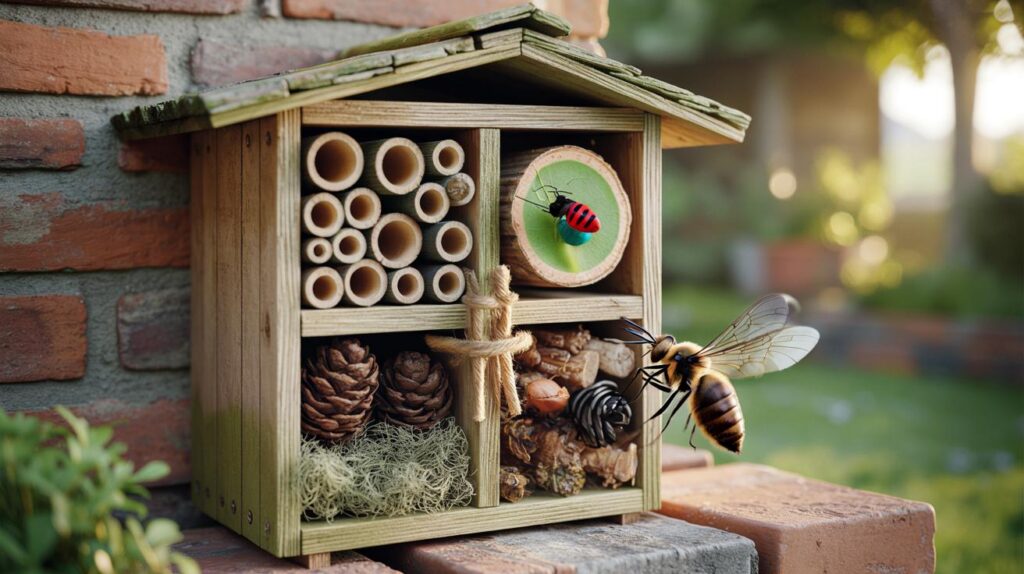
A humble wooden box from centuries-old kitchen gardens is quietly returning to British plots, and many growers now swear by it.
Once common in monastic enclosures, the technique relies on dry, natural materials and careful placement. It slots into small gardens. It suits balconies and allotments. It keeps costs low. It invites pollinators and helpful predators. It avoids plastics and glue. It respects how insects actually nest.
What makes the monastic-style insect hotel different
The concept is simple. You offer small, dry cavities and crevices using only untreated, breathable matter. You stack varied diameters. You leave air gaps. You keep rain out. You face the morning sun. You wait for spring to do the rest.
A dry build with no glues or plastics
Dryness decides success. Damp blocks nests. Mould kills larvae. Natural tubes breathe. Hemp twine holds parts without sealing them. Pine cones form a drainage layer. Dried moss fills gaps without trapping water. The whole unit sheds moisture and warms quickly at dawn.
Keep every component dry and breathable. Ventilation beats moisture. Damp is the fastest route to failure.
Orientation and height that insects prefer
Face the entrance to the south-east. Morning sun warms sleepers early. Wind-driven rain from the west causes less trouble. Fix the box at about 1.5 metres from the ground. Hedgehogs, mice and pets find it harder to reach. Colonisation often starts two to three months after spring warmth arrives.
Mount at 1.5 metres, face south-east, and expect first plugs within 2–3 months of spring.
Materials and measurements you can trust
Keep the footprint compact. A 30 × 20 × 15 cm frame suits most walls and sheds. Use untreated timber. Avoid varnish. Avoid paint near the holes. Sand any sharp edges to protect delicate wings.
- Untreated wooden crate or box: 1 piece, about 30 × 20 × 15 cm
- Bamboo canes: roughly 2 kg, inner diameters between 6 and 10 mm, outer 0.5–2 cm
- Pine cones: 15–20, oven- or air-dried
- Hazel or willow twigs: about 500 g, cut to 14–15 cm lengths
- Dried moss: 200 g, as loose packing
- Hemp twine: 5 m, for binding and anchoring
Cut tubes to 14 cm. Neaten the edges. Remove splinters. Group by diameter to make sorting easy during assembly.
Bamboo diameters guide who moves in: 8–10 mm favours mason bees; 6–8 mm suits many Osmia species.
Step-by-step build in under 70 minutes
Prepare the shell
Drill four drainage holes in the base. Lightly sand the interior. Add a thin, sloped top lip or small roof tile to shed rain.
Create compartments
Lay a base layer of pine cones. The irregular shapes lift materials above any moisture. Alternate rows of bamboo tubes and hazel twigs. Tuck dried moss into small gaps. Do not pack tight. Air must flow.
Secure without smothering
Bind the front gently with hemp twine in a cross pattern. Fix the box to a stable post, fence or brick wall. Use a small wedge to set a slight downward tilt on the face. That tilt helps rain roll off.
Who you will host and how to read the signs
Solitary bees use the tubes. Mason bees seal the ends with mud. Leafcutter bees finish with leaf discs. Ladybirds slip into the cones. Lacewings tuck into the moss. Hoverflies visit the sunlit face to warm up before foraging.
| Tube diameter (mm) | Likely guest | Sign of occupancy | Peak months |
|---|---|---|---|
| 6–8 | Osmia spp. | Neat mud cap | April–June |
| 8–10 | Red mason bee | Thicker mud seal | March–May |
| 10–12 | Leafcutter bee | Green leaf discs | June–August |
What you can expect in crops and flowers
Gardeners report stronger fruit set when the hotel sits near flowering crops. Apples show fewer misshapen fruits. Soft fruit sets more evenly. Broad beans carry longer rows of pods. In comparable gardens, pollination rose by roughly 40%. That uplift tracked with the number of occupied tubes measured in late spring.
Predators help as well. Ladybirds and lacewings shelter in the structure on wet days. Their larvae strip aphids from roses and beans. Fewer sap suckers mean less curled foliage. Plants direct energy into buds and fruit rather than defence.
Expect around 40% more pollination in spring peaks, fewer aphid flare-ups, and steadier yields across beds.
Seasonal care that keeps the hotel productive
- Autumn: remove cracked tubes and replace with dry stock; check the roof drip edge; clear any wet moss.
- Winter: keep the entrance dry; avoid moving the box; do not bring it indoors, as warmth can break dormancy early.
- Spring: refresh any loose bindings; confirm the south-east aspect; add a shallow mud source for mason bees.
- Summer: avoid watering directly onto the face; trim nearby foliage that shades the entrance at dawn.
Do not rotate occupied tubes. Pupae need stable orientation. Do not poke into capped holes. That damages cells. Leave spent tubes in place until the following spring, then retire them if frayed or mouldy.
Common mistakes and simple fixes
- Packing too tightly: loosen the fill so air flows and tubes dry after rain.
- Using softwood dust or straw: both hold moisture and harbour mites; swap for clean bamboo and hardwood twigs.
- Hanging in full shade: move to a brighter spot with morning sun for a warm start to the day.
- Fitting mixed diameters at the back: put the smallest diameters at the top front for easier access.
- Setting too low: raise to 1.5 metres to reduce disturbance from pets and splashing.
- Siting near pesticides: avoid spray drift; skip the hotel if regular spraying continues.
Where to place it for the biggest gains
Mount the box within 10 metres of blossom. Bees prefer short flights to conserve energy. Face a quiet corner sheltered from strong westerlies. Plant a strip of nectar-rich herbs under the box. Thyme, marjoram and chives suit pots and beds. Keep a shallow tray of damp soil nearby for nesting mud.
Low-cost add-ons that amplify results
Stage nectar across the year
Pair the hotel with flowers from early spring to late autumn. Crocus and lungwort feed early risers. Comfrey, borage and raspberries carry the late spring wave. Sedum, ivy and single dahlias stretch into autumn. This sequence keeps guests active when crops need them most.
Leave a little mess for wildlife
A small patch of bare, well-drained soil helps ground-nesting bees. Hollow stems left over winter shelter overwintering larvae. A shallow water dish with pebbles lets insects drink without drowning.
If you have very little space
Balconies work. Fix a half-sized unit to a sunny railing. Use shorter tubes. Add a rain hood made from a tile offcut. Plant a window box with herbs that flower across months. Keep a saucer of damp clay for mud-capping bees.
Extra notes for keen builders
Try a simple trial to see the uplift. Mark 10 runner bean plants within 5 metres of the hotel. Mark 10 at least 25 metres away. Count pods per plant at peak harvest. Record filled seeds per pod. Many growers see higher numbers near the hotel. Repeat over two seasons to smooth out weather swings.
Parasites can appear where occupancy is high. Small wasps may search for exposed cells. A 1 cm wire mesh set 2 cm in front of the tubes can lower raids while allowing bees to pass. Replace aged, frayed tubes yearly to limit mites. Space multiple hotels rather than building one giant block to spread risk.



Briliant guide—finally someone explains the 1.5 metres and south-east bit in plain English. I swapped my painted pallet for untreated timber and sanded the rims; got neat mud caps on 8–10 mm tubes in about 7 weeks. Thanks for the clear materials list.