
Autumn blues creeping in? Some habits you were told to ditch may quietly lift your head, when used smartly today.
New research reviews and small, carefully run trials point to a twist few expected. A bite of dark chocolate, guilt-free self-prioritising, and well-timed delay can ease stress and sharpen thinking. The trick lies in dose, timing and intent.
Chocolate’s quiet science: small doses, big lift
Dark chocolate carries a mix of magnesium, polyphenols and theobromine that nudges mood circuits. Magnesium supports nervous system balance. Cocoa flavanols improve blood flow, including to the brain, which can raise alertness and mental clarity. Small amounts of tryptophan feed serotonin pathways linked with steadier mood.
10–20 g of dark chocolate at 70% cocoa or higher can deliver roughly 40–50 mg of magnesium and a calm, measurable lift.
Timing matters. A mid-morning or mid-afternoon square curbs stress-snacking and lowers the urge for ultra-processed sweets. Most people gain a clearer head within 30–60 minutes, without the blood sugar spike you get from a pastry. The effect is modest, but reliable in real life.
How to use it without the crash
- Choose 70–85% cocoa. Aim for 1–2 squares, not a bar.
- Pair with a handful of nuts or a piece of fruit to steady appetite.
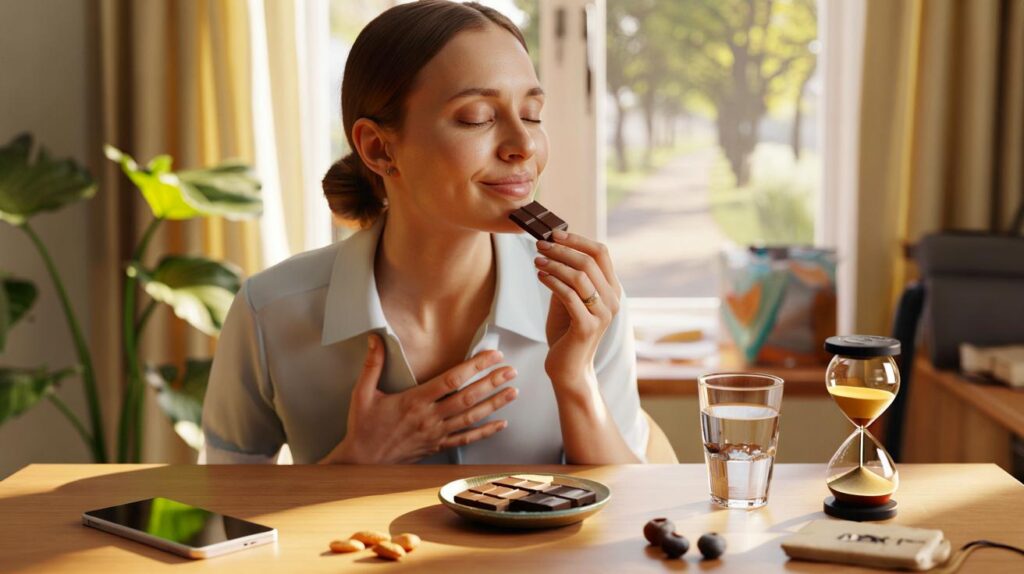
- Savour it. Let it melt for two minutes. Slower eating dampens stress signals.
- Avoid late evening if you are caffeine sensitive or sleep is fragile.
Not everyone benefits in the same way. Migraine-prone readers may prefer cocoa powder in porridge for a gentler effect. If reflux flares, keep to 10 g and take it after food. Diabetics should count carbs and discuss with a clinician if unsure.
Think of chocolate as a tool, not a treat: dose it, time it, and you keep the gain while skipping the guilt.
Self-prioritising without guilt: when ‘me first’ helps everyone
Years of overgiving drain energy and blunt attention. Boundary-setting and small daily acts of care lower cortisol, reduce rumination, and protect sleep. Studies link self-compassion with fewer depressive symptoms and faster recovery from setbacks. When you protect your bandwidth, colleagues and family get a steadier, kinder you.
Start small. Put two short appointments with yourself in the diary and treat them like meetings you would not miss. Keep them tech-free. You are training a habit loop that replaces constant availability with calm presence.
| Micro-habit | Time | Brain effect | When to avoid |
|---|---|---|---|
| 90-second box-breathing | 1.5 min | Slows heart rate, steadies focus | After heavy exercise |
| Sunlight walk | 10–15 min | Boosts circadian rhythm and mood | Strong heat or pollution alerts |
| Boundaried “no” script | 30 sec | Prevents overload, reduces resentment | Safety-critical requests |
| Compassionate check-in | 2 min | Lowers self-criticism, aids resilience | None |
A 7-day reset you can start tonight
- Mon: Write one “must-do” and one “nice-to-have”. Stop at “must-do”.
- Tue: Schedule two 10-minute breathers. Keep them no matter what.
- Wed: Say a polite no to one low-impact request. Offer a later review.
- Thu: Add a tech-free walk at lunch. Note one thing you can smell or hear.
- Fri: Plan a small reward for finishing your main task by 4 p.m.
- Sat: Do one hour for you. Read, garden, tinker, make—guilt-free.
- Sun: Prep three easy meals to reduce weekday decision fatigue.
Self-care is not a spa day; it is a boundary with a time, a place and a purpose.
Procrastination, rebranded: strategic delay that sparks better ideas
The word sounds lazy, yet timing shapes performance. Psychologists call it “incubation”: step away from a problem and hidden associations surface. Short, planned delays can boost creative output and reduce errors. Active procrastinators even report higher confidence because they choose when pressure will help them peak.
That does not mean ignoring the work. It means shaping the rhythm so your brain gets the right mix of focus and drift. You decide the gap. You set the return point. You protect the deadline.
Make delay work for you
- Set a “return slot”: 25–50 minutes away, then back for 25 focused minutes.
- Change state, not just task: walk stairs, stretch, wash a cup, breathe.
- Use a parking note: write the next step before you pause.
- Keep stakes visible: one sentence on why this task matters to someone.
Delay with a plan: choose it, time-box it, and return on cue. That is strategy, not avoidance.
Try the 3-box method. Box A holds tasks under five minutes—do them now. Box B holds deep work—book it in your freshest hour. Box C holds admin—batch it just before lunch when energy dips. Procrastination shrinks when tasks live in the right box.
What the numbers really say
Meta-analyses on cocoa flavanols show small but consistent benefits for mental fatigue and processing speed within hours of intake. Self-compassion training trials report medium-sized drops in stress scores within eight weeks. Studies on incubation show improved problem-solving, especially when the break involves a change of context. No single habit transforms mood, yet together they move the needle in everyday life.
Risks, limits and simple safeguards
- Chocolate: watch caffeine if sleep is fragile. Keep to 10–20 g. Choose lower sugar bars.
- Self-care: boundaries can upset others at first. State them early, repeat them calmly.
- Procrastination: if the delay risks others’ time or safety, do not delay. Communicate early.
- Attention issues: if you live with ADHD traits, use visual timers and brief, frequent returns.
Practical add-ons you can try this week
Pair your chocolate square with a glass of water and two minutes of box-breathing. Hydration helps cognition and the breath pattern turns down the alarm system that fuels worry. For self-care, choose a “keystone” slot—say 12:30 to 12:45—and protect it daily for one month. Habit strength grows when time and place stay stable.
For strategic delay, test a mini protocol. Write the next action, set a 40-minute incubation doing light movement, then return for a 20-minute sprint. Track results for five workdays. You will learn your best gap length and your best return window. Adjust by 10 minutes until output and calm both improve.
When to get guidance
Persistent low mood, heavy anxiety or sleep below six hours for weeks calls for a chat with a clinician. These habits support wellbeing, yet they do not replace care for depression, anxiety disorders, trauma or burnout. Think of them as foundations that make evidence-based help work better.



Loved the “tool, not a treat” framing. I paired 15 g of 85% dark chocolate with a glass of water and 2 minutes of box breathing—clearer head in under an hour. The 7‑day reset is going on my calendar tonight. Thanks for making it actionable 🙂