
Cold months bring damp socks on radiators, steamy windows and a meter that never seems to slow. Homes need a smarter fix.
Across the UK, families are turning to a ceiling-mounted pulley airer sold by The Range to speed up laundry without leaning on the tumble dryer. It hoists wet clothes into the warmest air in the room and, according to shoppers, gets them dry in roughly three hours while freeing precious floor space.
What is the ceiling pulley airer?
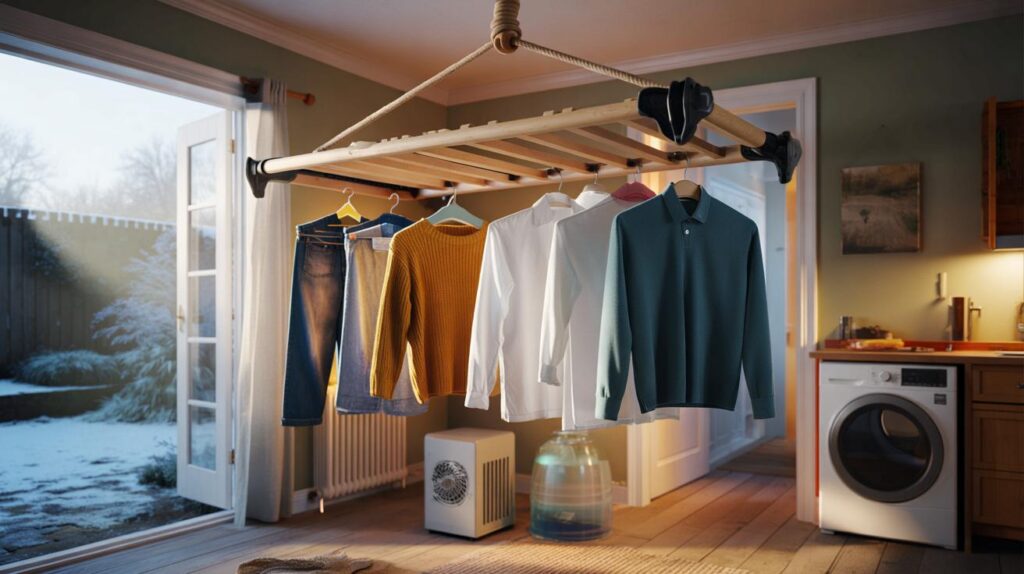
The Range’s ceiling pulley clothing airer is a traditional rack updated for modern homes. It costs £114.99 and mounts to the ceiling or a wall. Six solid pine laths slot into powder-coated cast-iron ends. A rope and pulley let you lower the rack to load it, then raise it into the warmer air that pools near the ceiling.
By using heat that already rises in your home, clothes can dry in around 2–4 hours, even in winter, with no extra electricity use.
The design draws on the same principle as old Victorian drying racks. Warm air sits high, so lifting garments upwards speeds evaporation. Because it lives above head height, the airer clears walkways, avoids trip hazards and keeps curious toddlers away from damp washing.
How it differs from a folding airer
Standard clothes horses sprawl across the lounge, block doors and tip over when the dog brushes past. This pulley airer disappears above eye level. The timber laths take towels, jeans and sheets without sagging, and the iron ends stop twisting. It looks more like a piece of fitted utility furniture than a temporary contraption.
- Price: £114.99 at The Range
- Design: six varnished pine laths with powder-coated cast-iron ends
- Mounting: ceiling or wall; suitable for flat or sloped ceilings with the supplied kit
- Drying time: typically 2–4 hours depending on fabric, spin speed and room conditions
- Footprint: zero floor space once hoisted
- Care: wipe-clean ironwork and sealed timber laths
Could it really save you money?
Many households reach for the tumble dryer as soon as the weather turns. That convenience carries a cost. A typical dryer cycle uses roughly 2–4 kWh. On current tariffs of about 28–30p per kWh, that’s roughly 60p–£1.20 per load. Families running four cycles a week through a six‑month heating season can spend £60–£110 on electricity for drying alone. Larger households can easily do more.
Swap four tumble cycles per week for the pulley airer and you could avoid £60–£110 in winter electricity costs, before accounting for wear on clothes.
Because the pulley airer works with heat already in the home, there’s no running cost beyond the heating you would use anyway. Those savings arrive alongside the longer fabric life that comes with air drying. Fewer high-heat cycles mean fewer shrunken jumpers and less lint lost from towels.
| Weekly tumble cycles avoided | Estimated cost per cycle | Six‑month saving |
|---|---|---|
| 2 | £0.60–£1.00 | £31–£52 |
| 4 | £0.60–£1.00 | £62–£104 |
| 6 | £0.60–£1.00 | £93–£156 |
Real savings depend on how often you dry, your tariff and your machine’s efficiency. The upfront £114.99 outlay can repay itself within one to two winters for many households that frequently tumble‑dry.
Space, noise and fabric care
The pulley clears the floor, so you regain your hallway and living room. There’s no fan drone, no hot exhaust and no risk of a wheeled airer skidding when the door opens. Air drying is gentler on elastics, denim dyes and wool fibres. Towels may feel less fluffy than after a dryer, but they keep their size and shape far longer.
Installation and daily use
Out of the box, the kit includes illustrated instructions and the fittings needed for joists and solid ceilings. The bracket and pulleys can be positioned to suit covings and light fixtures. Homes with a sloped ceiling can still run the rack level by fixing the pulleys at different heights.
Most DIY‑confident users can fit it in an hour or two. If in doubt, a local handyman can locate joists and secure the brackets for a modest fee. The laths are varnished for durability and wipe clean after any detergent marks.
Tips to speed up drying
- Use a fast spin cycle. 1,400 rpm squeezes far more water than 800 rpm.
- Leave gaps between items so air can circulate around sleeves and waistbands.
- Position it above a warmed space such as a kitchen, landing or near a radiator.
- Crack a window or run an extractor to manage humidity and prevent condensation.
- Pair with a small dehumidifier on laundry mode if rooms feel clammy.
Many households report around three hours to dry mixed loads when items are well spun, spaced and lifted into rising warm air.
Condensation and mould: what to watch
Indoor drying adds moisture to the air. Without airflow, that can mist up windows and feed mould on cold walls. Keep ventilation in mind. A small dehumidifier beside the drying area captures litres of water on heavy wash days. Avoid hanging garments directly above cookers or gas hobs. Keep clear of pendant lights and smoke alarms. Leave at least 50 cm from the ceiling if you have downlights that get hot.
Who benefits most
Flats without gardens, terraces with tiny utility rooms and family homes running daily washes gain the most. Parents avoiding trip hazards will value the overhead design. Anyone sensitive to dryer noise will appreciate the silence. The rack also suits renters who can’t plumb a condenser dryer, provided the landlord approves fixings into joists.
How it stacks up against other options
Heated electric airers draw about 200–300 W. Five hours of use can cost 30p–45p per session, and you still need ventilation. Tumble dryers are fast but sit at the top for running costs. A ceiling pulley airer uses the warmth your heating already provides. For many, it becomes the daily driver, with the tumble kept for emergencies like last‑minute school kits.
No ongoing energy draw, no floor space lost, and fewer frayed cuffs: the three pillars of its appeal.
What parents say they value
Speed sits near the top. So does the feeling of reclaiming the living room from a sprawling frame. The aesthetic matters too. The black cast‑iron ends and chunky timber give a tidy, purposeful look that blends with period homes and modern kitchens alike.
Extra pointers before you buy
Choose a location where warm air naturally drifts upward, such as a stairwell or landing. Check joist direction so fixings bite into solid timber, not plasterboard. Think about reach for the rope cleat; adults should be able to secure it without stretching over a stair void. If ceilings are very high, a longer rope or a secondary pully can make handling easier.
If you already own a dehumidifier, try running it beneath the rack on laundry days. The combination speeds drying and reduces window condensation. On milder days, open a top window by a crack to keep humidity balanced. For delicate fabrics, use hangers on the laths to maintain shape and avoid peg marks.



Just installed one last month and wow — three hours and the jeans were dry. My living room finally has its floor back 🙂 Price stings a bit, but feels like it’ll pay itself off by spring.