
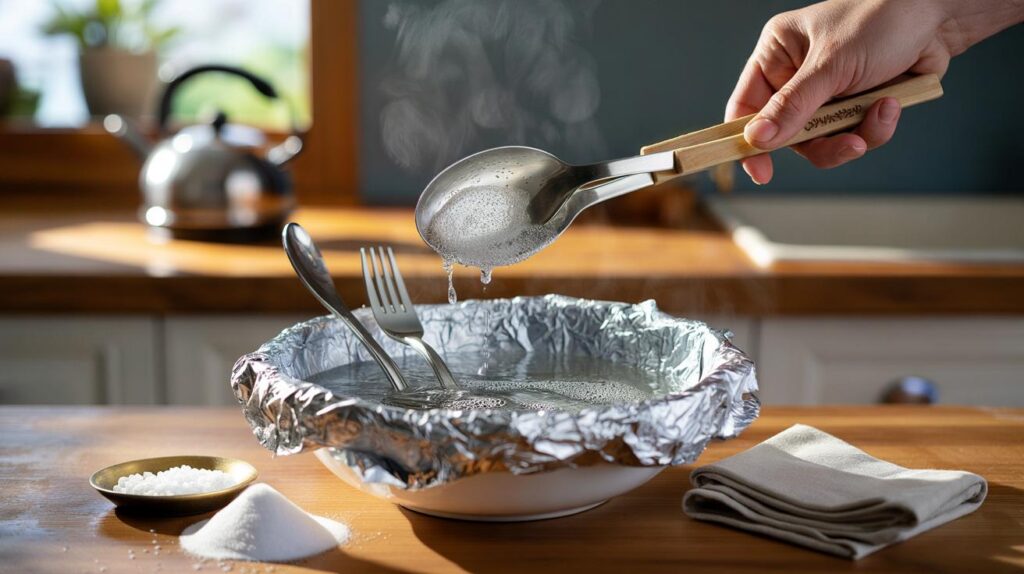
A humble kitchen setup is sweeping the nation as families look for quicker, cheaper ways to protect heirlooms at home.
Purse-watchers and vintage fans now swear by a hot-water bath, a crumpled sheet of aluminium foil and pantry staples. The promise is simple. Greyed silverware regains a bright sheen in about a quarter of an hour, without harsh pastes or rubbing. We looked at why it works, when to use it, and when to steer clear.
Why people are reaching for aluminium foil
Budgets look different this winter. A bottle of premium silver polish can cost more than £10. A professional clean for a full cutlery set can run to several times that. Households want options that are gentle on both metal and money. The foil-and-bicarbonate method ticks those boxes. It uses heat and a mild electrolyte to reverse tarnish without abrasion. The setup is quick. The ingredients are common. The results arrive fast.
In most kitchens you already have what you need: foil, bicarbonate of soda, table salt, very hot water and a non-metal bowl.
What you need
- Aluminium foil: one sheet, shiny side up, to line the vessel
- Bicarbonate of soda: around 30 g (two tablespoons) for a 500 ml bath
- Fine salt: around 15 g (one tablespoon) to boost conductivity
- Very hot water: about 500 ml, just off the boil
- Non-metal container: glass or ceramic bowl large enough for the items
Step-by-step in five moves
Heat drives the process. The hotter the water, the quicker the tarnish shifts. Protect stones and coatings.
Does it really clean in 15 minutes?
On lightly to moderately tarnished spoons, forks and bangles, the shift is visible within minutes. The grey film softens first, then retracts from edges and recesses. Ten minutes often suffices for cutlery used weekly. Heavier black sulphide deposits take the full 15 minutes and sometimes a second cycle. Intricate pieces with deep grooves may need a soft brush after the bath to dislodge residue from crevices. Plain, solid-silver surfaces respond fastest.
What the chemistry says
Tarnish on silver is mainly silver sulphide formed when the metal meets sulphur compounds in air, food and storage materials. In the hot bath, aluminium acts as a more reactive metal. The system forms a tiny galvanic cell. The tarnish reduces back to metallic silver at the surface, while aluminium oxidises. Bicarbonate and salt make the water conductive, moving ions between surfaces. You are not polishing. You are reversing a chemical layer. That explains the speed and the lack of scratching. A faint sulphurous odour can arise, especially with heavily tarnished items. Rinsing dispels it.
How this compares with other methods
| Method | Typical time | Estimated cost per clean | Surface risk | Best for |
|---|---|---|---|---|
| Foil + bicarbonate hot bath | 10–15 minutes | Under £0.20 | Low on solid silver | Cutlery, trays, simple jewellery |
| Commercial polish cream | 10–20 minutes with rubbing | £0.30–£0.60 | Low to moderate abrasion | Stubborn spots, carved details |
| Ultrasonic cleaner | 3–10 minutes | Varies with solution | Unsafe for many stones | Plain jewellery, chain links |
| Toothpaste | 5–10 minutes | Low | High micro-scratch risk | Not recommended |
Risks and when to avoid the bath
- Silver-plated items: prolonged contact can thin the plating. Use a gentle polish instead.
- Gem-set jewellery: adhesives and softer stones can suffer. Avoid pearls, opals, turquoise, amber and glued settings.
- Intentional dark finishes: oxidised or “antiqued” silver will lighten. Keep those pieces away from the foil.
- Hollow-handled knives: water entering joins can cause corrosion. Wipe these by hand with a cloth and mild polish.
- Metal containers: a metal bowl disrupts the galvanic pairing. Stick to glass or ceramic.
If in doubt, test on a small, inconspicuous area for two minutes, rinse, dry, and assess before proceeding.
Storage, prevention and care
Tarnish forms faster with humidity, sulphur-rich foods and polluted air. A few low-cost habits slow the cycle.
- Store silver clean and dry in soft sleeves or zip bags with anti-tarnish strips.
- Add silica gel sachets to drawers to reduce moisture.
- Avoid rubber bands and wool felt; both can emit sulphur and stain silver.
- Rinse cutlery after eggs, onions or mustard. Food residues accelerate darkening.
- Handle jewellery by the edges. Finger oils attract films that trap pollutants.
What you can expect to spend and save
The ingredients cost pennies. A tablespoon of bicarbonate and a tablespoon of salt from supermarket packs add up to well under 10 p for each session. Heating 500 ml of water in a standard 3 kW kettle uses roughly 0.18–0.20 kWh. At a typical unit price of 28 p per kWh, that is about 5–6 p of electricity. The total per clean sits near 15 p. Skip two bottles of branded polish a year and you keep more than £20 in your pocket.
Time is a factor too. Lay out a 24-piece cutlery set and you can run two or three batches in under an hour. Most of that time the bath does the work while you dry earlier pieces. No elbow grease. No black residue on cloths. No fine scratches from powdered abrasives.
Checks before you start
How to tell solid silver from plate
- Look for hallmarks. Sterling pieces often show “925” or, on British items, the lion passant.
- Plated goods are frequently stamped EPNS or EP. Treat these as delicate.
- Weight and colour help. Solid silver feels denser and shows a softer, whiter gleam after cleaning.
Getting the water temperature right
Use water just off the boil. Allow a short stand if your pieces include soldered joints or glass elements. Heat speeds the reaction, but thermal shock can stress mixed materials. Keep the bath hot by placing the bowl in a larger basin of warm water.
When a second round helps
Very dark items sometimes keep a thin stain after the first bath. Repeat the cycle with fresh water and foil for five minutes. Agitate the water gently to expose fresh surfaces to the foil. For carved patterns, loosen the last traces with a soft baby toothbrush and the same solution, then rinse and dry.
Dry thoroughly. Water left in seams or hinges can mark silver. A hairdryer on a cool setting speeds the final dry.
A wider view for careful owners
Tarnish control is a marathon, not a sprint. A rotation helps. Assign one weekend per quarter to silver care. Keep a labelled pouch for clean pieces so they do not mingle with those awaiting treatment. Photograph heirlooms before and after cleaning. Images create a maintenance record and help you spot wear on plated items early.
If you handle antiques with high sentimental or market value, speak to a conservator for tailored advice. Many period pieces carry mixed materials, lacquers or deliberate patination. Those finishes can be permanent features of the design. A gentle cream and cotton swab, used sparingly, may serve better in that case.



Followed the foil + bicarb method today and it definitley stripped years of tarnish in 12 mins. Cost me pennies vs £10+ polish. Cheers for the step-by-step and the 500 ml guidance—super clear.
Quick question: for EPNS cutlery, is a 5-minute dip safer, or should I skip this entirely? I really don’t want to thin the plating.