
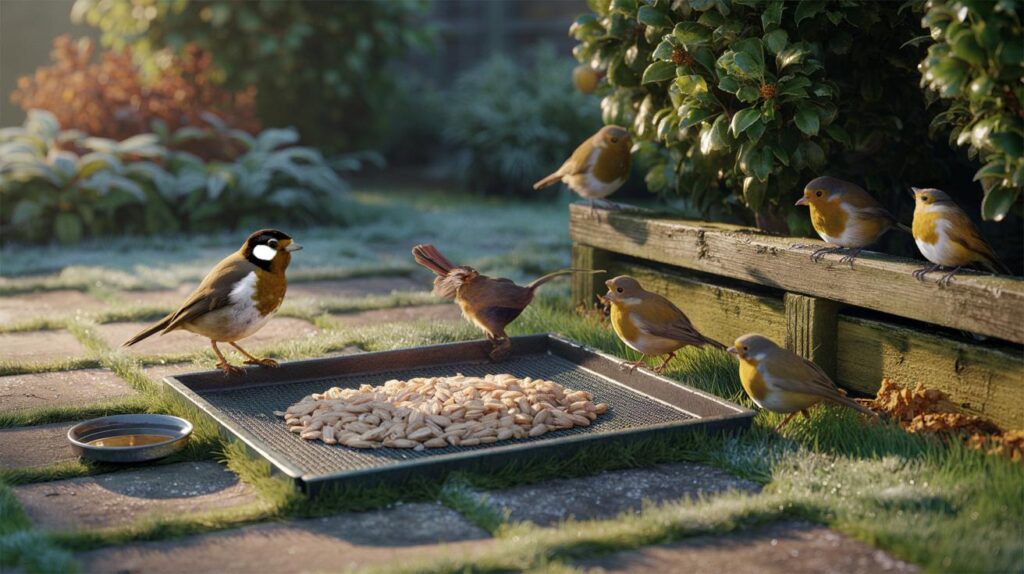
Cold mornings feel longer when gardens fall silent. Yet a simple, affordable trick can bring colour, movement and song back.
As autumn bites and food thins out, Britain’s favourite red-breasted visitor starts searching low to the ground for easy pickings. Put the right natural food in the right place and you stand a strong chance of turning passing robins into daily regulars.
Place sunflower hearts on a flat ground tray near cover. Keep portions small, fresh and clean. Expect quick results.
The one natural item robins rush to first
Sunflower hearts are the shelled kernels from sunflower seeds. They are soft, oil-rich and high in energy. Robins can gulp them without cracking shells. That saves effort on cold days when every calorie matters.
A 250g tub suits a week of light feeding for one or two robins. Start with a small handful, around 30g, each morning. Top up in late afternoon if it vanishes within an hour. Reduce the portion if food remains by dusk. Fresh beats excess every time.
Why the tray matters more than you think
Robins are ground feeders by habit. They hop, scan and peck at leaf litter. A raised tube feeder feels awkward to them. A low platform feels natural. A mesh ground tray allows drainage and reduces mould risk.
Set the tray two to three metres from a dense shrub. The bird gets a quick bolt-hole from sparrowhawks. The gap gives a clear view of prowling cats. Keep the surface level. Brush off old husks daily.
Quick set-up checklist
- Tray: flat or shallow mesh, 25–35 cm wide.
- Food: sunflower hearts only to start. Add variety later.
- Spot: open view with cover nearby. Avoid tight corners.
- Timing: 30g at dawn; optional 20–30g near dusk.
- Hygiene: rinse weekly; scrub with mild disinfectant every two weeks.
- Safety: use a baffle or low wire frame if cats visit.
How fast will they come
Results vary with local competition and weather. Many gardens see a trial visit within two to five days. Regular attendance often follows within a fortnight. Consistency helps. Keep the tray in the same place. Feed at roughly the same times. Birds notice routine.
Consistency wins: same tray, same spot, same time. Robins learn quickly when food appears.
What to add when temperatures drop
Suet pellets pair well with sunflower hearts. They boost fat intake during cold snaps. Offer a small pinch mixed into the hearts on the tray. Keep the ratio modest so hearts remain the main draw.
Live or dried mealworms work too, but they cost more and sell out fast in winter. If you try them, soak dried mealworms in warm water for 10 minutes to aid hydration.
Portions, prices and weekly plan
Feeding can be affordable with bulk buying and careful portions. The table below gives a simple guide.
| Item | Daily portion | Typical price per kg | Approx. weekly cost |
|---|---|---|---|
| Sunflower hearts | 30–60g | £3–£6 (bulk), £7–£10 (small bags) | £0.63–£4.20 |
| Suet pellets | 10–20g (cold spells) | £2.50–£5 | £0.18–£0.70 |
Start low. Watch how fast food disappears. Too much attracts rats. Too little sends birds elsewhere. Adjust within that range.
Placement tactics that lift your numbers
Use two trays if space allows. Put the main tray in view of your window and a second, lighter tray nearer cover. The bolder robin will use the open spot. The shy bird will shadow-feed from the edge.
Water beats any extra food. Add a shallow dish within one metre of the tray. Refresh daily. Robins sip between bites and bathe even on frosty days.
Windows cause collisions. Stick two or three decals on the pane nearest the tray. That breaks reflections. Place the tray either within one metre of the glass or over ten metres away to cut impact speed.
Mistakes that push robins away
- Using whole sunflower seeds with shells. Robins waste time cracking them.
- Letting food go damp. Mould grows fast under wet leaves.
- Feeding bread. It fills crops but offers little nutrition.
- Moving the tray daily. Birds map safe routes and return spots.
- Leaving piles overnight. That invites rodents.
What happens in spring
Robins guard small territories and may visit more often as nesting starts. Sunflower hearts support long days of feeding chicks. Keep portions modest so birds still search for insects, which remain vital for young.
If you hear sharp ticking calls and see chasing, that is boundary defence, not a feeding problem. Spacing two trays several metres apart can ease tension.
Small, steady portions keep robins loyal without turning the tray into a rodent magnet.
Extra gains for your garden
Sunflower hearts drop few husks, so lawns stay tidier than with whole seeds. Any leftover chips feed dunnocks, blackbirds and house sparrows. That spreads activity through the day.
Compost the crumbs you sweep from the tray. Mix with dry leaves to balance moisture. That adds structure to garden beds in spring.
If you want to go further
Try a simple weekly rotation. Monday to Friday: sunflower hearts only. Weekend mornings: hearts with a pinch of suet in cold weather, or soaked mealworms in mild spells. Record visits in a notebook. Count peak numbers for 15 minutes at dawn. Look for patterns after three weeks.
Add native cover near the tray. A small clump of holly or hazel gives shelter, berries and nest sites. Avoid heavy pruning in late winter when birds scope nesting spots.
Risk checks and hygiene routine
- Wash trays with hot water and a brush weekly. Use a mild, pet-safe disinfectant every two weeks.
- Rinse and dry before refilling. Wet surfaces breed bacteria.
- Wear gloves if you have cuts. Bag and bin sweepings.
- Rotate the tray location by one metre every few weeks to rest the ground.
One small change makes a visible difference. Put 30g of sunflower hearts on a ground tray at breakfast time. Keep it clean. Keep it regular. Most readers who try this see robins within days, and many keep them coming back right through winter.



Followed your checklist this morning—30g sunflower hearts on a mesh tray, 2m from a shrub. One bold robin showed up in 7 minutes and kept hopping back between sips of water. Going to log visits for the next 3 weeks as you suggest. Simple, cheap, and it actually works 🙂