
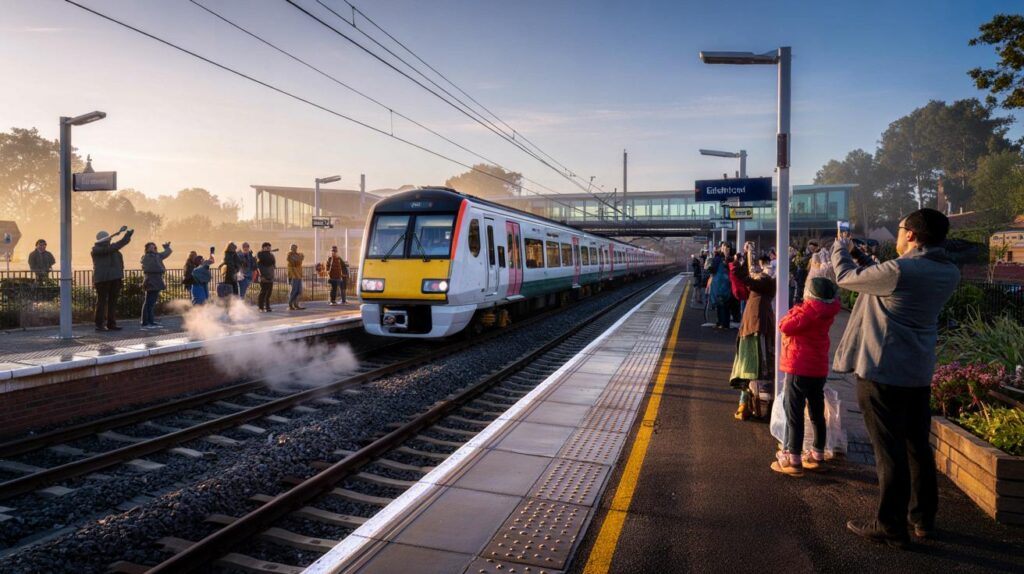
Foggy breath, phone cameras raised, and neighbours swapping smiles. A small moment on a cold platform felt bigger than a timetable.
At first light in Essex, a long-promised station welcomed its maiden arrival and turned a routine stop into a community milestone. A modest crowd came for a train and left with a story.
A century in the making
Beaulieu Park, on the northern edge of Chelmsford, opened to passengers as the first new station on the Great Eastern Main Line in more than a century. The debut came early in every sense. The price tag stands at £175 million, and the first trains are running four months ahead of the original schedule. The project sits within a wider low‑carbon growth plan around the Beaulieu and Channels neighbourhoods.
The first new station on this stretch of the Great Eastern Main Line in over 100 years opened four months ahead of plan, with a £175m investment aimed at reshaping daily travel into and out of north Chelmsford.
A 7:20am moment
The 7:20am service rolled in from Colchester to applause and cheers. Dozens lined the platform, some live‑streaming the arrival and many capturing it on phones. Early risers queued to buy tickets an hour before the first stop, turning commuter habit into civic ceremony. After the doors closed, the train headed on towards London Liverpool Street.
What travellers get today
Services begin with a clear pattern aimed at commuters and off‑peak users alike. Rail managers expect high demand from the first week, with authority figures calling the stop a catalyst for growth and a pressure valve for Chelmsford’s main hub.
- Peak frequency: up to four trains per hour serving Beaulieu Park.
- Off‑peak frequency: two trains per hour.
- First-day arrival: 7:20am from Colchester, greeted by local crowds.
- Delivery: station opened four months early on a £175m budget.
- Primary purpose: relieve Chelmsford station and cut car trips into the city centre.
Why this matters for Chelmsford
The new stop anchors the first phases of the Chelmsford Garden Community, a long‑term development plan for homes, jobs and services north of the city. The nearest neighbourhoods, Beaulieu and Channels, now gain a railhead designed to make public transport the default choice for work and school journeys.
North Chelmsford’s growth spine now links directly to the main line: thousands of homes consented, new schools open or planned, and a station intended to tip everyday trips from cars to rail.
Growth by the numbers
Approved and planned development around the station is substantial. The aim is simple: match new housing with transport, education and employment space from day one, rather than chase demand after congestion arrives.
| Measure | Detail |
|---|---|
| Homes with permission | 4,350 |
| Homes already built | 1,989 |
| Further homes planned | 6,250 |
| Education | One all‑through school open; more sites for a second campus and up to three primaries |
| Employment land | More than nine hectares earmarked |
| Active travel | Dedicated walking and cycling routes built into the Garden Community |
Opening day scenes and early demand
Local rail enthusiasts and families mixed with regular commuters on the platform. The moment felt both ceremonial and practical. Parents ushered children forward to see the front coach arrive. Workers filmed the stop before stepping aboard to continue their journey. Within minutes, routines returned, but with a new origin point that shortens some morning commutes and reduces pressure at Chelmsford’s busy concourse.
Rail leaders expect Beaulieu Park to become a preferred embarkation point for residents in the expanding northern districts. They forecast that reliable frequency will draw car drivers away from city‑centre parking, particularly for peak services towards London and key Essex towns.
Timings, money and delivery
Beaulieu Park’s completion ahead of schedule means the network gains capacity before the winter peak. The early opening reduces risk of seasonal delays to new patterns and allows operators to bed in timetables while daylight commuting still dominates. The £175m spend reflects new platforms, track connections and station facilities consistent with a modern mainline stop. While a precise build schedule remains commercially detailed, local authorities hailed the speed of delivery as proof of tight coordination between civic planners and rail operators.
A four‑month head start gives the new station a full commuter cycle to stabilise services, test passenger flows and fine‑tune operations before spring growth in ridership.
How the station shifts daily life
Regular, evenly spaced services influence choices. People who once drove to Chelmsford to catch a fast train can now start closer to home. Parents gain a simpler school‑run handover if trains depart within a predictable window. Businesses benefit from a wider catchment of potential staff who can arrive without navigating city‑centre congestion.
What to watch in the coming weeks
- Platform crowding patterns at the busiest morning departures.
- Parking and drop‑off behaviour near the station as travel habits settle.
- Shifts in footfall at Chelmsford station as origin points redistribute.
- Take‑up of off‑peak services for shopping and healthcare trips.
Wider context for new stations
Across Britain, new stops tend to work best when they open alongside housing, education and walking routes. Beaulieu Park follows that template by sitting inside a planned community with services already on the ground. The presence of an all‑through school, neighbourhood centre and consented employment land increases the odds that rail becomes a first choice rather than an occasional fallback.
For residents, the practical gains appear quickly. Peak headways of up to four trains an hour reduce wait times. Off‑peak services at two trains an hour support appointments and shift work. Consistency matters more than speed alone, because a reliable pattern lets households plan daily routines with fewer buffers.
Practical tips if you plan to use Beaulieu Park
- Check peak and off‑peak patterns before setting fixed meeting times.
- Allow extra minutes during the first fortnight as passenger flows settle.
- If you previously parked in the city centre, compare door‑to‑door time now that a nearer station is open.
- Consider mixing rail with cycling for short first‑ and last‑mile trips on the established local routes.
Looking ahead
As housing completions accelerate, demand will grow around the station catchment. Transport planners expect that early adoption by residents will influence decisions on bus links, micro‑mobility and safe street design. The immediate indicator will be car counts on approaches to Chelmsford versus rail boardings at Beaulieu Park during the school term.
The arrival of a mainline stop also changes how local employers recruit. A station that trims uncertainty from the commute widens the pool of candidates and supports flexible shifts. For households, the benefit sits closer to the kitchen table: shorter drives, fewer parking hunts, and a predictable ride that leaves more of the day intact.



Four months early and 7:20am cheers—love to see it 🙂 Congrats Beaulieu Park, this is the kind of local win that actually changes mornings.
£175m is a lot of money—how will we measure if it really cuts car trips into Chelmsford? We definately need transparent reports on modal shift and parking pressure over the next year.