
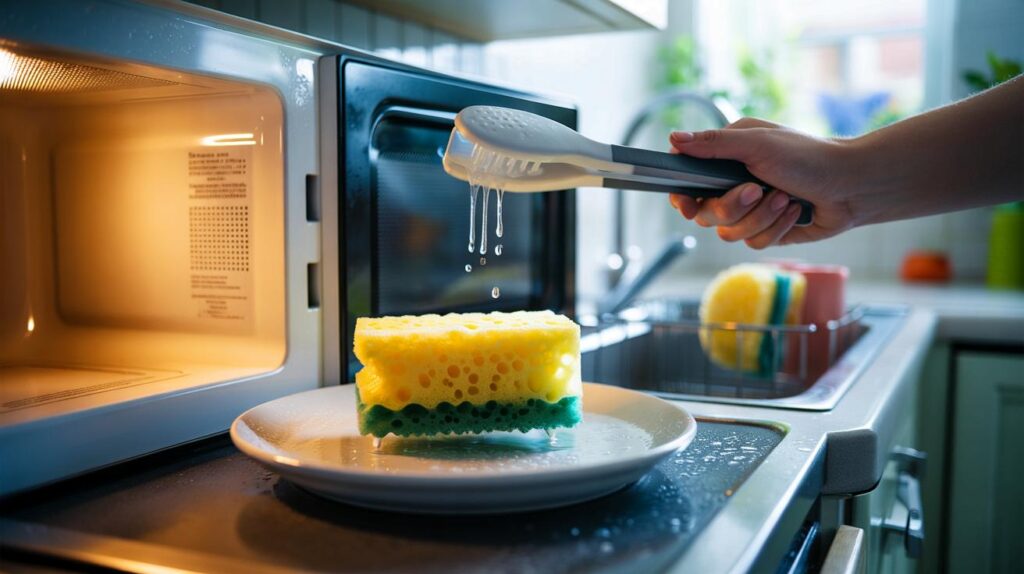
Kitchen routines feel harmless, yet one small square can tilt the balance between a tidy sink and a hidden hazard.
Hygiene experts keep circling back to the same culprits behind tummy bugs at home. The kitchen sponge sits near the top. It traps moisture, collects crumbs and juices, and rarely gets a proper reset. That makes it a playground for microbes you cannot see but often spread with every wipe.
Why your sponge turns into a microbe magnet
A used sponge holds water deep in its pores. Food residues cling to the fibres. Warmth from the room adds energy. That trio feeds microbes. Studies have counted tens of billions of bacteria per cubic centimetre in spent sponges. Salmonella and E. coli can lurk in that mix after raw meat prep or leaky packaging.
Moisture drives the problem. If a sponge sits wet for hours, bacteria multiply fast. A long, damp pause between dinner and the next wash gives them time to thrive. Poor airflow and a dark sink corner make matters worse.
Moisture is the multiplier. Leave a sponge wet for 10 hours and it becomes an incubator for household bacteria.
The 2-minute microwave method, explained
The exact protocol
Heat kills microbes, and household microwaves can deliver that heat. Food-safety guidance backs a simple routine when you follow it precisely.
- Soak the sponge until it is fully saturated and dripping.
- Place it on a microwave-safe plate. Do not add metal or scouring pads with wire.
- Run the microwave at full power for 2 minutes. Typical ovens range from 800 to 1,000 W.
- Let it stand for 1 minute to even out heat, then cool, wring, and air-dry upright.
- Use only non-metallic sponges. Discard ones that smell rancid, shed, or scorch.
Wet sponge. Two minutes. Full power. Non‑metallic. Expect a meaningful reduction in microbes, not sterilisation.
Why heat works—and what it cannot promise
Microwave energy warms the water inside the sponge. Heat disrupts bacterial proteins and membranes. That knocks down the population. Controlled tests report reductions of around 60% after a careful 2‑minute blast on a thoroughly wet sponge.
But gaps exist. Cold spots leave pockets of survivors. Biofilms shield bacteria in sticky layers. Some hardy species and spores tolerate brief heat. That means the method lowers risk but does not make a sponge sterile. The safest approach still includes regular replacement and keeping sponges dry between uses.
Safety first: avoid fires, sparks and burns
Dry sponges can scorch or catch fire in a microwave. Always soak thoroughly. Keep an eye on the oven. Stop immediately if you see smoke.
Do not microwave scouring pads with hidden metal threads. Avoid chemicals and bleach in the microwave; they can release fumes and damage the oven. Use tongs or gloves when removing a hot sponge to prevent burns.
Other ways to knock down germs
Not keen on microwaving? Several household options also reduce the microbial load when used correctly.
| Method | How to do it | Time/temperature | Effect | Cautions |
|---|---|---|---|---|
| Boiling water | Submerge a clean, wet sponge in vigorously boiling water | At least 5 minutes at a rolling boil | Strong reduction via sustained heat | Avoid splashes; cool fully before wringing |
| Bleach soak | After washing, soak in a diluted bleach solution | 5 minutes in 1/2 to 1 glass per 5 litres of water | Very effective against common bacteria | Never mix with acids; do not heat; rinse well |
| Heated vinegar–salt soak | Simmer solution, remove from heat, soak sponge | Several minutes in hot solution | Moderate reduction; odour control | Do not combine with bleach; may not tackle all pathogens |
| Dishwasher hot cycle | Tuck sponge on the top rack during a hot wash | High‑temperature programme with drying phase | Reduces microbes; depends on heat and drying | Sponges can degrade; check materials |
Replace and rotate: small habits that cut risk fast
Swap heavily used sponges weekly. Light-duty sponges can stretch longer if they dry quickly, but odours or fraying mean it is time to bin them. Keep two on rotation, so one dries fully while the other works.
Store sponges upright, above the sink, where air circulates. Avoid leaving them in the basin or on a wet worktop. After wiping up raw meat juices, do not reuse the sponge. Use paper towels for that job, then clean the surface with hot soapy water and finish with your preferred disinfectant.
Consider switching tools. Microfibre cloths launder well at 60 °C and dry faster than sponges. Dish brushes drain and aerate between uses. Copper scourers resist odour build-up and dry quickly. The faster the tool dries, the fewer microbes can take hold.
What the 60% number means for you
A 60% drop is a solid dent in risk after routine wiping. It matters on busy weeknights when one sponge handles several tasks. It does not remove every pathogen, and it will not rescue a sponge that is already past its best. Pair the microwave routine with frequent drying and timely replacement.
Think in layers. Reduce contamination at the source by scraping plates into the bin. Wash with hot water and detergent to lift grease and food. Apply heat or disinfectant to the sponge to lower residues. Then let tools dry fully. Each layer trims risk further.
Extra pointers that pay off quickly
- Clean first, disinfect second. Dirt shields microbes, so wash the sponge before any heat or chemical step.
- Mind the wattage. Smaller microwaves may need a few extra seconds; always keep the sponge soaked and supervised.
- Sniff test wisely. A musty smell signals biofilm growth. Odourless does not guarantee safety; stick to a routine.
- Protect vulnerable people. If someone is pregnant, elderly, or immunocompromised, prefer brushes and hot‑wash cloths over sponges.
- Target 60 °C or higher for laundry. Hot cycles help if you switch to machine‑washable cloths.
The quickest win: keep cleaning tools dry between jobs. Drying starves bacteria and costs nothing.
If you want to test your own setup, run the microwave routine on a wet sponge, then press it against a clean white plate. If the sponge leaves a film or smell, it needs replacement rather than rescue. A simple rotation system and a two‑minute heat cycle can keep your kitchen tools on the right side of safe.



Super practical write‑up. The exact protocol (soak till dripping, full power, let it stand) is the kind of clarity I needed. I’d defintely lost a sponge or two to scorching because I rushed the ‘wet’ step. Also appreciate the nuance: 60% isn’t sterilisation, it’s risk trimming. I’ll pair the micowave blast with rotating two sponges and storing them upright. Quick Q: for smaller 700 W units, would +20–30 seconds be reasonable, or is a thermometer/check advised?