
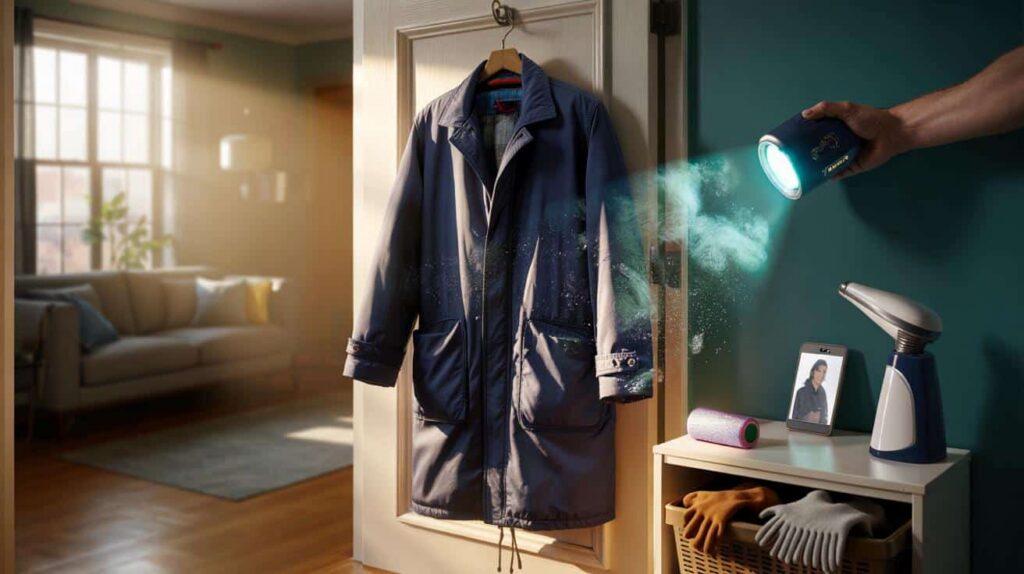
Strangely, it almost never hits the wash.
That quiet gap in your routine lets microbes build up where you least expect them. The culprit hangs by the door, travels through trains and offices, and sits on your sofa. It’s the jacket or coat you rely on every day, yet rarely clean.
The forgotten garment we carry everywhere
Outerwear touches more public surfaces than most clothes. Cuffs graze bus rails. Collars rub against hair and skin. Pockets shelter phones and snacks. Then the coat returns indoors and rests near clean laundry or on the couch.
Microbiologists flag that pattern for a reason. Coats and jackets see heavy contact and light laundering. That mix gives germs time to settle into fibers and seams. Lining fabrics pick up sweat and skin oils. Shell fabrics collect dust, soot, and pollen while you move through city air.
Coats and jackets rank among the most handled yet least washed items in the wardrobe.
What studies suggest
Research on household contamination highlights a recurring theme: the items we touch most often carry the greatest microbial load. Field work led by microbiologist Charles Gerba has long pointed to high-touch textiles as hidden reservoirs. Outerwear sits on that list because many people wash it only once or twice a season. That long interval lets bacteria, fungi, and allergens accumulate, especially on cuffs, collars, and pocket linings.
What actually builds up on your coat
- Skin oils and sweat salts that feed bacteria on fabric fibers
- Airborne particles: dust, soot, and pollen trapped in textured weaves
- Food residues from commutes and lunches that invite microbes
- Pet dander transferred from seats and hugs
- Makeup and hair products on collars and hoods
- Moisture from rain or snow that encourages fungal growth if drying lags
Clean fibers shed microbes more easily. Dirty fibers hold moisture and nourish bacterial growth.
Health risks you can avoid
Most people won’t get sick from a single dirty coat. The problem grows with repetition. Frequent wear without cleaning can trigger skin irritation on the neck and jawline. Acne mechanica and folliculitis flare where collars rub. Eczema and dermatitis worsen when fabrics carry sweat residues and detergents from old washes.
Allergens ride along too. Pollen and dust in fibers can aggravate rhinitis and asthma once you bring the coat indoors. Scarves and high collars increase contact with the face and can move microbes toward the eyes and mouth during winter commutes.
How germs spread from outerwear
The transfer looks boring and constant. You hang a coat next to a clean shirt. Fibers touch. You toss a jacket over the sofa. The kids sit there later. You stuff your phone into a pocket, then press it to your cheek. Each step moves microbes around your space and back onto your skin.
How often to clean your outerwear
Frequency depends on fabric, climate, and daily exposure. Use these simple rules to set a schedule that fits your life.
- Daily city commute: refresh weekly, deep clean every 4–6 weeks
- Light use by car: refresh every 2 weeks, deep clean every 2–3 months
- High-contact jobs or childcare: refresh after two to three wears, deep clean monthly
- Allergy season or pet households: increase refreshes and clean monthly
| Material | Best method | Typical interval |
|---|---|---|
| Nylon or polyester shells | Machine wash gentle, cold | Every 4–6 weeks |
| Down jackets | Machine wash gentle, extra rinse; low tumble with dryer balls | Every 1–2 months |
| Wool coats | Brush and steam weekly; occasional professional clean | Seasonal deep clean |
| Leather or suede | Wipe, condition, specialty care | Spot clean often; pro care as needed |
Frequency beats intensity. Light maintenance each week, a deeper reset each month, and a seasonal service keep microbes down.
Fast routines between washes
Short, regular steps knock down bioburden and odors without wearing out fabrics.
- Air it out: hang in a breezy spot for 30 minutes after each wear.
- Brush and lint-roll: remove dust, hair, and skin flakes from collars and cuffs.
- Steam: pass a garment steamer over lining and seams to reduce surface microbes and wrinkles.
- Sunlight reset: brief morning sun helps dry and freshen; avoid long exposure on dark colors.
- Targeted sprays: use fabric-safe antimicrobial or anti-mite sprays on cuffs and pockets. Test colorfastness first.
- Spot clean: treat collar rings and sleeve grime with diluted mild detergent, then blot and air-dry.
Deep-clean methods by material
Machine-washable synthetics: close zippers, empty pockets, turn inside out. Use a gentle liquid detergent. Wash cold on a delicate cycle. Skip fabric softener to protect water-repellent finishes. Air-dry on a hanger or tumble low if the care label allows.
Down jackets: choose a front-load washer. Use down-safe detergent. Run an extra rinse. Dry low with clean dryer balls to restore loft. Break up clumps by hand as it dries.
Wool coats: brush nap with a clothes brush. Steam to relax fibers and refresh. Spot clean with a wool-safe solution. Book occasional professional cleaning to maintain shape.
Leather and suede: wipe spills quickly. Use dedicated cleaners and conditioners. Keep away from heaters. For stains and salt marks, seek a specialist.
Stop the recontamination loop
Set up the entryway for hygiene. Give coats a ventilated hook, not the bed or sofa. Keep a small bin for scarves and gloves. Rotate outerwear so pieces dry fully between wears.
Empty pockets daily. Tissues, wrappers, and crumbs trap moisture. Clean your phone before it goes back into a pocket. Wash hands after commuting and before handling wardrobes or kids’ toys.
In cars, avoid draping coats on seats used by children. Use a back-seat hook and air them when you arrive.
Extra notes for families and heavy users
Kids’ coats collect playground soil and classroom germs fast. Add midweek refreshes and teach them to hang jackets to dry after school. Gym-goers should separate sweaty layers from coats in a washable tote. Healthcare and hospitality workers benefit from more frequent refreshes and a dedicated outer layer for work travel.
Thrifted or borrowed jackets deserve a full clean before regular use. Check labels, then run a deep wash or book professional care, depending on the fabric.
Smart care without over-washing
Deodorizing is not disinfecting. Fragrance mists mask smell but leave microbes behind. Steam, airflow, and proper washing actually reduce microbial load. Balance care with fabric longevity. Too many hot cycles can strip coatings and fade dyes. Use gentle products. Space out deep washes with consistent light maintenance.
This small habit pays off. Cleaner outerwear lowers skin flare-ups, reduces indoor allergens, and keeps sofas and car seats cleaner. It also protects your investment. Good coats last longer when you brush, steam, and wash on a schedule that matches your commute and season.


