
It sits in your browser tabs and homework, shaping what you believe about history, science, and pop culture every day.
Look at today’s French main page and you’ll see how Wikipedia quietly curates your reading: a vintage comedy takes centre stage, a nation marks its founding, the early internet blips to life, and curious footnotes tug at your attention. All of it shifts, daily, under the hands of volunteers.
The front page as a daily briefing
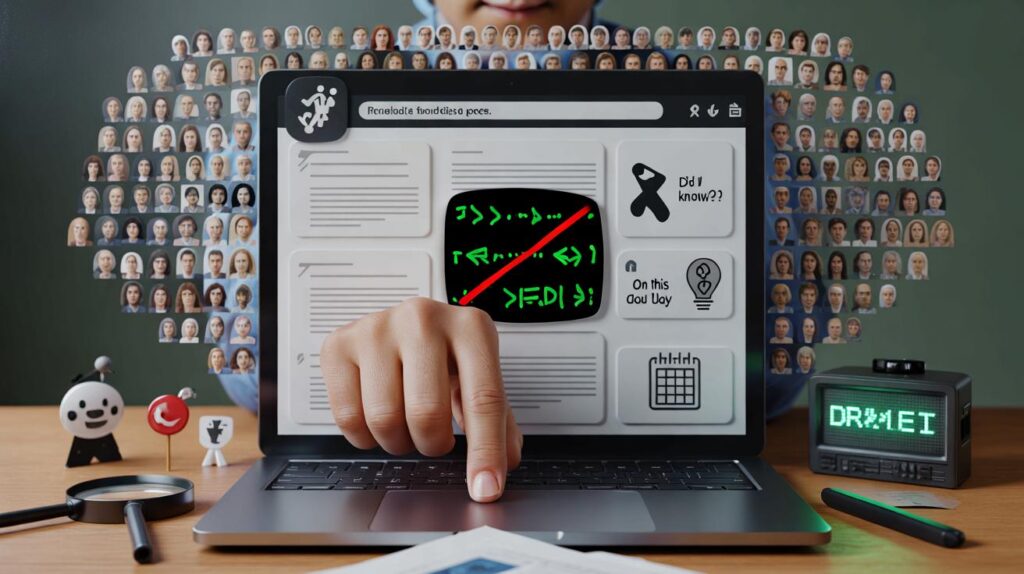
Wikipedia’s front page is not a billboard. It’s a rotating briefing that filters knowledge into digestible chunks. The featured article sits at the top, offering depth. “Did you know?” lures you with oddities. “On this day” anchors the present to a chain of past events. A column steers newcomers towards the Community portal, help pages and questions desk. Every element invites you to read, and then to edit.
On 29 October, the page pairs the 1969 ARPANET “login” with the birth of the Turkish Republic in 1923, compressing decades into moments.
Featured article: a vintage comedy leads the news
Today’s spotlight picks a slice of French cinema. The featured article examines Le Gendarme à New York, a 1965 Franco‑Italian comedy by Jean Girault. It follows Ludovic Cruchot, the hapless gendarme made famous by Louis de Funès, as he blunders through Manhattan. It’s the second film in the Saint‑Tropez series, and the front page uses it to bring a curated, well‑sourced essay to millions who might never search for it. Featured status signals a rigorous editorial process: volunteers nominate, reviewers scrutinise sources and structure, and the community promotes the best to the front page.
Did you know: small questions spark big curiosity
The “Did you know?” rail needles your curiosity with tightly framed facts. One entry spotlights the Pont‑Saint‑Louis outpost, where nine French soldiers reportedly held their position against an Italian advance even after the 1940 armistice. Such snippets push you to click, read the sources, and decide what the evidence supports. The line looks tiny; the editorial labour behind it is not.
On this day: context, in five lines
History arrives in crisp dates. The page flags the 1888 Constantinople Convention on Suez traffic. It nods to the Yser battles of 1914. It marks 1956, when Israel invaded Gaza and Sinai. It lands on 1969, when a “login” over ARPANET crashed after two letters, yet still lit a new era. You get a timeline that feels manageable, and prompts you to read the longer stories.
From Suez rules to the first internet message, the day’s anniversaries turn casual browsing into a low‑effort lesson.
The people behind the pages
Wikipedia runs on volunteer labour. Across hundreds of language editions, tens of thousands of editors make at least one edit in a typical month. A smaller group watches over new changes, checks citations, and warns vandals. Bots tidy links and revert obvious spam in seconds. The French main page adds an explicit welcome: “How to contribute?”, “Help”, “Ask a question”, and “Founding principles” sit side by side, signalling that this newsroom never closes.
| Section | What it does | Today’s concrete example |
|---|---|---|
| Featured article | Showcases a rigorously reviewed, high‑quality article | Le Gendarme à New York (1965), by Jean Girault |
| Did you know? | Highlights quirky, verifiable facts with fresh citations | Pont‑Saint‑Louis outpost holding after the 1940 armistice |
| On this day | Lists notable anniversaries for today’s date | 1923 proclamation of the Republic of Turkey; 1969 ARPANET message |
| Community portal | Routes newcomers to tasks, mentoring and discussions | “How to contribute?” and “Ask a question” links |
Trust, transparency and the fight against errors
Trust on Wikipedia doesn’t come from a stamp of authority. It comes from transparent process. Every article shows its edit history. Talk pages reveal disputes. Inline citations let you check claims. Good editors ask, “What does the source say?” rather than “What do I believe?” Volunteers flag unsourced fragments. Patrollers watch lists of new changes and use tools to roll back bad edits fast. Readers play a role too. If you spot a typo, you fix it. If you see a dated claim, you add a citation or raise a question on the talk page.
- Check the source before you add a fact.
- Prefer high‑quality references with a clear author and date.
- Avoid editorialising. Stick to what the source actually says.
- Summarise changes in the edit box so others can follow your reasoning.
- When in doubt, ask on the talk page and invite comment.
How you can help in 10 minutes
You don’t need to write a magnum opus to improve Wikipedia. Small tasks matter. The help pages show how to fix links, add dates, and trim repetition. The Community portal lists open jobs. The questions desk points new editors to guidance. A quick pass with fresh eyes can raise the quality of a paragraph that millions will read this year.
Here’s a simple starter plan you can try this week:
- Choose a short article on today’s “On this day” list.
- Open two sources cited in the lead paragraph.
- Verify a date or figure, and correct it if the source differs.
- Add a citation template with the publication, author and date.
- Leave a short note on the talk page explaining the change.
What the obituaries column signals
The French main page also runs a rolling necrology. It tracks recent deaths of notable figures across sport, arts and public life. That list changes fast, and the stakes are high. Editors tread carefully, waiting for reliable confirmation before updating biographies. Readers can help by flagging premature reports and adding solid sources. Accuracy here protects reputations and families, not just pages.
Why the front page keeps working
The structure blends habits with surprise. Regular sections build trust. Fresh entries keep you clicking. The mix moves from a finely reviewed feature to lighter hooks and then to community signposts. You can read for three minutes or thirty and get value either way. The page reminds you that knowledge is a process, not a product.
Key terms that unlock the process
- Featured article: a piece that passes strict checks on sourcing, neutrality and structure.
- Stub: a short article that needs expansion, often perfect for a first edit.
- Reliable source: a publication with a traceable author, editorial process and date.
- Talk page: the forum where editors discuss improvements and resolve disputes.
- Watchlist: a personal feed of pages you monitor for changes.
If you want a quick simulation at home, pick a topic you understand, then write a two‑sentence summary with a single high‑quality source. Read it aloud. Remove any adjectives that add opinion. Add one date and one figure that a reader can verify. That small discipline mirrors how featured content gets built, inch by inch.
You can also try a themed activity. Use the “Did you know?” section as a prompt, then find a second source that supports or challenges the claim. If both align, strengthen the article with the extra reference. If they diverge, refine the wording so it reflects what sources actually say. That reduces ambiguity, a common risk when snippets travel without context.



Huge respect to the volunteeers. The “transparent process” bit—histories, talk pages, citations—really matters, and this piece nails it. Thx for reminding us that small fixes (dates, links, commas) add up to real quality, everyday.
That’s roughly one active editor per 56 articles—no wonder errors slip through. How do we keep obscure topics from quietly decaying while the headline pages get all the love?