
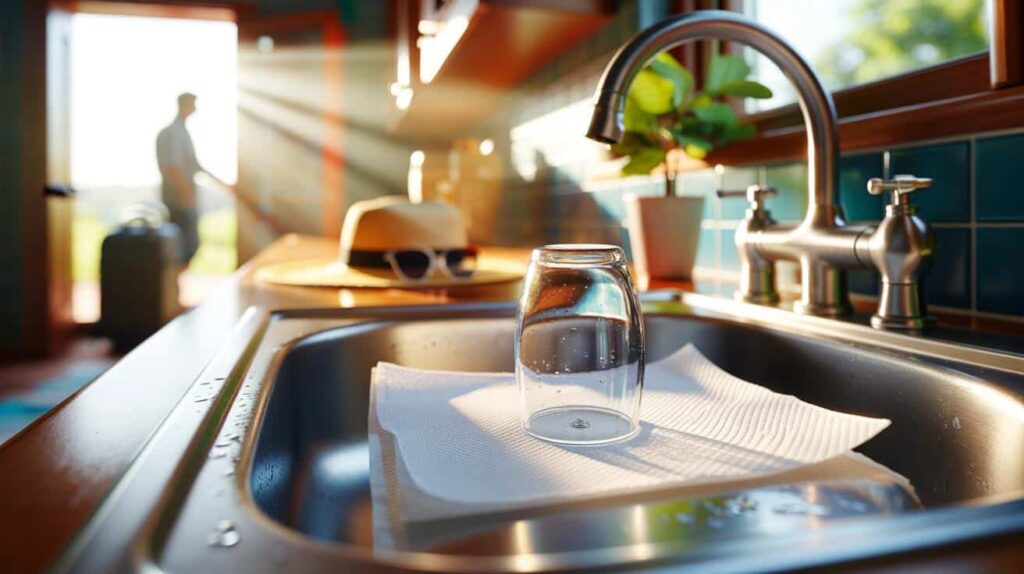
A sour drain smell greets you before your suitcase lands inside.
Summer heat, closed rooms, and idle plumbing make a perfect recipe for stale, sewer-like odors. There’s a cheap, quick move that stops it before it starts. It looks odd: a damp paper towel and an upside-down glass on your sink. It works for weeks, and you already own everything you need.
Why your sink smells in summer
Your sink blocks sewer gas with a small water barrier called a trap seal. It sits in the curved pipe under the basin, often a P-trap. That pocket of water seals your home from the main drain line. No water in the trap means an open path for odor.
Heat speeds evaporation. Long absences mean no fresh water flows back into the trap. A hot, dry kitchen or bathroom can empty a shallow seal surprisingly fast. In some apartments, a trap can dry in 7–21 days. A deeper seal lasts longer, but not forever.
Once the seal vanishes, air from the drain carries sulfur compounds and other volatiles into the room. It can also invite pests from the stack in older buildings. You smell it first thing, because the air sat stagnant while you were away.
A tiny pool of water is the only thing standing between your home and sewer gas. Keep it there, and the smell never starts.
The glass and paper method, step by step
This low-tech cover slows evaporation by limiting airflow across the drain. It takes 30 seconds per sink.
- Run the tap for 10–15 seconds to top up the trap.
- Wring a paper towel until it’s damp, not dripping.
- Lay it flat over the drain opening or strainer.
- Invert a drinking glass over the paper, centered on the drain. A mug also works.
- Repeat for each sink you won’t use while away.
This simple cover cuts evaporation by choking airflow and raising humidity right above the drain. Your trap stays sealed for weeks.
Why it works
Evaporation needs moving air and a dry atmosphere. The glass creates a still pocket of humid air. The damp paper cushions the seal and fills minor gaps. Together they act like a temporary vapor cap. The trap keeps its water. Odor stays down the line.
For toilets, just close the lid and seat to slow water loss from the bowl. For shower and floor drains, a strip of plastic film and a bowl or pan set on top creates a similar cover.
Extra measures before you lock the door
If you plan a longer trip, layer a few quick moves. They add insurance, especially in hot, dry apartments or houses that sit closed all day.
- Add a teaspoon to a tablespoon of oil to each drain. Food-grade mineral oil resists rancid smells. Vegetable oil works in a pinch, but it can turn musty over time.
- Rinse crumbs, coffee grounds, and grease from the sink and strainer. Run the disposer with cold water for 20 seconds if you have one.
- Clean the waste arm with 1/2 cup baking soda followed by 1/2 cup warm white vinegar. Wait five minutes, then flush with hot water. Skip this if you recently used a chemical drain cleaner.
- Pour a cup of water into little-used traps: shower, tub, laundry standpipe, basement or garage floor drain.
- Set indoor temperature to moderate, not sweltering. Cooler rooms slow evaporation.
| Fixture | What to do | Why it helps |
|---|---|---|
| Kitchen sink | Top up water, cover with damp paper + inverted glass | Reduces airflow and evaporation over the trap |
| Bathroom sink | Same as kitchen sink | Keeps the trap sealed while the room sits hot |
| Shower/tub drain | Add water, cover drain with plastic film + a bowl | Makes a simple vapor cap on large grates |
| Floor drain | Top up water, add a teaspoon of mineral oil, cover with a plate | Oil slows evaporation; cover blocks drafts |
| Toilet | Close lid and seat; don’t shut off the tank unless needed | Lowers air movement over the bowl water |
| Laundry standpipe | Pour in a cup of water | Refills a trap that dries easily between cycles |
If you skipped the prep: quick recovery routine
- Open windows for a few minutes.
- Run cold water at each sink for 30–60 seconds to re-prime the traps.
- Flush toilets and run the shower for 15 seconds.
- Clean the sink drain with baking soda and warm vinegar, then hot water.
- If odor lingers, remove the P-trap under the sink and rinse it outside in a bucket. Reinstall with fresh washers if needed.
Re-prime every drain after a long absence: water in the trap is your odor shield.
What science says about trap seals and heat
Most household traps hold a water seal of about 50 mm (roughly two inches). That volume looks small, but it blocks gases well. Evaporation speed depends on temperature, humidity, air movement, and time. A sun-baked kitchen with a fan nearby can dry a shallow seal in days. A cool, closed bath might hold for a month. There’s no exact clock, so prevention wins.
You also face small but real side effects when a trap goes dry. Low levels of hydrogen sulfide and ammonia can cause headaches or nausea in sensitive people. In older plumbing, dry traps can invite cockroaches or drain flies from the stack. Keeping the seal intact tackles both issues in one move.
Smart tweaks and small risks to consider
Use mineral oil if you can. It resists oxidation and won’t turn sticky. Use a teaspoon, not a splash. Large amounts of any oil can collect residue over time, especially in cold pipes. If you rely on a septic system, keep additions tiny and infrequent.
Skip mixing baking soda and vinegar right after using a caustic drain opener. The reaction can sputter. If you suspect a clog, schedule a proper mechanical clean instead of stacking chemicals.
Choose a sturdy cup or a mug if the sink sits near a window or a curious pet. The cover only needs to block airflow; it does not need to clamp down. When you return, lift the glass, toss the paper, and run water for a few seconds. That’s it.
Need a quick way to plan your prep?
Count your drains. If a home has two sinks, one shower, one toilet, and a floor drain, you will spend under five minutes. For a two-week trip during a heatwave, aim for the full routine: top up traps, oil dab, cover drains, and close lids. For a weekend trip, water top-up and the glass trick alone usually suffice.
Here’s a simple picture of timing. A 50 mm trap might hold around 200–300 ml of water. If a hot, dry room pulls 5–10 ml a day, the seal could fade in 2–4 weeks. Reduce airflow and temperature, and you stretch that timeline easily. The glass-and-paper cap gives you that margin without tools, cost, or mess.
One damp paper towel. One inverted glass. No smell when you come home. That’s a trade any traveler can live with.


