
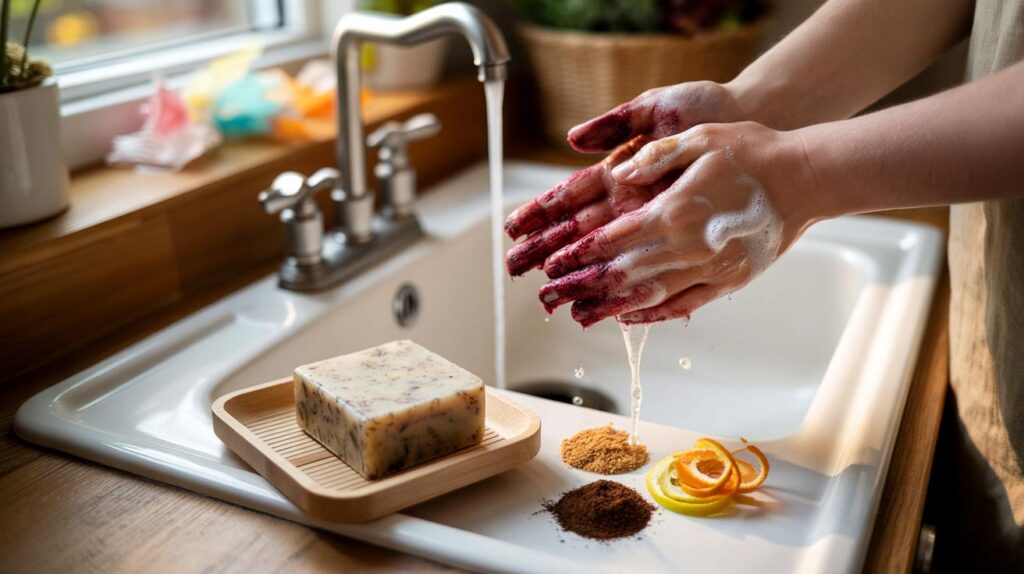
Autumn kitchens and muddy gardens leave stubborn marks. Prices climb, bins brim with plastic, and patience wears thin. A quieter solution is gathering pace.
Across Britain, households are turning to a simple bar that scrubs out dye, grease and odour using kitchen leftovers. It promises cleaner cuffs, calmer skin and fewer bottles by the sink.
A frugal shift in plain sight
Supermarket stain removers multiply on the shelf. Many smell sharp, foam fast and cost more than last year. People still report carrot stains on fingers, beetroot on aprons and soil under nails. Families want results without another plastic bottle or a perfumed fog in the utility room.
Enter the home‑made stain bar. It uses a neutral solid soap plus a gentle abrasive from the pantry. Coffee grounds, citrus zest and crushed nut shells pull grime from skin creases and fabric fibres. The bar lasts for weeks. It lives next to the tap, not in a trigger bottle. Waste shrinks. So does the bill.
Grit plus soap beats pigments, oil and odour. The hand feels clean, not stripped, and the sink stays free of plastic.
What sits inside the three-ingredient bar
The recipe reads like a tidy‑up after breakfast rather than a chemistry set. Start with a plain, fragrance‑light bar, ideally cold‑processed, which tends to leave skin comfortable. Fold in one or two abrasives to suit the stain at hand, then bind the mix with a splash of mild vegetable oil for glide.
- Coffee grounds: lift soil, garden grit and cooking fats after stock or roast prep.
- Dried citrus zest: orange or lemon peels counter garlic and fish odours and help cut grease.
- Crushed nut shells: walnut, hazelnut or almond shells scour pigment from beetroot, carrot, grape and leafy greens.
These particles perform a soft mechanical scrub. The soap carries loosened residue away. The oil reduces drag and leaves skin supple as the weather cools.
How the mechanics outsmart stubborn marks
Many bottled removers rely on solvents, synthetic fragrance and microbeads. They mask smell, then rinse down the drain in plastic packaging. A bar with natural grit behaves differently. The particles wedge gently between pigment and pore. Friction shifts the stain. Soap molecules surround the freed dirt and oil. Water rinses them off the skin or textile.
Three actions do the work: micro‑abrasion to unstick residue, surfactants to lift it, and light oils to protect skin while you scrub.
Make it at home in 20 minutes
You need a small bowl, a saucepan for a bain‑marie and a simple mould. A clean yoghurt pot works well. Dry your coffee grounds and citrus peels first to prevent the bar from spoiling.
- 100 g neutral bar soap, grated (Marseille or Aleppo style)
- 2 tbsp dry coffee grounds
- 2 tbsp very finely crushed nut shells (or skip if making a nut‑free batch)
- Dried zest of one lemon or orange, crumbled
- 1 tbsp mild vegetable oil such as olive or sunflower
- 2 tbsp water, added gradually to bind
Place the grated soap, water and oil in the bowl. Warm gently over a bain‑marie while stirring until a thick paste forms. Fold in the grounds, shells and zest. Pack the paste into the mould. Press down firmly. Leave to cool for several hours. Pop out and let it dry for a day before first use.
Pairings that work when time is tight
- Gardening hands: coffee grounds plus nut shells clear soil, chlorophyll and sap after pruning.
- Fish night: citrus zest plus coffee grounds erase lingering odours and squash orange streaks from squash or beetroot.
- Studio spills: add poppy seeds to citrus zest for extra bite on clay and water‑based paint.
What you save: money, plastic, time
Trigger sprays add up. So do tubs, sticks and perfumed gels. A small back‑of‑the‑envelope model helps test the switch.
| Scenario | Assumption | Yearly total |
|---|---|---|
| Shop sprays | 12 bottles at £3.50, 500 ml each | £42, ~336 g plastic |
| Full arsenal | Sprays (£42) + pre‑wash gel (£28) + stain stick (£8) + hand scrub (£12) + extras (£88) | £178, ~1.1–1.6 kg plastic |
| Home stain bar | 4 bars per year, 100 g soap + kitchen scraps + 20 ml oil | ~£12–£16, negligible plastic |
The figures use typical UK shelf prices and bottle weights of 25–40 g. Your basket may differ. The direction stays the same. Households cut packaging by the armful and keep more cash for the weekly shop.
When to reach for which abrasive
Match the grit to the blot. Softer hands prefer finer particles. Tough jobs on aprons and garden gloves accept a coarser mix.
- Grease and stock: coffee grounds plus lemon zest help break films on fingers and chopping boards.
- Pigment from roots and berries: fine nut shell powder rubs out beetroot, carrot and grape stains on cotton.
- Soil and clay: grounds alone give enough scrub for knuckles and nails.
- Kitchen odours: orange zest tamps down garlic and fish smells after filleting.
Use tips that spare your skin and your clothes
- Wet hands or fabric. Rub the bar directly on the mark. Work up a paste. Rinse. Repeat if needed.
- Patch test on delicate textiles. Avoid silk, fine wool and coated fabrics.
- Skip nut shells for nut‑allergic households. Use rice flour or fine salt in a pinch.
- Keep the bar dry between uses. A draining soap dish extends life and keeps texture firm.
- Avoid eyes and broken skin. Rinse well after scrubbing.
Why many people prefer the bar once they try it
The hand feels clean, not tight. The sink area looks simpler without four different bottles. The bin fills more slowly. Children can join a weekend make‑and‑mend session and shape bars for gifts. The scent comes from peels, not perfumes that linger through dinner.
Autumn suits the habit. Gardens need tidying. Stews stain spoons and sleeves. A compact bar sits ready by the tap and goes straight to work after each task.
A kitchen scrap becomes a cleaning tool. That small loop of reuse adds up across weeks, chores and rooms.
Answers to common doubts
Will it damage my skin?
Choose a mild base soap and keep abrasives fine for frequent hand use. Add an extra teaspoon of olive oil if your knuckles crack in cold weather. For workshop grime, make a second, coarser bar and reserve it for gloves and aprons.
Does it replace every product?
It handles most hand grime, cooking colours and day‑to‑day splashes on cotton. For set‑in stains on delicate fibres, spot treat gently and wash as usual. You will likely buy fewer speciality removers rather than none at all.
How long does one bar last?
For a family of four with daily kitchen use, expect four to eight weeks. Storage matters. A dry dish doubles longevity.
Extra know‑how that pays off
Cold‑process soaps keep more natural glycerin, which attracts moisture and helps the skin feel comfortable after scrubbing. Syndet bars, common in hotel bathrooms, clean effectively but behave differently when melted. If you prefer a vegan, fragrance‑light base, read the label and pick a plain, uncoloured bar to avoid dyes transferring to the mix.
For stain triage, act fast. Blot first. Use cool water on protein spills such as egg or milk. Use warm water on oils. The home bar then finishes the job before washing. Keep one bar by the kitchen sink and another in the shed for garden days. If you fancy a project with children, press the paste into biscuit cutters and stamp labels with the date and blend. The habit sticks when the bar looks good and sits where you need it.



Made a small batch with lemon zest and grounds—my beetroot‑stained chopping cloth looks normal again. Honestly didn’t expect it to beat the pricey spray. Hands felt clean, not tight. Cheers for the step‑by‑step; even my teen helped (and didn’t complain!). Definately keeping this by the sink.