
Your kitchen table doubles as an office. Your shoulders feel tight by lunchtime. A small, low-cost fix might change your day.
Across Britain, laptops live on dining tables and cramped corners. A subtle height lift can ease strain and calm the visual mess.
What the £12.99 riser actually does
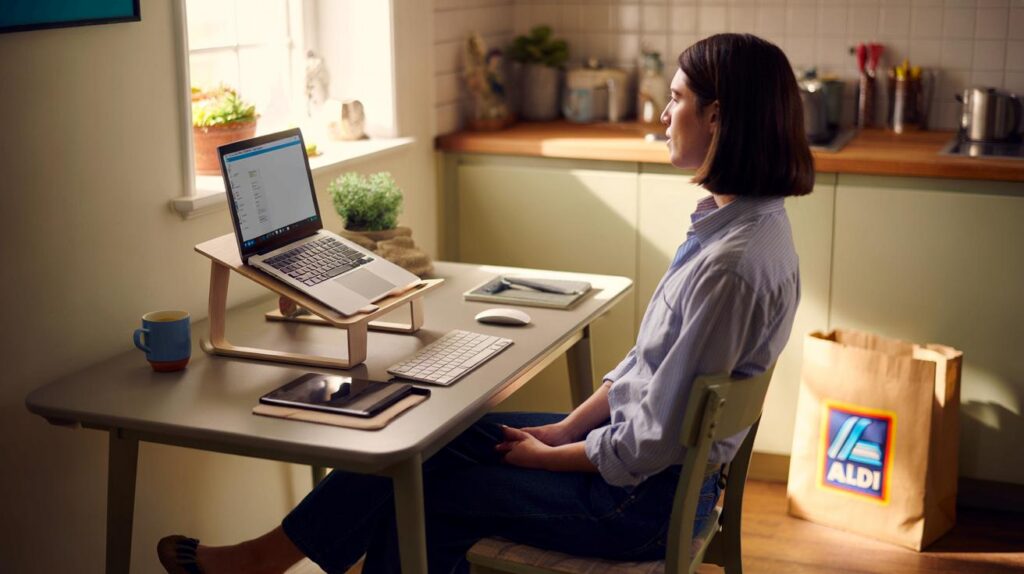
Aldi is selling the SOHL Furniture laptop riser for £12.99. The platform lifts your screen towards eye level. The design creates a shelf beneath for a keyboard or notebook. The unit comes in black or white. It sits neatly on a table or compact desk.
The £12.99 SOHL riser lifts the laptop, clears space below, and nudges you into a more upright, less tense posture.
The aim is straightforward. Reduce the neck bend caused by looking down. Give your wrists and shoulders a more neutral line. Keep the work surface clear when the day ends. The approach suits kitchens, bedrooms and small home offices.
Why posture matters when you work eight hours or more
Neck flexion loads the upper spine and traps muscle tension. A higher screen reduces this forward tilt. Less tilt can mean fewer headaches in the afternoon. It can also reduce shoulder pinching and upper back fatigue. A calmer desk helps attention and mood.
- Eye-level screens reduce downward gaze and neck flexion.
- Neutral shoulders limit the tug on the upper back.
- Clear surfaces cut visual clutter and mental drag.
- Consistent setup supports more regular work habits.
Design details that tidy the desk
The riser raises the machine and creates storage space under it. A full-size keyboard slides out of sight. A tablet or notepad fits under the platform. This keeps the main surface ready for a mug or a stack of papers. The edges look simple and clean on a table.
Fits small spaces
A compact footprint suits narrow dining tables. The unit looks unobtrusive in a bedroom corner. It can move from room to room without a fuss. It also parks neatly on a shelf when not in use.
Colour choices that blend in
Black hides scuffs in busy family homes. White suits bright, light rooms. Either finish sits quietly in the background. The look avoids the heavy “office kit” vibe.
Lift the screen, slide the keyboard under, and reclaim enough space for a calm, end-of-day reset.
How the price stacks up
Ergonomic laptop stands often start around £20. Adjustable, multi-angle stands can reach £35 or more. Metal units with added features cost even more. Aldi’s £12.99 undercuts the low end of that range. The saving can hit £7 to £25 against typical high-street options.
| Product type | Typical UK price | What you get |
|---|---|---|
| Basic plastic riser | £20–£25 | Fixed height, simple lift |
| Adjustable aluminium stand | £30–£45 | Angle options, premium build |
| Sit–stand converter | £80+ | Desktop frame, multi-device |
| Aldi SOHL riser | £12.99 | Fixed lift, storage below, two colours |
This makes the Aldi option a low-risk upgrade. It lets you test a higher screen position without a big outlay. If you like the change, you can later add an external keyboard and mouse.
Set-up tips that make the difference
A platform alone does not solve everything. Small adjustments lock in the gains. These steps help most people reach a neutral posture.
- Place the top of your screen near eye level.
- Keep the screen about an arm’s length away.
- Use an external keyboard and mouse if wrists feel bent.
- Keep elbows roughly at a right angle when typing.
- Rest feet flat or on a small footrest if the chair sits high.
- Stand, stretch or walk for two minutes every 30 to 45 minutes.
Eye-height screen, neutral wrists, feet supported, short movement breaks: the simple formula for long desk days.
Practical notes and caveats
Laptops cool through vents at the sides or the base. Leave space around the machine for airflow. Do not block fans with papers under the riser. If you feel heat build-up, shift the laptop slightly or add a thin mesh pad. Weight capacity varies by design. Place heavy textbooks beside the unit, not on it.
Fixed-height stands suit typical dining chairs. Very tall users may want extra lift. A slim book under the riser can add a little height. If glare hits the screen, angle blinds or reduce overhead reflections. Glare forces you to crane forward, which defeats the point.
Who will benefit most
- Parents working around school runs who need a quick setup on the table.
- Students in shared flats who rotate between rooms and tight desks.
- Hybrid workers who pack down a workspace each evening.
- Anyone feeling neck or shoulder tightness after long email sessions.
Where this fits in an ergonomic plan
The riser targets screen height. A low-cost mouse and keyboard pair improves wrist comfort. A cushion behind the lower back can support the lumbar curve. A simple footrest can stabilise posture if the chair runs high. These elements together often beat a single big purchase.
Short mobility habits reinforce the benefits. Shoulder rolls relax the upper traps. Gentle chin tucks reset neck alignment. Calf raises pump blood after long sits. A timer nudge on your phone helps you remember the breaks. Small, regular actions add up over a week.
The takeaway for your desk and your budget
A £12.99 lift removes the daily hunch that creeps in by mid-morning. It also gives you a clean spot to close the laptop and breathe. Many stands cost £20 to £45, so the Aldi price leaves money for a mouse or lamp. That combination covers posture, clarity and comfort in one compact setup.
If you want to test before committing to pricier gear, this is a low-stakes start. Pair it with sensible screen height, an external keyboard, and two-minute breaks. Your neck, shoulders and focus will feel the shift by Friday. Your table will look ready for dinner in seconds.



Just grabbed the SOHL riser in white at £12.99 and it’s a surprsingly solid little upgrade. Screen’s closer to eye level, keyboard slides underneath, and my dining table finally looks less cluttered by 6pm. Not adjustable, but for this price I can live with a fixed lift. Pairing it with a cheap mouse/keyboard made a bigger diference than I expected. Honestly, I feel less neck crank by mid‑afternoon. Definately a low-risk test if you’re WFH on a kitchen table.