
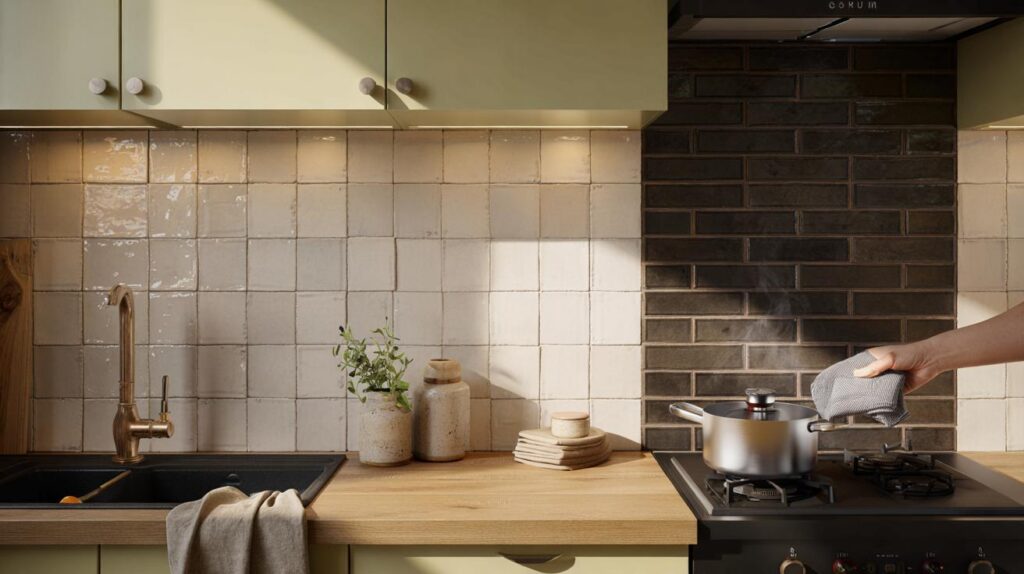
As autumn design showrooms reset their mood boards, one humble surface is about to upend your splashback plans for 2026.
Across Britain’s kitchens, the glossy look of faux stone is losing its grip. Homeowners now want materials that feel real under the fingertips, age with grace and stand up to heavy use. The surprising winner is not a flashy slab, nor a gimmick. It is raw ceramic, used honestly rather than as an imitation, and it is reshaping how people finish walls and work zones.
Stone-effect fatigue: why imitation lost its shine
Stone-look splashbacks shot to fame because they promised drama without the price or upkeep of marble or travertine. They looked tidy in photos and filled catalogues and feeds. That ubiquity became their undoing.
Predictable patterns started to feel cold. Repeat prints exposed the trick. Many kitchens began to look the same, even when layouts and cabinetry differed. People wanted depth and tactility again. They wanted surfaces that tell a story rather than mimic one.
Real texture and honest finishes now drive choices. You see the glaze. You feel the grain. You stop pretending.
Seasonal living plays a role. Shorter days pull families back to the hob. Warmth, weight and touch matter more when stews simmer and ovens run. Ceramic answers that need by delivering both comfort and credibility.
The quiet disruptor for 2026: raw ceramic in the spotlight
Raw ceramic covers a wide family: hand-pressed tiles, unglazed terracotta, matt-glazed squares, and porcelain in simple, mineral tones. The point is not to fake a quarry. The point is to frame heat and water with a surface that takes them in stride.
- It resists heat, pan splashes and steam without drama.
- It shrugs off daily cleaning when you choose a suitable glaze or sealer.
- It looks better as it softens with use, rather than tired as prints do.
- It offers size and layout freedom: tiny 50 mm mosaics, classic 100 x 100 mm squares, or long 50 x 150 mm bricks.
Colour shifts are subtle. Shades sit between neutral and earthy: chalk, bone, clay, rust, ink. Irregular edges and pooled glaze add movement. Under spotlights, relief lines catch shadows and turn a plain wall into a quiet feature.
For a cooker zone, choose glazed ceramic with light- or mid-tone grout. It cleans fast and hides splatter between wipes.
How it stacks up on cost, care and carbon
Numbers help you decide. These are indicative UK ranges per square metre for splashback use. They reflect tile or sheet only, not labour.
| Material | Typical price | Heat resistance | Cleaning | Look over time | Embodied carbon |
|---|---|---|---|---|---|
| Stone-effect laminate panel | £30–£60/m² | Moderate | Easy, avoid abrasives | Print may date or scuff | Low–moderate per m² |
| Printed porcelain slab | £80–£150/m² | High | Easy, low porosity | Stable but can feel flat | Moderate per m² |
| Raw ceramic tile (unglazed/glazed) | £25–£90/m² | High | Easy if glazed; seal unglazed | Improves with patina | Moderate per m² |
For a 3 m² splashback, a workable budget looks like this:
- Tiles: £150–£270 for mid-range ceramic.
- Adhesive, grout, trims: £60–£90.
- Labour: £180–£360 for a day to a day and a half.
Total: roughly £390–£720, depending on tile size, cuts and region.
Design moves that make raw ceramic sing
Layout ideas that lift small kitchens
- Stacked squares to create calm lines behind a busy hob.
- Vertical brick-bond to add height under a low extractor.
- One-band ledge: a 200–300 mm high run above the worktop, then paint above to keep costs lean.
- Two-tone field: warm mid-tone around the sink, lighter shade near natural light to balance the mood.
Choose warm neutrals—sand, oat, ochre, smoke—to stop winter light feeling harsh. These tones flatter timber fronts and black appliances equally.
Grout, edges and height
- Grout width: 2–3 mm for a refined grid; 4–5 mm for rustic charm.
- Grout colour: match tile for calm; contrast for a graphic grid.
- Edge trims: slim aluminium or a bullnose tile keeps corners tidy.
- Height: take tiles at least to the underside of the extractor; behind gas hobs, respect the manufacturer’s clearance.
Buy 10% extra tiles for cuts and future repairs. Keep a spare box labelled with the batch code.
Installation notes to avoid headaches
- Check flatness of the wall; skim if you see more than 3 mm deviation over 1 m.
- Use white adhesive under pale glaze to prevent show-through at joints.
- Back-butter small handmade tiles to avoid hollow spots.
- Seal unglazed faces and grout with a penetrating sealer before first use.
Care, durability and hygiene
Daily cleaning needs little more than warm water and a pH-neutral cleaner. Microfibre handles most splashes. For stubborn marks, diluted washing-up liquid works on glazed tiles without harming sheen. Avoid wire pads and bleach on coloured grout.
Unglazed ceramic brings wonderful texture near dry prep zones. Use a food-safe sealant near sinks if you cook with oils. Reseal high-use areas every 12–18 months. Expect a softening of edges and a mellowing of tone. That is the charm, not a flaw.
The 7 reasons homeowners are switching in 2026
Pairings that work right now
- Worktops: oiled oak for warmth, or honed composite for a quiet match.
- Metals: aged brass or brushed steel taps complement earthy glazes.
- Lighting: low-glare spots and a small wall washer to graze the tile texture.
- Accessories: stoneware jars, linen tea towels, and a single row of open oak shelving.
Risks to manage before you buy
Highly crackled glazes can stain if you splash turmeric or wine during the first weeks. Pre-seal or confine them to drier runs. Dark grout hides curry and tomato stains yet can visually shrink small spaces, so test a sample board under your actual lights. Large-format tiles reduce grout lines but demand flatter walls and more careful handling.
Fast planning toolkit
- Measure: length x height in metres, then add 10% for waste.
- Decide: glazed for hobs, unglazed or matt-glazed for prep walls.
- Sample: order at least 0.25 m² to see colour shift across pieces.
- Schedule: allow 1–2 days for tiling plus 24 hours before grouting.
Extra context for keen renovators
If you care about embodied carbon, look for factories firing at lower temperatures or using recycled clays. Some British and European makers publish Environmental Product Declarations. Weight per square metre also affects transport impact; small tiles travel densely and cut waste on awkward walls.
On a tight budget, phase the project. Tile the cooker strip first, paint the rest in scrubbable emulsion, then return to tile the sink run later. You keep momentum, spread costs and still gain the key protection where you need it most.



So we’re binning £1,200 faux stone splashbacks for “honest” clay—trend or truth? It sounds great, but will unglazed areas near sinks actually cope with olive oil splatters long-term, even when sealed? I’ve been burnt by ‘low-maintanence’ claims before.