
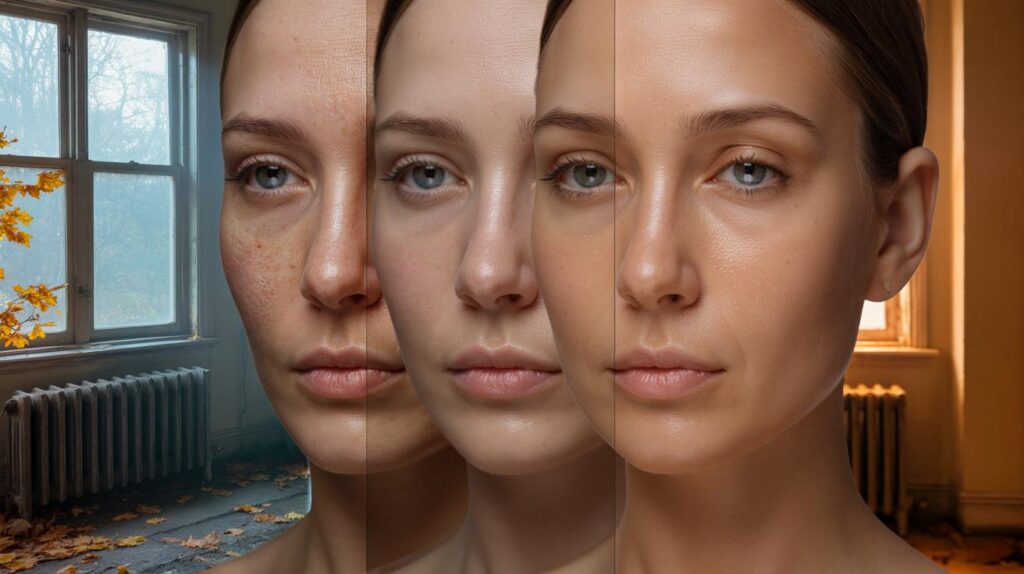
Colder air, harsher radiators, and a single choice to challenge routine. Thirty days later, the mirror told a new story.
One woman shelved her moisturiser for a full month as the weather turned. No face cream, just gentle cleansing, patience, and notes. The aim was simple: see what the skin does when it must fend for itself. The findings speak to anyone tempted to scale back their routine this autumn.
Why try 30 days without moisturiser
Moisturiser sits at the centre of most bathroom shelves. We reach for it as soon as we feel tightness, shine or flaking. Yet many dermatology researchers argue the skin owns a capable defence: the hydrolipid film, often called the acid mantle. It marries sebum with sweat, buffers pH, and slows water loss. The question is blunt. If you stop topping up, can your barrier adapt?
Lea, 29, tried this in October. She kept a mild cleanser, sunscreen on bright days, and nothing else. She did not use retinoids, scrubs or peels. She changed nothing in diet or sleep. That controlled set‑up helped her separate myth from response.
The skin’s first moisturiser is the one it makes itself: a thin, clever film of oil, water and acids that resists the cold.
The first days: stings, tightness and doubt
Day 1 to 3 felt rough. Cheeks prickled after showers. The nose shone by lunchtime. Lines looked deeper under office lighting. She rubbed less and cut the water temperature. That reduced flare. It also slowed the urge to reach for a tube.
This early spike in discomfort fits a known pattern. When a barrier is nudged, trans‑epidermal water loss can rise for a short spell. Indoor heating amplifies it. In October, humidity indoors often drops below 30%, far from the 40–60% comfort band most homes hit in spring. Dry air draws water out of skin. Tightness follows.
Day-by-day notes
- Days 1–3: tingling on cheeks after cleansing, shine on the T‑zone by noon.
- Days 4–7: less stinging, redness patchy around the nose, fewer flakes on the chin.
- Days 8–14: texture looks smoother under natural light, fewer midday touch‑ups.
- Days 15–30: skin looks more even, oil spikes settle, makeup sits longer without pilling.
By the second week, the mirror stopped shouting. Texture steadied, shine eased, and nothing new broke out.
Adaptation: what the barrier does when you stop cream
The hydrolipid film is not decorative. It sets the skin’s surface pH around 4.7–5.5, which supports enzymes that keep corneocytes tidy. That tidy stack reduces micro‑cracks, which keeps water in. Moisturisers can help, especially in harsh weather. Yet small withdrawal periods can nudge the skin to raise its own output of sebum and natural moisturising factors.
Lea’s notes matched that idea. Oiliness peaked early, then settled. Redness flared near the nostrils after a windy commute, then eased by the weekend. No new products meant fewer variables. Sleep and stress still mattered. So did the shower head. Hard water can lift the skin’s pH and slow repair.
| Week | Barrier signs | Sebum | Redness | Texture |
|---|---|---|---|---|
| 1 | More tightness on cheeks | High midday shine | Patchy around nose | Rough under fingertips |
| 2 | Tightness easing | Moderate shine | Less patchy | Smoother, pores look smaller |
| 3 | Stable comfort most days | Balanced across T‑zone | Low and transient | More even under daylight |
| 4 | Comfort holds after showers | Minor afternoon glow | Rare, wind‑related | Makeup wears longer |
A quiet shift: a less polished, more honest finish
By week three, Lea’s face looked less lacquered. It also looked calmer. Pores on the sides of the nose appeared tighter. The jawline stayed even through the day. The skin still reflected light, but not in streaks. She called it “less perfect, more real”.
There was no magic glow. There was a return to baseline. That baseline had been buried under layers of emollients and silicones. Once removed, the acid mantle seemed to rebuild at a pace that matched the weather and her own oil flow.
Put simply: the barrier did not collapse without cream. It reorganised, then held its line through colder days.
Social pressure: comments, norms and the office lift
The hardest stretch did not involve stinging. It involved people. “Are you tired?” cropped up in the lift. “You look flushed” landed after a brisk walk. Colleagues mean well, but the winter standard is a polished, moisturised face. That standard sets expectations that many wear without noticing.
Lea stuck with the test. By week four, no one asked questions. She had fewer midday blotting papers in her bag. Routine took less time. Spend fell too: zero on creams for a month, which, at £12–£35 for mid‑range moisturisers, adds up across a season.
What the 30‑day experiment actually shows
This is a sample of one. It still offers useful prompts for anyone thinking about a reset.
- Your barrier can adapt when you remove moisturiser, especially if you keep cleansing gentle and water lukewarm.
- Short spikes in tightness and shine are common in the first week and often fade by days 7–14.
- Indoor humidity, wind and hot showers influence comfort more than most products do.
- Fewer layers can reduce midday oil and makeup pilling in people with combination skin.
Who should not go cold turkey
- Eczema, rosacea or psoriasis flares need medical advice before any change.
- On prescription retinoids, isotretinoin or after peels and lasers, keep barrier support.
- If your skin cracks or bleeds, stop the test and repair first.
Thinking of trying it? A cautious plan you can follow
There is no badge for suffering. If you want the benefits of a simpler routine without a shock, taper instead of stopping overnight.
- Week 1: use moisturiser every other night; mornings off, sunscreen stays on bright days.
- Week 2: moisturiser twice a week at night only; swap hot showers for warm, under five minutes.
- Week 3: pause moisturiser; add a humidifier to keep rooms near 45–55% humidity.
- Week 4: keep pausing; if cheeks chap in wind, dab a pea of plain petrolatum on those spots.
The smart compromise: protect against sun and wind, keep cleansing mild, and let the acid mantle do the heavy lifting.
What you should keep using
Sunscreen on bright days remains non‑negotiable if you spend time outdoors. Ultraviolet damage does not pause for experiments. Apply a thin layer, then leave it there. At night, go bare. If you use fragrance‑free petroleum jelly as a wind shield on ski days, treat it like a coat, not a daily moisturiser.
Adding context that helps you judge your own skin
Not all faces behave like Lea’s. Oil‑rich skin often tolerates a pause well. Dry, mature or post‑menopausal skin may prefer a light moisturiser every few nights. Water hardness matters. Very hard water raises surface pH for hours, which can slow barrier repair. A cheap shower filter can limit that effect. So can splashing with cooled, boiled water after cleansing.
Re‑introducing products also deserves care. If you miss slip and cushion, start with a single‑ingredient oil, like squalane, 2–3 drops at night, twice a week. If fine lines bother you, patch test a gentle retinoid once weekly and watch for scaling. Track changes for two weeks before adding anything else. The skin hates committee meetings.
Finally, watch the room, not just the mirror. Central heating, open windows, and wind speeds drive comfort shifts you might blame on products. If your indoor humidity dips below 35%, a small humidifier often does more than an extra layer of cream. That small tweak, plus shorter, cooler showers, can cut the early‑week sting by a large margin.
This 30‑day pause is not a crusade against moisturiser. It is a way to test how much support your barrier actually needs in autumn. For many, the answer is “less than you think, but not zero on the harshest days.” That answer can save time, reduce spend, and hand some control back to the quiet machinery already working on your face.



Loved this experiment. The day-by-day notes and the acid mantle explanation were super clear. I tried a mini pause last autumn and, after 5 rough days, my skin definately settled by week two. Tracking indoor humidity (aimed for ~45%) helped a lot. Thanks for the reminder that sunscreen stays, even when everything else goes.