
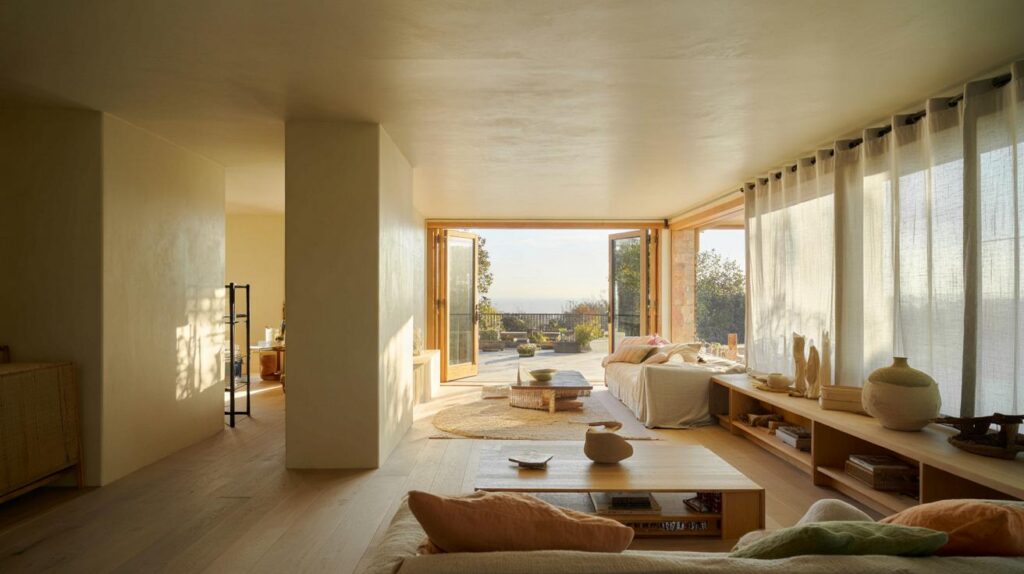
Short days are coming, and many homes feel dim. The next bright idea might not be made of steel and glass.
Across 2025 schemes, designers are shelving factory-style partitions and chasing daylight with wider openings, softer materials and calmer layouts. The goal is simple: push natural light further, reduce visual noise, and warm rooms that must work from dawn to dusk.
The end of a trend: why the workshop look is fading
From statement to default
Steel-framed “atelier” screens once felt daring. A decade on, they appear in halls, kitchens and parents’ suites so often that the surprise has gone. Scroll any feed and the same black mullions repeat. When a feature becomes a template, rooms risk leaning on style rather than solving light.
Invisible light traps
Many expected a glazed screen to lift brightness everywhere. In practice, the frames interrupt sightlines, and tinted or textured panes cut visible light. Set in the wrong wall, a screen can block the daylight path, leaving corners gloomy and circulation stilted. Add a cool-toned finish and the room reads colder than it feels.
Warmth beats grit in darker months
Autumn brings lower sun angles and cloudier afternoons. In London, November averages under nine hours of daylight, much of it weak. Hard, black grids accentuate contrast and clutter precisely when homes crave softness. People want light that wraps, not light that slices.
Steel grids dramatise shadow. In low autumn light, that drama often suppresses the very brightness you wanted.
The pivot to real light
Bigger openings, thinner frames
Designers now favour openings that act like conduits rather than cages: sliding doors with slim sightlines, pocket doors that vanish, and lightweight movable panels. Where structure allows, a single wider span beats two smaller ones. Sightline width matters. Every extra 10 mm of frame can trim a small opening’s clear area by 2–3%.
Think performance as well as looks. Timber or thermally broken aluminium frames cut cold bridging. Clear glazing with high visible light transmittance lets more sky in. For renovations in the UK, check compliance on U-values and solar gain when you enlarge.
Swap a 1.2 m internal steel screen for a 2.4 m pocket slider and you can lift the daylight factor by 35–50% in typical UK rooms.
Materials and tones that carry light
Natural, tactile finishes diffuse glare and feel warmer to the eye. Pale oak, rattan, linen, washed cotton, handmade ceramics and mineral paints lend softness. Paint choices matter: aim for high light reflectance values on ceilings and upper walls to keep daylight bouncing. Pastel clay tones, creams, soft terracotta and sage green keep the spectrum warm without dulling it.
A ceiling paint with an LRV above 70 works like a gentle reflector, lifting brightness across the whole day.
How designers stage the space
- Place a large mirror beside, not opposite, a window to extend the view without glare.
- Use lower, open-backed furniture to let light travel through the plan.
- Choose matte finishes over high-gloss; matte spreads light, gloss throws hot spots.
- Layer sheer curtains (linen, voile, cotton gauze) to filter harsh contrast while keeping the room bright.
What to choose instead of factory-style screens
| Option | Typical cost (UK) | Light gain | Privacy | Thermal comfort |
|---|---|---|---|---|
| Steel-framed screen | £800–£2,500 | Low to medium | Medium | Cool touch, potential bridging |
| Pocket glazed door (timber) | £1,500–£3,800 | Medium to high | Adjustable | Warmer frame, better U-values |
| Wide opening + sheer curtains | £300–£1,200 | High | Low to adjustable | Depends on adjacent glazing |
| Sliding patio with slim frames | £2,800–£6,500 | High to very high | Low | Check g-value, shading strategy |
Light loves continuity. The fewer vertical interruptions you add, the further it flows.
Practical swaps you can make now
Renting or watching the budget
- Hang 2–3 layers of sheers (140–300 gsm) to soften contrast and keep brightness up.
- Add an 80–120 cm mirror near a window reveal; shift it until you catch sky, not the lamp across the room.
- Choose warm-white LEDs (2700–3000 K) with high CRI for evening use; put them on a dimmer to protect night-time wind-down.
- Use high-LRV paint on ceilings; even one coat can lift perceived brightness by a visible notch.
- Declutter window zones and drop tall backs on sofas that block the daylight route.
Owning and planning works
- Open a nib wall to widen a doorway to 2.2–2.6 m where structure allows; add a pocket door for flexible privacy.
- Pick frames with slim sightlines (30–45 mm in timber) to maximise clear glass.
- Specify clear glazing with high visible light transmittance for internal doors; avoid frosted or smoked panes in shaded rooms.
- Address structure early: a structural engineer can size a lintel so you gain width without sag or cracking.
- Plan shading and privacy with layered textiles rather than bars of metal.
Typical project ranges: £300–£800 for textile-layer upgrades; £1,500–£3,800 for a pocket door kit and installation; £2,800–£6,500 for slim-frame sliders, size dependent. Regional labour can swing costs by 15–25%.
The numbers behind brighter rooms
Light levels that feel good
- Kitchen prep by day: 300–500 lux on worktops; evenings: 150–250 lux with under-cabinet task strips.
- Living spaces by day: 200–300 lux ambient; evenings: 50–150 lux with shaded lamps and wall washers.
- Reading: 300 lux at the page, delivered by a focused lamp to avoid lighting the whole room.
As a rule of thumb, 20–30 minutes near a bright window each morning helps stabilise mood and sleep timing.
Why people are switching now
From graphic to gentle
Homes are working harder: office corner by day, family zone by night. That shift favours spaces that adapt and soothe. The new appetite is for authenticity—clear glass where it counts, generous openings, and natural textures that balance clarity with comfort.
Retail reflects the change. Autumn 2025 lines at big-box brands focus on pale woods, glass-and-brass objets, and open shelving that lets light travel. High-street names such as IKEA and Maisons du Monde stock modular, low-slung pieces that free sightlines, while Zara Home’s seasonal drops bring translucent textiles and warm ceramics that temper glare.
Extra guidance to go brighter without regret
Common pitfalls to avoid
- Dark mullions in small rooms: they raise contrast and reduce perceived width.
- Textured or smoked glass where light is already scarce: it cuts transmission further.
- Glossy floors under low sun: they create harsh reflection bands; use satin or matte.
- Wide glass without shading: plan sheer layers or external shading to limit summer gain.
Quick home “light audit” you can run
- At midday and one hour before sunset, use a phone lux app at seat height; note the lowest and highest readings.
- Mark the bright path from window to interior wall. Remove or lower anything blocking that path.
- Test paint swatches at wall and ceiling; pick the one that looks brightest in the late afternoon, not at noon.
Key terms to guide your next step
- Daylight factor: percentage of outdoor light reaching a point indoors; higher feels brighter.
- LRV (light reflectance value): how much light a surface bounces back; higher equals brighter perception.
- U-value: heat loss through a component; lower means better insulation.
- g-value (solar factor): solar heat passed through glass; balance it to curb overheating.
Design for flow first. The combination of a wider opening, pale upper surfaces and layered sheers outperforms a graphic screen in most homes.



That “35–50% daylight factor” jump from swapping a 1.2 m steel screen to a 2.4 m pocket slider sounds big—what assumptions did you use (room depth, LRV, glazing VLT)? Also, the “every extra 10 millimetres costs 2–3%” line—got a source I can read? I may have mis-read/ refered wrongly.
Great piece—especially the LRV >70 ceiling tip and the 140–300 gsm sheers. Any budget UK paint brands that actually hit those LRVs without going chalky? Renting here, so reversible wins 🙂