
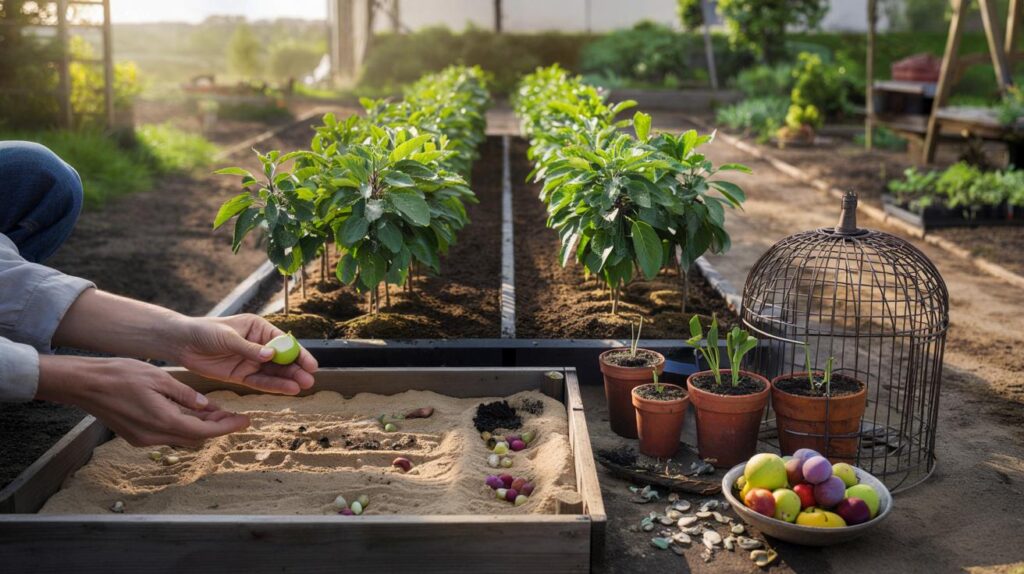
Rising plant prices and tight budgets push home gardeners toward an old trick hiding in plain sight in the fruit bowl.
Across the country, thrifty growers are turning pips and stones into free rootstocks with nothing more than winter cold, a box of damp sand and patience. The movement quietly gathers pace each October as allotments wind down and next year’s orchards begin, not at the garden centre till, but at the compost caddy.
Why people are doing this now
Rootstocks from seed cost £0, reduce waste and adapt themselves to your local soil. Seedlings toughen up outdoors through winter, then power into growth when spring returns. You avoid shortages, save cash and sidestep one-size-fits-all nursery stock. You also keep heritage genetics moving, using pips from local apples or stones from a neighbour’s plum tree.
Zero spend, low waste: 50 stones in October can yield 20–30 viable rootstocks by April with simple cold treatment.
There is another draw. Seedling rootstocks bring resilience. They emerge where they will live, so they learn your wind, your clay, your rain. That local fitness pays off when summer drought hits or a late frost bites.
From bin to nursery: the cold stratification playbook
Cold stratification copies winter. It tells dormant seeds that the freeze–thaw cycle has passed and the season for growth has begun. You can do it outside in a rodent-proof box, or in a fridge if you live in a flat.
What you need this week
- Fresh stones or pips from plum, cherry, apple or pear (cleaned of all pulp)
- Washed sand or a peat-free sowing mix, just damp to the touch
- A ventilated box, crate or perforated food bags, plus a label and pencil
- Wire mesh or a lidded crate to keep mice out if stored outdoors
Six practical steps that work
- Rinse and scrub off any fruit flesh. Discard split or mouldy seeds.
- Layer seeds and damp sand like lasagne in a shallow crate or freezer bag.
- Store at 1–5°C. An outdoor corner that stays cold works; a spare fridge shelf also does the job.
- Let nature provide chill for 8–16 weeks, with occasional checks to prevent drying out.
- Once radicles appear, handle gently and pot on into 9–11 cm pots with free-draining compost.
- Harden off outside, then move to a sheltered nursery bed once growth is steady.
| Fruit | Typical chill need | Best sowing window | Notes |
|---|---|---|---|
| Apple (pips) | 10–12 weeks at 1–5°C | October–November | Vigorous seedlings; ideal for standard or semi-standard rootstocks. |
| Pear (pips) | 12–16 weeks at 1–5°C | October–December | Slow to start; strong taproot forms with steady moisture. |
| Plum (stones) | 8–10 weeks with freeze–thaw | October–November | Protect from rodents; shells split as germination begins. |
| Cherry (stones) | 12–14 weeks | October–December | Some need two winters; patience pays off. |
Freeze–thaw outdoors breaks dormancy for free. In a city flat, a fridge at 3–5°C for 10–14 weeks gets similar results.
Spring watch: when the seeds wake up
From late March, you start to see white radicles and tiny green hooks. Move promptly. Pot the strongest into individual containers. Set them a few millimetres deeper than they sat in the sand. Water once to settle the compost and place them in light shade for a week. Sun after that, with mulch to keep the top few centimetres moist and weed-free.
Protecting tiny trunks from slugs and birds
- Use 2–3 cm rings of horticultural grit around each stem to deter slugs.
- Push two sticks in and stretch netting above the tray to stop blackbirds lifting seedlings.
- Fit a simple mesh cloche over a nursery row to block mice and pigeons.
Training tough future rootstocks
Keep watering light and regular. Aim for steady growth, not soft, sappy stems. A light top-dress of mature compost in June feeds the soil without jolting the plants. Remove side shoots low down to encourage a straight leader. By August, many will stand 30–60 cm tall with pencil-thick bases. In October, lift the strongest into a dedicated nursery bed with 30 cm spacing, or heel in pots for winter.
Seedling rootstocks will not match the shop apple you ate. That is fine: they exist to carry the scion you choose.
Grafting timeline and realistic yields
Plan to graft in your second winter. Take dormant scion wood in January from a tree with fruit you trust. Match scion thickness to your seedling where possible. Make clean cuts with a disinfected knife. Bind tightly, seal the join and label.
- Whip-and-tongue suits pencil-thick stock and gives strong unions.
- Cleft graft helps when the scion is thinner than the rootstock.
- Chip budding in late summer works well on actively growing bark.
Expect attrition, then enjoy gains. A typical run looks like this: start with 60 stones in October. See 35 germinate by April. Grow on 28 well. Plant out 24. Graft 18 in year two. Achieve 12–15 takes by the following spring. That is a small orchard from what most people bin.
Why seedling rootstocks make sense
Clonal rootstocks from nurseries give predictable sizes. Seedlings give strength and adaptability. They suit standards and half-standards, windbreak apples, or wildlife edges. They anchor well, need less staking and shrug off local stresses. You also reduce transport emissions and keep your money for stakes, ties and pruning kit.
Safety, legality and neighbourly swaps
Clean seeds reduce fungal problems. If fruits are shop-bought, wash pits well to remove residues. Do not move plant material from regions with quarantine pests. Keep a simple hygiene rule: one knife, one tree, wipe with alcohol between cuts. Watch for canker and fireblight in apples and pears; prune diseased wood in dry weather and burn it.
Surplus rootstocks make perfect trade tokens. Swap a dozen seedling plums for a scion bundle from a community orchard. Label everything with date, species and source. Local swaps keep genetics diverse and costs low.
Ideas that stretch the method further
Cold-hardy hedging: sow crab apple pips for a living fence that feeds pollinators and birds. Drought trials: grow a batch in lean soil with sparse watering to pick the toughest keepers. Dual-purpose trees: graft two or three scions on a single sturdy seedling to stagger ripening from August to October.
Risk and reward: late frosts can nip early shoots, so delay potting out during false springs. Rodents love plum stones; use mesh. Gains arrive steadily: £0 spent, dozens of rootstocks banked, and a grafting season ahead that turns leftovers from last October into next year’s fruit.



Brilliant guide—finally someone explains cold stratification like a simple playbook. The lasagne-style layers and 1–5°C target made this feel do-able. I tried it with pear pips last winter and the seedlings are tough as nails. Thanks for the step-by-step and the gritty slug ring tip.