
Prices bite, cravings rise, and autumn ovens hum. Home bakers chase deep sweetness without the sugar hangover or faff.
Across Britain, health‑minded cooks now trade bags of white crystals for a pantry staple you probably walked past. The goal stays the same: a cosy, caramel‑like crumb that feels generous, lasts longer, and keeps the family happy on a Tuesday night.
Why dates beat white sugar for everyday bakes
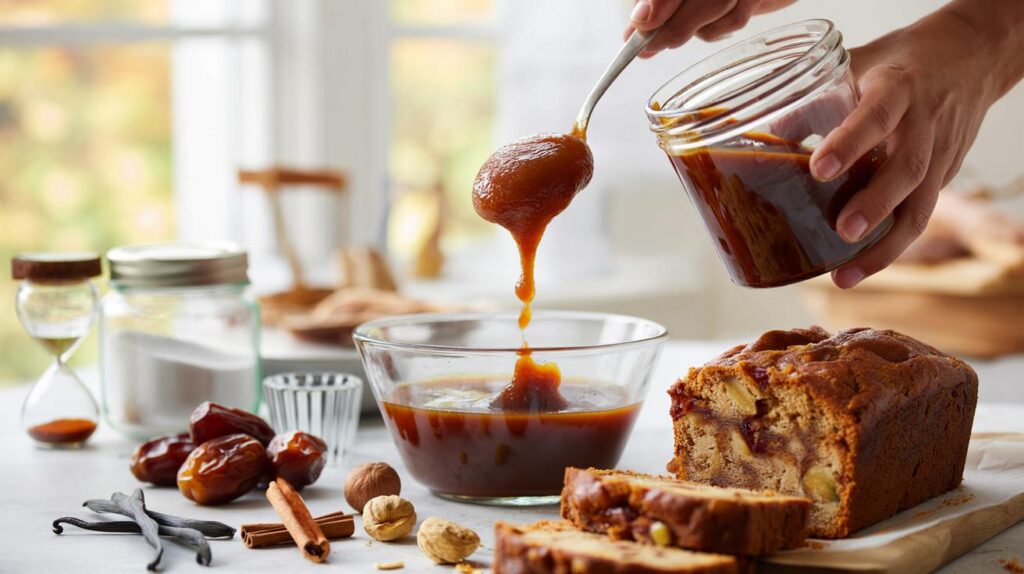
Whole dates bring more than sweetness. They carry fibre, potassium, and a mellow toffee note that plays beautifully with spices and nuts. When you blitz them with a little hot water, you get a spoonable paste that sweetens, moistens, and perfumes cakes without refined sugar.
That matters for people watching blood glucose. The fibre and viscous texture of date purée can slow absorption compared with straight table sugar in like‑for‑like bakes. You still eat natural sugars, but you gain useful nutrients and a richer flavour profile.
Swap refined sugar gram‑for‑gram with date purée, then trim other liquids slightly to keep the crumb balanced.
Fibre, minerals and the glycaemic curve
Per 100 g, dates typically offer around 7 g of fibre, with notable potassium and small amounts of magnesium and iron. Fibre helps satiety and supports a softer glycaemic rise than pure sucrose solutions. It also improves mouthfeel, so cakes stay moist for days instead of hours.
Make a jar in 5 minutes
- 200 g pitted dates (Medjool for lush softness, Deglet Noor for value)
- 80 ml hot water
Soak the dates in the hot water for 10 minutes to soften. Blitz dates and soak water until smooth. Scrape down the sides and blend again for a glossy paste. You’ll make roughly 260–280 g of purée, enough to sweeten one medium loaf cake or a tray of 8–12 slices, depending on taste.
Five minutes of prep. Two ingredients. A pantry jar that transforms bakes all week.
Dial up that caramel note without adding sugar
The right accents amplify the toffee character already present in dates. Balance sweetness, deepen aroma, and guard the crumb.
- Add a tiny pinch of fine salt to sharpen and round the flavour.
- Stir in 1 teaspoon vanilla extract for warmth and length.
- Fold through 1 teaspoon cinnamon or mixed spice for autumnal depth.
- Toast walnuts or hazelnuts and add a handful to boost roasted notes.
- Bake gently at 160–170°C to preserve soft caramel tones and avoid dryness.
Lower, slower baking protects the fruit sugars and yields a plush, pudding‑like crumb.
How to swap: clear rules that work
The simple ratio
Replace sugar by weight. Use 100 g date purée for 100 g caster sugar. Reduce other liquids by 1–2 tablespoons per 100 g purée to offset added moisture. If a recipe contains only dry sweetener and fat, start by trimming milk or oil first.
Temperature and timing
Fruit‑rich batters brown faster. Drop oven temperature by 10–20°C versus the original recipe and check 5–10 minutes earlier. A skewer should come out with a few moist crumbs, not wet batter.
Texture tuning
Want fluffier? Cream the purée with the fat to aerate. Want fudgier? Stir purée in at the end and bake low and steady. A half‑teaspoon of bicarbonate of soda helps lift denser loaves that include acidic ingredients like yoghurt or cocoa.
Quick conversions for favourites
| Recipe | Typical sugar | Date purée | Liquid change | Temp/time |
|---|---|---|---|---|
| Banana bread (1 lb loaf) | 150 g | 150 g | -30 ml milk | 165°C, 55–65 min |
| Apple and cinnamon cake | 120 g | 120 g | -2 tbsp oil | 170°C, 35–40 min |
| Brownie tray (20 cm) | 180 g | 180 g | -2 tbsp water/coffee | 160°C, 22–26 min |
| Carrot cake (2 x 20 cm) | 200 g | 200 g | -40 ml juice | 165°C, 28–32 min |
Rule of thumb: for every 100 g purée, trim 15–30 ml of other liquid. Then bake 10–20°C cooler.
Shelf life, costs and storage
Store the purée in a clean jar in the fridge for up to two weeks, or freeze in 100 g portions for three months. Deglet Noor often runs cheaper than Medjool and purées smoothly once soaked. Expect a jar to cost less than a premium syrup and to stretch across several bakes.
What you really cut when you cut 120 g of sugar
Removing 120 g of caster sugar takes out 120 g of refined sugar. Replace it with 120 g date purée and you still deliver sweetness, but a chunk now arrives with fibre, minerals, and water. The overall sugar in the cake drops, the crumb stays moist, and flavour complexity rises.
If you prefer numbers, a typical 120 g portion of date purée contains roughly half to two‑thirds the sugars of 120 g white sugar, plus around 8 g fibre. That difference explains why the taste feels generous while the sweetness lands softer.
Recipe ideas that play to dates’ strengths
Autumn loaf trio
- Apple, oat and pecan loaf with vanilla and a pinch of salt.
- Pumpkin and mixed spice loaf with toasted seeds on top.
- Carrot, orange zest and walnut cake with a tangy yoghurt frosting.
Comfort bakes for grey days
- Espresso brownies with cocoa and a shot of cooled coffee for depth.
- Banana bread with dark chocolate chunks and flaky salt.
- Pear and ginger traybake finished with a yoghurt‑tahini drizzle.
Nutrition, allergies and who should be cautious
Dates suit many diets and often come unsulphured, which helps people who avoid sulphites. They remain high in natural sugars, so portion control matters. People managing diabetes should test and track their own response, since recipe matrices vary. Those on a low‑FODMAP plan may find dates trigger symptoms, so small trial portions make sense.
Troubleshooting: from gummy middles to pale tops
- Gummy middle: bake longer at a slightly lower temperature, or cut 1 tablespoon more liquid next time.
- Pale top: finish with 2–3 minutes under a gentle grill, or add a dusting of cocoa before baking.
- Over‑sweet: blend in 1 tablespoon lemon juice to sharpen the mix without extra sugar.
- Too dense: beat purée with eggs and fat for 2 minutes to add air before folding in flour.
A quick price and time check for busy kitchens
Hands‑on time runs to about five minutes for a jar, which covers one medium cake or a dozen muffins. Deglet Noor dates often land between budget and mid‑range prices, while Medjool gives a silkier texture and deeper flavour. You can mix both to control cost and richness.
Level up: flavour boosters that behave like caramel
Add 1 tablespoon black tea or chicory coffee to batters for roasted notes without extra sugar. Toast spices in a dry pan for 30 seconds before mixing to unlock oils that echo caramel. A nut‑brown butter base offers a butterscotch vibe while the date purée handles sweetness.
The trifecta for that caramel feel: a pinch of salt, a roasted note, and a gentle bake.
What to try next
Test a side‑by‑side bake. Make two half‑loaves: one with 120 g sugar, one with 120 g date purée and 30 ml less milk. Compare colour, crumb, and how each tastes on day two. You may find the date loaf wins on aroma and keeping quality, even when the first‑day sweetness feels gentler.
For batch bakers, scale up the base purée to 1 kg dates with 400 ml hot water, blend in two rounds, and freeze in 100 g pucks. The pucks defrost in minutes and make midweek bakes faster than a dash to the shop for sugar.



Made the 5‑minute purée tonight—Medjool + pinch of salt + vanilla. Swapped 120 g sugar in an apple cake, trimmed 2 tbsp oil, baked 15°C cooler. Caramelly, moist, and no faff. Big win, thanks! 🙂
Does this really cut total sugars that much? Dates still pack fructose. Any referneces for the “half to two‑thirds” figure or glycaemic impact, and how the extra water/fibre affects shelf life?