
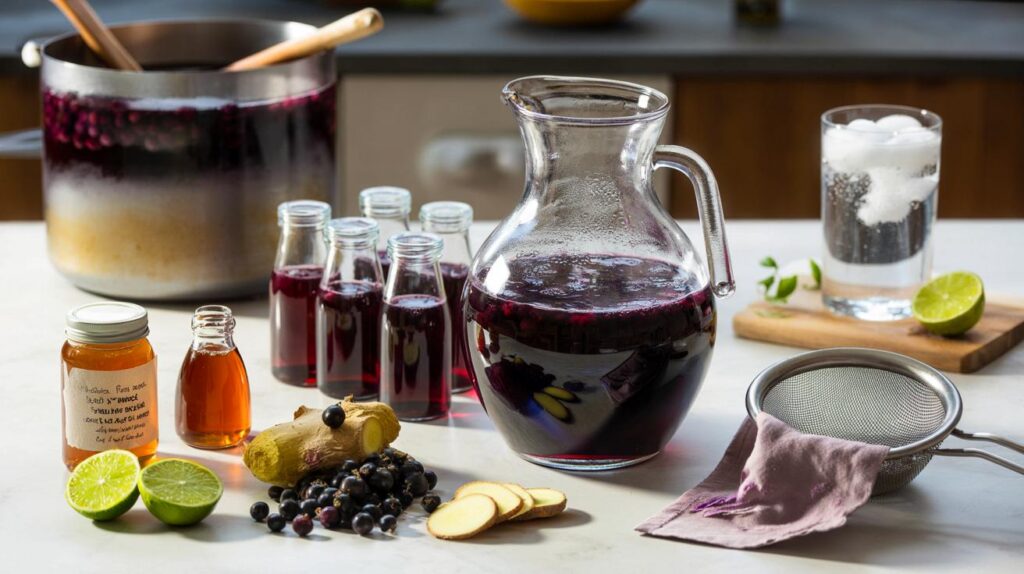
A violet jug in the fridge, a nose-tingling scent by the sink, and a wartime trick making an unexpected return.
Across Britain and the Caribbean diaspora, families are reviving a quiet classic: a blackcurrant-and-ginger water that perfumes the kitchen and pours like a soft, tart cordial. It costs little, wastes almost nothing, and keeps its fragrance for days.
Why this blackcurrant drink is back
Home cooks want short ingredient lists and real flavour. Blackcurrant water answers both. It steeps fruit, not syrup, and swaps hard boils for a patient overnight rest. Ginger brings warmth. Lime or citric acid balances the sweetness. The result is a jug that looks like stained glass, smells of hedgerows, and lasts through a long weekend.
There is heritage behind the trend. Wartime households leaned on preserved berries and clever infusions when fresh fruit ran short. Caribbean kitchens paired warming spices with tangy fruit for comfort and calm. Today’s version respects both threads while trimming sugar and effort.
Keep the water hot but not scalding: stay under 80°C to protect vitamins and prevent a cooked, jammy taste.
What you need
- 1.5 kg fresh blackcurrants (or 250 g dried blackcurrants if fresh are scarce)
- 1 piece fresh ginger, about 3 cm, scrubbed
- 1.5 to 2 litres filtered water
- Juice of 1 lime, or 1 teaspoon citric acid
- Light brown sugar or runny honey, added to taste
- A large saucepan, a fine sieve or clean cloth, and clean glass jars or bottles
Ripe berries and firm ginger give a clean, peppery edge. A wider pot speeds infusing and keeps the temperature even.
Five-step method
Short heat, long rest
- Simmer the ginger in the water for 5 minutes. Turn off the heat.
- Remove the ginger. Tip the blackcurrants into the hot water. Cover the pan.
- Leave at room temperature for 8 to 12 hours. Keep the lid on to trap aroma.
- Gently crush the berries with a spoon. Avoid grinding the seeds, which can taste bitter.
- Strain through a fine sieve or cloth. Add lime or citric acid, then sweeten gradually, tasting as you go.
Plan the jug like a weekend: start on Friday, bottle on Saturday morning, pour until Tuesday. Store it cold in glass for 3–4 days.
Small but mighty techniques
Temperature matters. If the liquid scalds, anthocyanins and vitamin C degrade faster and the kitchen smells like jam, not fruit. A simple test helps: dip a clean finger; it should be hot but bearable. If you want a stronger pour, drop the water to 1.2 litres for the same fruit weight.
Sweetness sets the tone. Sugar draws out aroma and rounds off the lime. Honey adds floral notes and a softer finish. Citric acid is sharper than lime but keeps colour vibrant for longer. Add in small doses, allow a minute, then taste again.
Use glass. It holds aroma, shows the ruby colour, and avoids plastic taint. Fill the bottle to the neck to limit air, then chill. If the fragrance fades, a fresh slice of lime brightens it without more sugar.
What you smell and taste
The pour looks like diluted ink with sunlight through it. You get a nose of hedgerow fruit, clean spice from the ginger, and a brisk edge from the lime. It is not cordial and not squash. It drinks like water with presence. Top with chilled sparkling water for lift, or keep it still for a calm, afternoon glass.
Numbers that guide the jug
- Ginger simmer: 5 minutes
- Steeping time: 8–12 hours, covered
- Storage life: 3–4 days in the fridge
- Fruit-to-water ratio: 1.5 kg to 1.5–2 litres (or 250 g dried to 1.5 litres)
- Temperature ceiling: 80°C during the fruit stage
Fresh berries or dried fruit
| Form | Pros | Watch-outs |
|---|---|---|
| Fresh (1.5 kg) | Brighter aroma, juicier mouthfeel, vivid colour | Needs rinsing, seasonal availability |
| Dried (250 g) | Year-round, compact storage, lower cost per jug | Heavier tannins; sweeten more gently |
Health, safety and the kitchen nose
Blackcurrants carry natural anthocyanins and vitamin C. You keep more of both with gentle heat and overnight extraction. Ginger adds a warm prickle without overpowering the fruit. The lime or citric acid steadies the colour and keeps microbes in check. Keep everything clean, cap bottles firmly, and use the fridge. If the scent turns yeasty or the liquid clouds sharply, start a new batch.
The fragrance is part of the appeal. A sealed jug perfumes the fridge. An open glass on the worktop scents the room for a short burst. For a softer background, tuck a slice of ginger peel in the jug rather than loose in the glass.
Costs, waste and quick swaps
A family jug uses about 1.5 kg fruit and 1.5 litres of water. Berries can be bought in season, frozen, or replaced with dried fruit. The spent pulp still holds flavour. Fold it into porridge, bake it into muffins, or simmer it again with a cinnamon stick for a lighter second pour. Lime rinds go into the sugar jar to perfume it for tea.
No carbonated drinks tax applies when you top the infusion with your own sparkling water. A 50:50 blend keeps sugar low and bubbles lively. If you want less sweetness, let the jug sit unsweetened and sweeten the glass, not the bottle.
Variations and useful extras
Flavour shifts that work
- Spice: swap half the ginger for a short piece of cinnamon stick.
- Herb: add 2 bruised mint sprigs during the final hour of steeping, then remove.
- Citrus: use ½ lemon plus ½ lime for a rounder finish.
- Strength: reduce water to 1.2 litres for a punchier base, or increase to 2 litres for a lighter table drink.
Serving ideas
Pour over ice with a dash of soda for a lunch drink. Use in a 1:2 mix with tonic for an evening spritz. Freeze some in ice-cube trays; one cube perfumes a glass of tap water without extra sugar. For guests, rim glasses with fine sugar and a touch of lime zest.
Press berries gently. Broken seeds add bitterness and dull the perfume. A wooden spoon and a light hand are enough.
If you want a longer keep
Make a concentrated base: steep as above with 1.2 litres of water, strain, sweeten to your preferred level, then bottle hot into sterilised glass and chill immediately. Dilute 1:1 when serving. This version keeps its edge for the full 4 days and stretches to more glasses.
For context, a 1.5 kg batch yields roughly 8–10 tall glasses when served over ice or topped with sparkling water. A family of four can pour small glasses with lunch and dinner across four days without running out. Those numbers help you size the jug, reduce waste, and keep the fridge smelling like summer hedges without effort.



Made it with frozen blackcurrants and a nub of ginger—kept it under 80°C like you said. The fridge smells amazing and the color is like stained glass. Topped with soda 50:50 and it was perfect after a run. Big win, zero waste—definately making again! 😍
I’m curious but a bit sceptical: if you’re leaving fruit at room temp for 8–12 hours, how safe is that really? Does the lime/citric acid lower pH enough, or are we flirting with off-flavours and microbes? Also, “you won’t believe” reads a tad clickbaity—nice infusion, though.