
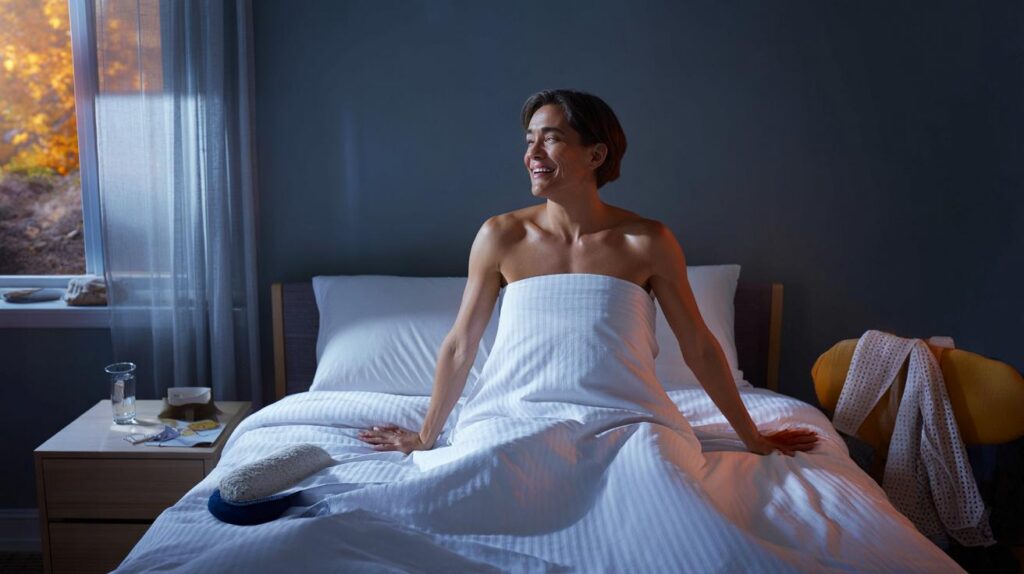
A restless, airless night led to an unexpected switch: no pyjamas, fewer wake-ups, a calmer morning, and a curious sense of freedom.
I tried it for one night, then another. The habit stuck. What began as a heatwave fix turned into a cooler, steadier routine as autumn drew in.
From one hot night to a cooler habit
Many of us cling to pyjamas for modesty, routine or warmth. Yet your body follows its own thermal rhythm after dark. Core temperature dips to start sleep, bottoms out in the small hours, then rises before dawn. Heavy layers and snug waistbands trap heat and stall that rhythm. Lose the layers and your skin can shed warmth more freely, so your brain gets the green light to enter deeper stages sooner.
Let your skin breathe and your core cool slightly. That small shift often unlocks longer, smoother sleep cycles.
The surprise came fast. Fewer throw-the-duvet-off moments. Fewer dry mouth wake-ups. Fewer battles with tangled sleeves. The result wasn’t dramatic in one go, but it built across a fortnight into a calmer wakefulness and a clearer head by mid-morning.
What changes when you ditch pyjamas
The temperature nudge your brain expects
Sleep signals love a cooler surface. When fabric traps heat, your body fights to offload it through hands, feet and face, which can spark micro-awakenings. Bare skin loses excess warmth quickly, so you drift back into stage N3 more often. Many people notice fewer vivid, stress-tinged dreams and a steadier pulse through the night when they avoid heavy sleepwear.
Most bedrooms sleep best at 16–18°C with breathable bedding. Undress the body, not the bed, to keep that range comfortable.
Skin comfort and the microbiome
Your skin renews overnight. Friction, trapped sweat and detergent residues can irritate. Without fabric, airflow eases itch and helps calm hot patches. A less humid microclimate also supports your skin’s bacterial balance, which can reduce morning tightness or redness for people prone to flare-ups.
Mood, intimacy and calm nerves
Skin-to-skin contact with a partner raises warmth in a targeted, responsive way and can lift bonding hormones. You may feel less edgy at bedtime and more connected, even without a sexual context. That sense of security matters in colder months when stress often ramps up.
Comfort, boundaries and hygiene at home
Sleeping naked does not mean lowering your standards. You still set boundaries and keep things fresh. Focus on tactility, privacy and easy laundering.
- Pick natural fibres for sheets: cotton percale, linen or bamboo blends breathe and wash well.
- Change pillowcases every 2–3 nights and sheets weekly if you sleep bare; more often during hot spells.
- Keep a robe by the bed for children’s wake-ups, deliveries or flatmates.
- Use a 10–12 tog duvet for most UK homes in autumn; add a light throw rather than thicker pyjamas when cold bites.
- Open windows briefly at dusk to purge heat, then shut to reduce noise and draughts.
Hygiene lives in the laundry basket, not in the pyjama drawer. Clean sheets and breathable fibres matter most.
A 14‑night self‑test you can try
Small, structured changes help you judge whether this suits you. Keep notes on wake-ups, morning mood and afternoon energy.
| Days | What to adjust | Typical observations |
|---|---|---|
| 1–3 | Sleep naked with existing duvet; set room to 17–18°C; robe on standby. | Novelty, mixed sensations, some clock-watching fades by night three. |
| 4–7 | Switch to crisp, breathable sheets; avoid late caffeine and alcohol. | Fewer hot flushes, faster return to sleep after toilet trips. |
| 8–14 | Add a light blanket for feet; keep bedtime consistent within 30 minutes. | More refreshing wake-ups, steadier energy mid‑morning to early afternoon. |
When sleeping naked may not suit you
Some situations call for a tweak rather than a total switch. Try a soft, loose vest or breathable shorts if you prefer a barrier. Consider modified routines if any of these apply:
- Very cold or damp homes where heating runs minimally at night.
- Shared bedrooms in houseshare settings where privacy changes unpredictably.
- Skin conditions that benefit from medicated creams under bandages or silk layers.
- Postnatal recovery or pelvic health concerns where absorbent garments help overnight.
- Frequent night-time caregiving that needs quick, fully clothed movement.
What partners need to talk about
Agreement beats assumptions. Set simple signals: a spare throw at the foot of the bed for the colder sleeper, a rule about washing sheets more often, and a plan for guests or children knocking late. Start on a weekend so both of you can adjust without work pressure. A gentle, curious tone helps build comfort and respect.
Costs, energy and the autumn equation
Dropping pyjamas can help you run the room slightly cooler without feeling chilly. The body warms the duvet microclimate efficiently, so you may reduce overnight heating or delay switching it on. Choose a duvet with a higher tog and keep your head and shoulders tucked in. A hot water bottle at the feet often does more than thicker clothing because it targets where heat escapes fastest.
Warm the bed, not the room. A bottle, good duvet and bare skin often outmatch central heating for night comfort.
Extra pointers for better autumn sleep
Circadian timing ties closely to skin temperature and light. Dim living spaces 90 minutes before bed. Keep screens low and warm-toned. A lukewarm shower and full dry-off cool the skin by evaporative loss, which nudges your brain towards sleep readiness without shock.
People with busy heads often benefit from a wind-down that includes a short journal entry, a to‑do list for tomorrow, and ten slow breaths. Pair that with breathable sheets and minimal clothing, and you give your nervous system fewer reasons to stay on guard.
If you want a deeper dive into the science
Thermoregulation works like a gate. Blood vessels near the skin open to dump heat before sleep. Tight cuffs and layered fabric can blunt that response. Bare skin lowers resistance, so heat leaves smoothly. That shift supports melatonin’s night-time rise, which aligns your internal clock with earlier sunsets in October and November.
To check your own response, run a simple simulation: track bedtime, wake-ups, and a 0–10 alertness score at 10:00 and 15:00 for two weeks with pyjamas, then two weeks without. Compare averages and variability. If your afternoon dip shrinks and wake-ups fall, you’ve found a low-cost tweak that fits the season.



I swapped to linen sheets and no pyjamas; fewer 3am duvet‑kickoffs and I wake clearer by 10am. The 10–12 tog tip was gold for UK autumn. Not dramatic overnight, but by day 12 I definitly noticed steadier mid‑morning energy. Surprisingly doable.
23% more energy? Sounds like correlation dressed as certainty. Did you control for caffeine, alcohol, and bedtime regularity beyond the 14‑day tweak? I’d love actual numbers from a counterbalanced AB/BA trial, not just anecdotes.